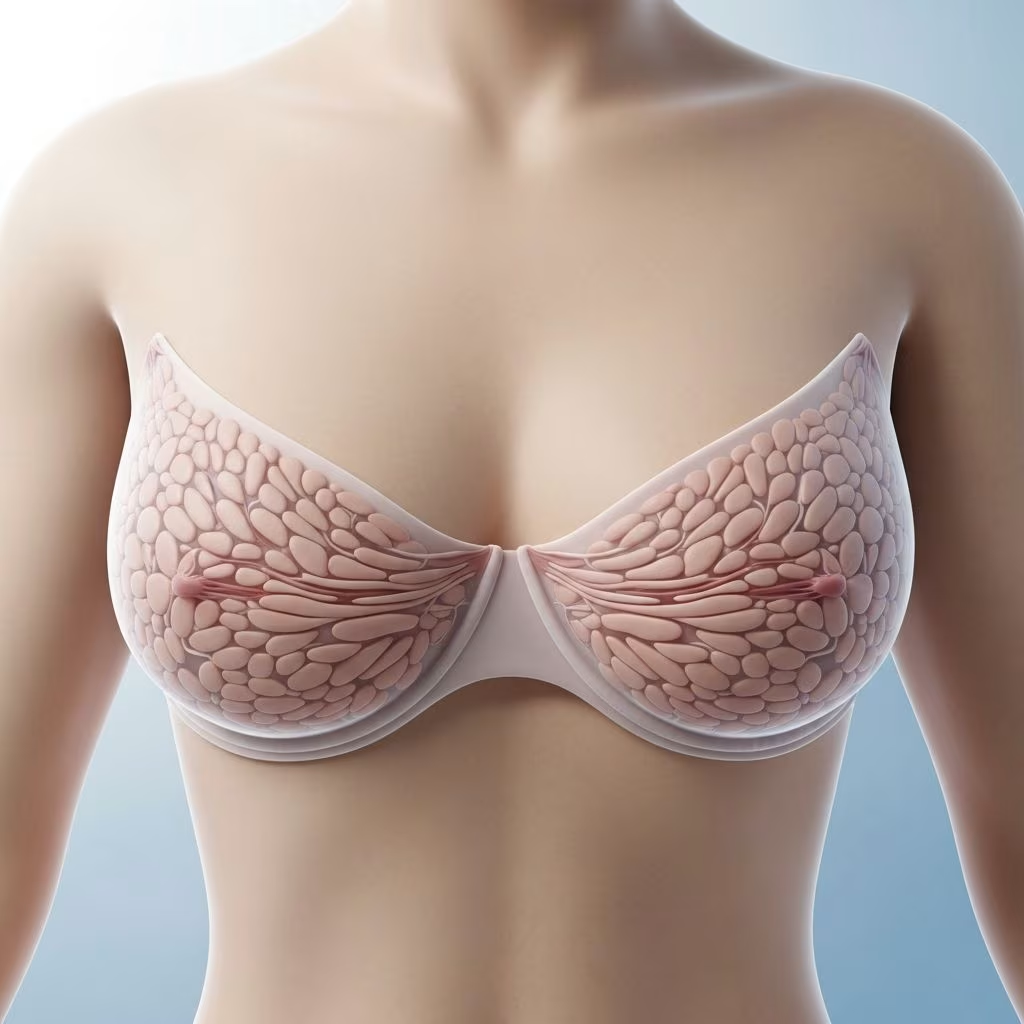
Hormonal fluctuations throughout the menstrual cycle commonly cause breast tenderness, swelling, and texture changes in many women. These symptoms typically peak in the luteal phase and resolve with menstruation, affecting nearly all women to some degree.
What Causes Breast Changes During Your Period?
The menstrual cycle triggers distinct breast changes due to shifting levels of estrogen and progesterone. Early in the follicular phase, rising estrogen enlarges breast ducts, creating a fuller sensation. Post-ovulation, progesterone dominates in the luteal phase (days 14-28), stimulating lobule (milk gland) growth, which leads to swelling, nodularity, and tenderness.
This cyclical response prepares breasts for potential pregnancy. If no conception occurs, hormone levels drop, alleviating symptoms. Factors amplifying these changes include:
- Premenstrual syndrome (PMS): Affects up to 90% of women, often intensifying breast pain.
- Fibrocystic breast changes: Benign condition causing lumpy, tender breasts that worsen premenstrually in 50-70% of cases.
- Genetic predisposition: Family history increases risk.
- Lifestyle factors: High caffeine intake, fatty diets, or salt retention exacerbate swelling.
Women on hormonal birth control may experience milder symptoms due to stabilized hormone levels.
How Your Breasts Change Throughout the Cycle
| Phase | Days (28-day cycle) | Breast Changes | Hormone Driver |
|---|---|---|---|
| Follicular | 1-14 | Mild fullness; ducts enlarge | Rising estrogen |
| Ovulation | ~14 | Peak sensitivity; slight tenderness | Estrogen surge |
| Luteal | 15-28 | Swelling, pain, lumpiness (cobblestoned texture) | Progesterone peak |
| Menstruation | 1-5 | Symptoms resolve | Hormone drop |
Breasts often feel dense and bumpy, especially outer quadrants near armpits, with dull heaviness or sharp tenderness.
11 Breast Symptoms During Menstrual Cycle
- Tenderness: Aching or soreness, worst 3-5 days before period.
- Swelling: Increased size by 15-30%; bra feels tight.
- Lumpiness: Nodular, cobblestone texture from lobule swelling.
- Heaviness: Full, weighted sensation.
- Sharp pains: Shooting sensations from duct dilation.
- Sensitivity: Pain with touch, clothing friction, or exercise.
- Asymmetry: One breast more affected.
- Nipple soreness: Heightened sensitivity or tingling.
- Vein prominence: Bluish veins more visible under stretched skin.
- Itching: Skin stretching causes mild pruritus.
- Size fluctuations: Temporary cup size increase.
Symptoms vary monthly; tracking via apps helps identify patterns.
How to Relieve Breast Pain and Tenderness
Home Remedies and Lifestyle Changes
Most women find relief through simple adjustments:
- Supportive bra: Wear well-fitted bra 24/7, especially during exercise. Sports bras reduce bounce-related pain.
- Diet tweaks: Cut salt 10 days pre-period to minimize fluid retention; reduce fat and caffeine (coffee, soda, chocolate).
- Exercise: 30 minutes daily moderate activity (walking, yoga) lowers estrogen and stress.
- Heat/cold therapy: Warm compresses relax tissue; ice packs numb pain (10-15 min sessions).
- Massage: Gentle circular motions improve circulation.
- Supplements: Vitamin E (400 IU), B6 (50-100mg), evening primrose oil (controversial; consult MD).
Medical Treatments
For severe cases:
- NSAIDs: Ibuprofen (400-600mg) reduces inflammation and prostaglandin-driven pain.
- Birth control: Combined pills stabilize hormones.
- Diuretics: Spironolactone pre-period decreases swelling.
- Progestin injections: Depo-Provera halts cycles for 90 days.
- Danazol: Synthetic androgen for refractory cases (side effects limit use).
When to See a Doctor for Breast Changes
Cyclical symptoms rarely signal cancer, but consult if:
- New, fixed, or growing lumps (especially unilateral).
- Bloody/brown nipple discharge.
- Skin changes: dimpling, redness, orange-peel texture.
- Symptoms persist post-period or worsen over cycles.
- Age 40+ without recent mammogram.
- Pain disrupts sleep despite self-care.
Perform monthly breast self-exam post-period when least lumpy. Clinical exams annually; mammograms per guidelines.
Breast Changes vs. Other Conditions
| Feature | Cyclical (Menstrual) | Fibrocystic | Infection (Mastitis) | Cancer |
|---|---|---|---|---|
| Timing | Luteal phase only | Worsens pre-period | Sudden, fever | Persistent |
| Pain | Bilateral, dull | Tender lumps | Sharp, red | Often painless |
| Lumps | Diffuse, mobile | Multiple, smooth | Focal, warm | Hard, irregular |
| Resolution | With period | Partial | With antibiotics | No |
Frequently Asked Questions (FAQs)
Do all women experience breast changes during their period?
Yes, to varying degrees; nearly all notice some tenderness or swelling due to hormones.
Can breast pain be a sign of pregnancy?
Similar to luteal phase but persists beyond expected period; test if late.
Does caffeine really worsen breast tenderness?
Evidence mixed, but many report improvement eliminating it; worth trying.
Are fibrocystic breasts dangerous?
No, benign; monitored via imaging if needed.
When should I get my first mammogram?
Age 40 or earlier with risk factors/family history.
Can exercise make breast pain worse?
Bouncing aggravates; proper bra and low-impact activities help.
Is nipple discharge during cycle normal?
Milky may be; bloody requires evaluation.
References
- Premenstrual breast changes — MedlinePlus (U.S. National Library of Medicine). 2024-04-16. https://medlineplus.gov/ency/article/003153.htm
- Primary and secondary dysmenorrhea, premenstrual syndrome, and premenstrual dysphoric disorder: etiology, diagnosis, management — Mendiratta V, Lentz GM. In: Comprehensive Gynecology. 8th ed. Elsevier; 2022. (Cited via MedlinePlus)
- Etiology and management of benign breast disease — Cox DM et al. In: Bland and Copeland’s The Breast. 6th ed. Elsevier; 2024:chap 14. (Cited via MedlinePlus)
- Dysmenorrhea: painful periods — American College of Obstetricians and Gynecologists. 2022-01. https://www.acog.org/womens-health/faqs/dysmenorrhea-painful-periods