
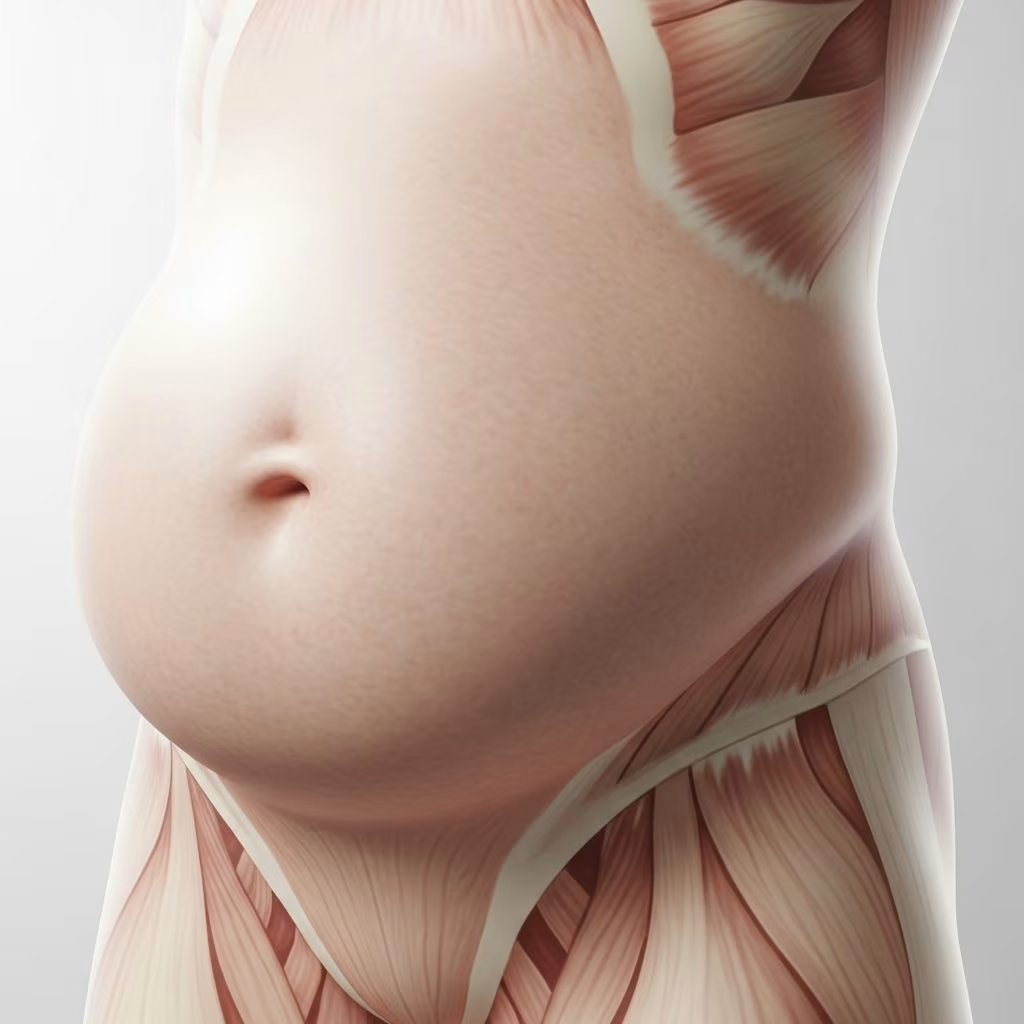
Abdominal distension refers to the visible swelling or expansion of the abdomen, often accompanied by a sensation of fullness or tightness. Unlike simple bloating, which is primarily a subjective feeling, distension involves measurable girth increase, commonly linked to gastrointestinal issues like gas accumulation or motility disorders.
What Is Abdominal Distension?
Abdominal distension occurs when the belly appears swollen or enlarged, distinguishing it from bloating, which patients describe as a feeling of fullness, tightness, or pressure without visible change. Patients often report both, but studies show distension correlates with objective abdominal girth increases, up to 12 cm in some irritable bowel syndrome (IBS) cases. This symptom affects quality of life, particularly in functional gastrointestinal disorders.
The abdomino-phrenic theory explains distension not just from increased luminal contents (gas, stool, liquid) but from impaired abdominal volume displacement. In healthy individuals, gas infusion triggers anterior abdominal wall contraction and diaphragmatic relaxation, redistributing contents upward. In patients, paradoxical diaphragm contraction and wall relaxation lead to exaggerated girth.
Symptoms of Abdominal Distension
Key symptoms include:
- Visible abdominal swelling or increased waist circumference.
- Sensation of tightness, pressure, or fullness.
- Accompanying bloating, pain, or discomfort.
- Potential belching, flatulence, or altered bowel habits.
Distension often worsens after meals, during stress, or in constipation-predominant IBS (IBS-C), where it’s 14-fold more likely than in diarrhea-predominant IBS (IBS-D). IBS-D patients report bloating more than visible distension.
Causes of Abdominal Distension
Several mechanisms contribute:
- Increased Luminal Contents: Gas from fermentation, bacterial overgrowth, or slowed transit traps air, especially in IBS-C.
- Impaired Propulsion: Constipation or obstructed evacuation retains stool and gas.
- Abdomino-Phrenic Dysfunction: Abnormal diaphragm and wall responses fail to accommodate volume, causing protrusion.
- Sensory Factors: Heightened perception amplifies symptoms even with modest gas.
Conflicting data link distension more to IBS-C, while bloating alone prevails in IBS-D. Gas retention mechanisms—obstruction vs. propulsion—affect symptom severity; obstruction heightens tension via small bubbles against barriers.
Common Conditions Associated
| Condition | Link to Distension | Prevalence |
|---|---|---|
| IBS-C | Strong correlation with girth increase and distension | High in constipation patients |
| IBS-D | More bloating than visible distension | Lower distension rate |
| Functional Bloating | Altered muscle responses to gas load | Common in GI disorders |
| Small Intestinal Bacterial Overgrowth (SIBO) | Fermentation produces excess gas | Frequently implicated |
When to See a Doctor for Abdominal Distension
Seek medical attention if distension persists beyond two weeks, accompanies severe pain, vomiting, blood in stool, unexplained weight loss, or fever. These signal potential serious issues like ovarian cancer, celiac disease, or bowel obstruction. Chronic cases warrant gastroenterologist evaluation.
How Is Abdominal Distension Diagnosed?
Diagnosis starts with history and physical exam measuring girth. Tests include:
- Abdominal X-ray or CT for gas patterns.
- Breath tests for SIBO or lactose intolerance.
- Colonoscopy or endoscopy for structural issues.
- Manometry for motility disorders.
Electromyography (EMG) studies diaphragm and wall responses during gas infusion, revealing dysfunction.
Treatments for Abdominal Distension
Treatment targets underlying causes:
- Dietary Changes: Low-FODMAP diet reduces fermentable carbs; smaller, frequent meals aid digestion.
- Medications: Simethicone for gas; laxatives or prokinetics for motility; antispasmodics for IBS.
- Biofeedback: Trains diaphragm contraction correction, reducing protrusion.
- Probiotics: Balance gut flora to curb overgrowth.
Abdomino-phrenic therapy shows promise in preliminary studies.
Prevention and Lifestyle Tips
Prevent distension by:
- Eating slowly to minimize air swallowing.
- Avoiding gum, carbonated drinks, and trigger foods.
- Exercising daily to promote motility.
- Managing stress via yoga or mindfulness.
- Staying hydrated and high-fiber (gradually).
Posture matters: upright positioning aids accommodation.
Abdominal Distension vs. Bloating
| Aspect | Bloating | Distension |
|---|---|---|
| Nature | Subjective sensation | Visible/measurable swelling |
| IBS Association | Common in IBS-D | Stronger in IBS-C |
| Mechanisms | Perception-focused | Volume displacement issues |
Frequently Asked Questions (FAQs)
What causes visible abdominal distension?
Primarily gas retention, impaired motility, and abdomino-phrenic dysfunction leading to girth expansion.
Is abdominal distension always serious?
No, often benign in IBS, but persistent cases need evaluation for underlying conditions.
Can diet fix abdominal distension?
Yes, low-FODMAP and portion control often reduce symptoms significantly.
How does IBS relate to distension?
IBS-C patients experience more distension due to constipation and gas trapping; IBS-D more bloating.
What is the abdomino-phrenic theory?
It posits distension from poor coordination between diaphragm and abdominal wall during gas loads, causing protrusion.
References
- Bloating and functional gastro-intestinal disorders — D. P. B. Sanders, N. J. Talley. 2014-10-14. https://pmc.ncbi.nlm.nih.gov/articles/PMC4202369/
- Abdominal Bloating: Pathophysiology and Treatment — Mayo Clinic Proceedings. 2019-05-01. https://www.mayoclinicproceedings.org/article/S0025-6196(19)30245-8/fulltext
- Irritable Bowel Syndrome — National Institute of Diabetes and Digestive and Kidney Diseases (NIDDK). 2023-06-15. https://www.niddk.nih.gov/health-information/digestive-diseases/irritable-bowel-syndrome
- Gas in the Digestive Tract — NIDDK. 2020-12-01. https://www.niddk.nih.gov/health-information/digestive-diseases/gas-digestive-tract
- Functional Gastrointestinal Disorders — Rome Foundation. 2022-11-10. https://theromefoundation.org/functional-gi-disorders/