
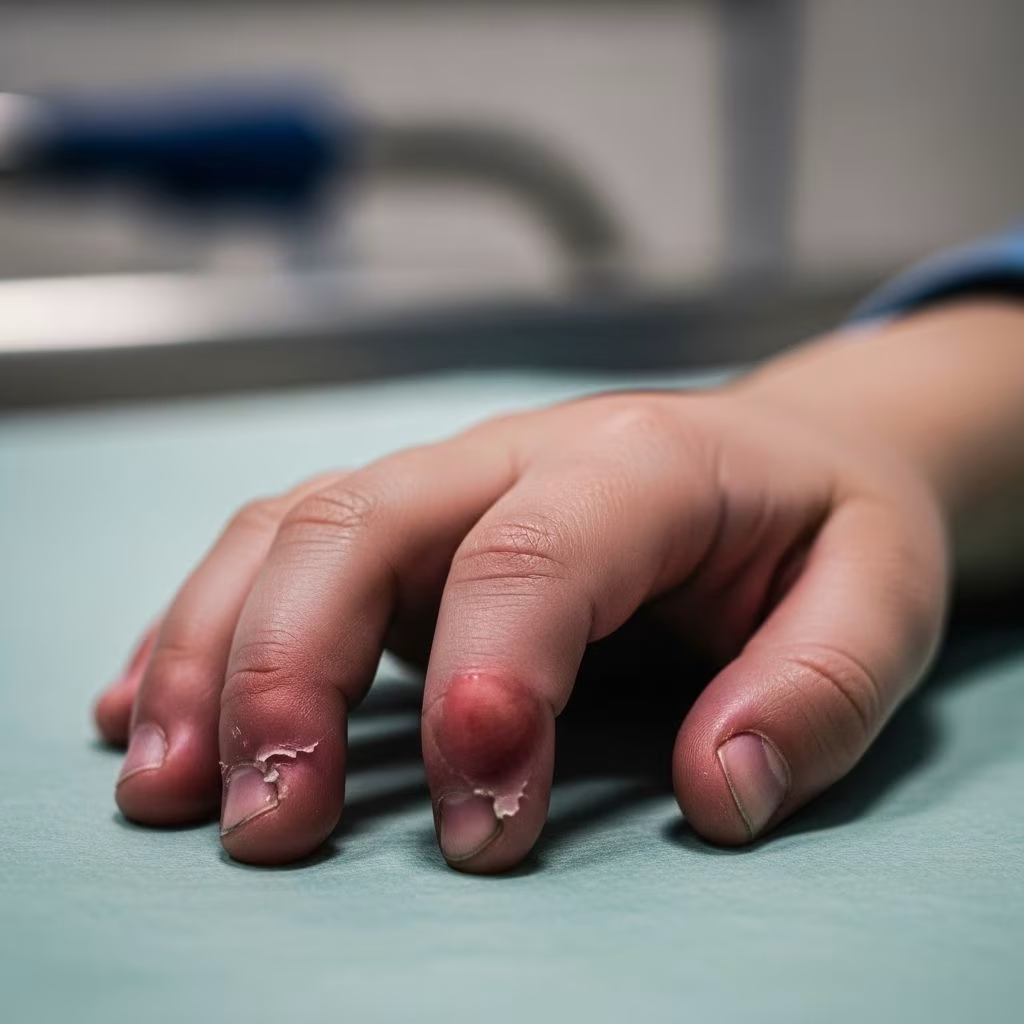
Acrodynia, also known as pink disease, is a rare condition resulting from chronic mercury poisoning, primarily affecting infants and young children. It is characterized by pink discoloration and pain in the hands and feet, accompanied by irritability, photophobia, and polyneuritis.
Introduction
Acrodynia derives its name from the Greek words akron (extremity) and odyn (pain), reflecting the hallmark painful pink extremities. Historically prevalent in the early 20th century due to mercury in teething powders, it has become rare with regulatory bans on mercury-containing products. The condition arises from hypersensitivity or chronic exposure to mercury, leading to systemic toxicity with prominent dermatological, neurological, and autonomic manifestations.
Mercury, a heavy metal, exists in elemental, inorganic, and organic forms. In acrodynia, exposure often stems from calomel (mercurous chloride) in medications or environmental sources. Symptoms emerge 2-4 weeks post-exposure, mimicking other pediatric illnesses, which delayed recognition until the 1940s. Today, cases are sporadic, linked to alternative medicines or accidental ingestion.
Demographics
Acrodynia predominantly affects infants and children under 2 years, with a higher incidence in males (ratio ~2:1). Genetic predisposition may play a role, as not all exposed children develop symptoms—only about 1 in 500 exposed to teething powders historically. It was most common in developed countries pre-1950s but now occurs globally via unregulated products like Ayurvedic medicines or broken thermometers.
- Age group: Primarily 2 months to 4 years; peak at 12-18 months.
- Gender: Slight male predominance.
- Risk factors: History of mercury-containing teething powders, vaccinations with thiomersal (in past), or folk remedies.
Causes
The primary cause is chronic exposure to mercury, especially inorganic forms like mercurous chloride (calomel) from teething powders, diaper powders, or ointments. Elemental mercury vapors from broken thermometers or fluorescent bulbs, and organic mercury (methylmercury) from fish or fungicides, also contribute.
Children are susceptible due to immature detoxification pathways and higher absorption rates. Mercury inhibits catecholamine degradation, causing sympathetic overactivity. Historically, 10% of UK infants received calomel teething powders in the 1930s-40s, leading to epidemics. Modern sources include:
- Preservatives like thiomersal in vaccines (now phased out in many countries).
- Traditional medicines (e.g., Ayurvedic preparations with high mercury).
- Household items: batteries, paints, anthelmintics.
- Plant fungicides and bactericidal agents.
| Mercury Type | Sources | Absorption Route |
|---|---|---|
| Elemental (quicksilver) | Thermometers, bulbs | Inhalation > Ingestion |
| Inorganic salts (calomel) | Teething powders, ointments | Oral, dermal |
| Organic (methylmercury) | Fish, fungicides | Oral |
Mercury bioaccumulates, with symptoms delayed by weeks to months due to tissue storage.
Clinical Features
Clinical presentation unfolds in phases over 2-4 weeks. Initial non-specific symptoms progress to distinctive dermatological and systemic signs.
Initial Signs (1-4 Weeks Post-Exposure)
- Irritability and insomnia: Extreme restlessness, crying.
- Anorexia and weight loss: Refusal to eat, rapid emaciation.
- Excessive sleepiness or lethargy: Alternating with hyperactivity.
- Photophobia: Sensitivity to light, miosis (pinpoint pupils).
- Pink papules on palms/soles: Evolving to dusky erythema.
Skin Changes (2-4 Weeks)
Characteristic puffy, pink, painful, peeling hands and feet (“pinky hands and feet”). Extremities show acral erythema, edema, desquamation, and anhidrosis except palms/soles (hyperhidrosis).
- Hands/Feet: Dusky pink-red discoloration, swelling, peeling, painful paresthesia (burning/itching).
- Face: Red cheeks/nose (“chipmunk facies”), erythematous lips, gingival hypertrophy.
- Nails/Teeth/Hair: Dysonychia, loosening; alopecia, tooth loss.
- Rashes: Morbilliform, urticarial, or miliaria rubra leading to pyoderma.
Systemic Features
- Autonomic: Profuse sweating (diaphoresis), tachycardia, hypertension from catecholamine excess.
- Neurological: Polyneuritis, hypotonia, tremors, weakness; ‘Salaam posture’ (head between legs, rubbing feet).
- Other: Salivation, fever, anemia, proteinuria (Fanconi syndrome), muscle atrophy.
Skin biopsy shows eccrine gland hyperplasia, chronic inflammation. Nerve biopsy reveals demyelination.
Treatment
Treatment focuses on mercury removal, supportive care, and chelation. Prognosis is good with early intervention; mortality <1% today vs. 10-50% historically.
Immediate Management
- Remove exposure source; decontaminate (gastric lavage with milk/egg white for ingestion, whole-bowel irrigation).
- Correct fluids/electrolytes, nutrition (B-vitamins).
- Monitor vitals, renal/hepatic function.
Chelation Therapy
Meso-2,3-dimercaptosuccinic acid (DMSA, succimer) is first-line: oral, 19-day course (high then taper dose). Prevents mercury uptake by RBCs/hepatocytes.
- Alternatives: Dimercaprol (BAL, IM), D-penicillamine (less effective for organic Hg).
- Dialysis: Hemodialysis ± L-cysteine for renal failure; peritoneal/plasmapheresis.
Symptomatic Relief
- Pain: Analgesics, topical anesthetics/steroids.
- Sympathetic overactivity: Tolazoline.
- Infections: Antibiotics for secondary pyoderma.
| Treatment | Dose/Regimen | Notes |
|---|---|---|
| DMSA | 30 mg/kg/day oral, taper over 19 days | Monitor CBC, LFTs, RFTs |
| BAL | IM injections | May redistribute Hg to brain |
| Hemodialysis | As needed | For AKI |
Frequently Asked Questions (FAQs)
What is acrodynia?
Acrodynia, or pink disease, is mercury poisoning causing pink, painful hands/feet, irritability, and photophobia in children.
Is acrodynia still common?
No, it’s rare today due to bans on mercury products, but occurs via alternative medicines.
How is acrodynia diagnosed?
By history of exposure, symptoms, elevated urine/hair mercury, exclusion of differentials like Kawasaki.
Can acrodynia be fatal?
Rarely with treatment; historical mortality high from complications.
How to prevent acrodynia?
Avoid mercury-containing products; check traditional remedies.
What does pink disease look like?
Puffy pink-red swollen hands/feet with peeling, red cheeks.
This comprehensive overview expands on acrodynia’s history, from 1930s epidemics (thousands affected in Australia/UK) to modern rarity. Early teething powders contained 20% calomel, dosed 5-10g over weeks. Diagnosis historically relied on ‘scorbutic facies’ misdiagnosis as scurvy. Mercury’s mechanism: Inhibits COMT/SAM, elevating epinephrine/norepinephrine, explaining tachycardia/sweating.
Differentials: Kawasaki disease (fever/mucosal changes), scarlet fever, eczema, malnutrition. Key distinguisher: mercury levels >50 mcg/L urine. Long-term sequelae: Neurodevelopmental delays in 20-30% untreated cases. Prevention via WHO guidelines: Thiomersal-free vaccines, Hg-free thermometers.
Case example: 1940s NZ outbreak linked to teething powders; symptoms resolved post-ban. Research continues on chelator efficacy; DMSA superior, reducing Hg burden 90%. Public health vigilance needed for global migration/traditional medicine use.
References
- Acrodynia – Wikipedia — Wikipedia contributors. 2023-10-01. https://en.wikipedia.org/wiki/Acrodynia
- Acrodynia – MD Searchlight — MD Searchlight. 2024-05-15. https://mdsearchlight.com/poisons/acrodynia/
- Acrodynia (mercury poisoning) – DermNet — DermNet NZ (Vanessa Ngan). 2005-01-01. https://dermnetnz.org/topics/acrodynia
- Hydrargyria, mercurialism, acrodynia – Dermatology Advisor — Dermatology Advisor. 2023-11-20. https://www.dermatologyadvisor.com/home/decision-support-in-medicine/dermatology/heavy-metal-dermatoses-mercurymercury-dermatosis-hydrargyria-mercurialism-acrodynia-pink-disease-mad-hatters-disease-hatters-disease-minamata-disease/
- Acrodynia – StatPearls — NCBI Bookshelf. 2023-07-17. https://www.ncbi.nlm.nih.gov/books/NBK559114/