Adjuvant therapies are administered after primary surgical treatment for high-risk melanoma to target any remaining microscopic cancer cells, thereby lowering the risk of recurrence and metastasis. These treatments, including immunotherapy and targeted therapies, have shown substantial improvements in relapse-free survival (RFS) for patients with resected stage IIB-IV melanoma.
What is the aim of adjuvant therapy for melanoma?
The primary goal of adjuvant therapy in melanoma is to eradicate residual micro-metastatic disease that may lead to future relapse, enhancing the chances of long-term disease control and potentially improving overall survival (OS). For patients with stage III or IV melanoma post-resection, or high-risk stage IIB/IIC, these therapies reduce the relative risk of recurrence by approximately 40-50%, with absolute reductions of 15-25% in local and distant recurrences.
Systemic adjuvant therapy is recommended for surgically resected stage IIB-IV melanoma due to elevated relapse risk. Modern standards prioritize PD-1 inhibitors (nivolumab, pembrolizumab) and BRAF/MEK inhibitors (dabrafenib plus trametinib for BRAF-mutant cases), which demonstrate significant RFS benefits over prior options like interferon-alpha or ipilimumab.
Who is adjuvant therapy for melanoma recommended for?
Adjuvant therapy is indicated for patients with completely resected high-risk melanoma, specifically:
- Stage III melanoma with lymph node involvement.
- Stage IV melanoma after complete resection of metastases.
- Stage IIB and IIC melanoma (pembrolizumab approved based on KEYNOTE-716 trial).
Key considerations include BRAF mutation status: BRAF wild-type patients receive anti-PD-1 immunotherapy, while BRAF V600E/K mutants have options of anti-PD-1 or dabrafenib-trametinib. Patient factors such as comorbidities, preference for oral vs. intravenous administration, and toxicity profiles guide selection.
What are the current adjuvant therapies for melanoma?
Current FDA-approved adjuvant therapies include four immunotherapies and one targeted combination:
- PD-1 inhibitors: Nivolumab (Opdivo®) for resected stage III/IV; Pembrolizumab (Keytruda®) for stage IIB/IIC/III.
- CTLA-4 inhibitor: Ipilimumab (Yervoy®) for stage III, though less favored due to toxicity.
- Targeted therapy: Dabrafenib (Tafinlar®) + Trametinib (Mekinist®) for BRAF-mutant stage III.
These approvals stem from phase III trials like CheckMate-238 (nivolumab vs. ipilimumab), KEYNOTE-054 (pembrolizumab vs. placebo), and COMBI-AD (dabrafenib-trametinib vs. placebo), all showing superior RFS.
Immunotherapy
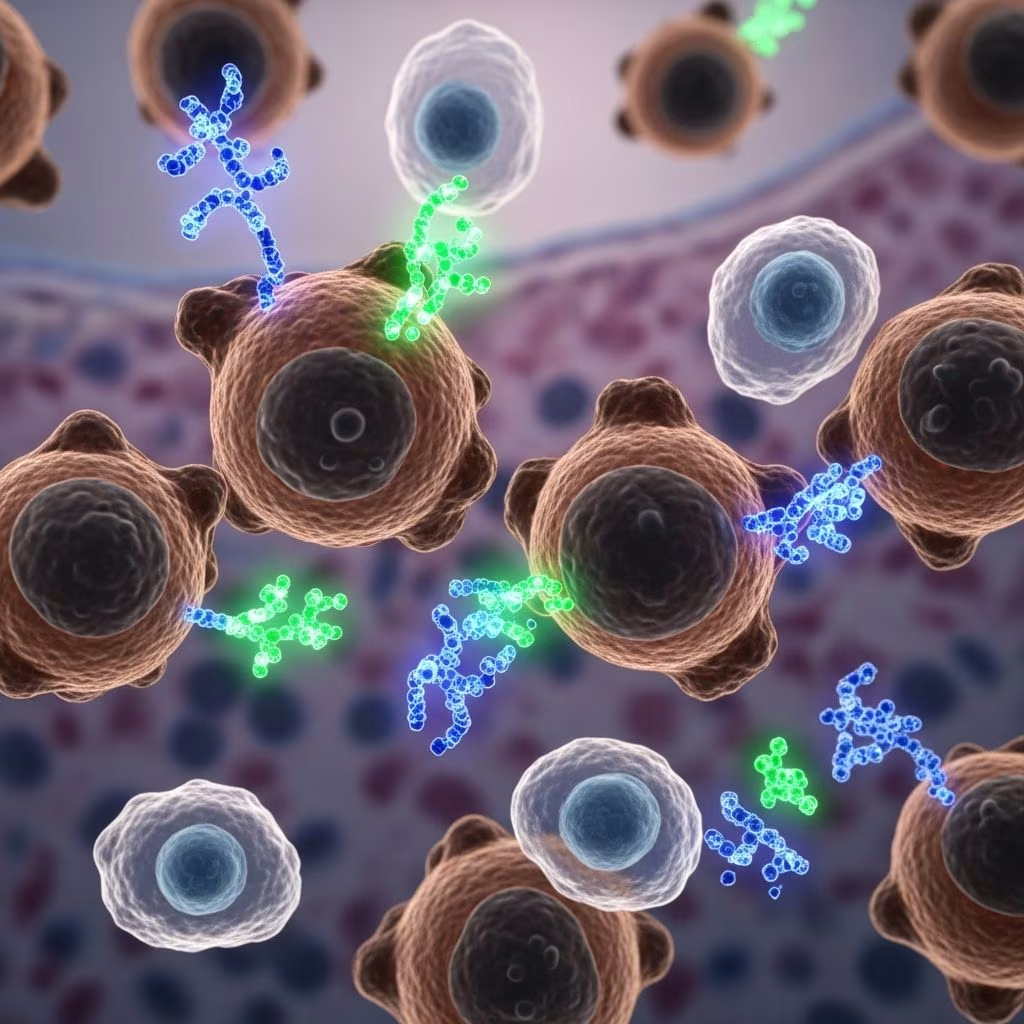
Immunotherapy leverages the patient’s immune system to target melanoma cells. Anti-PD-1 agents like nivolumab and pembrolizumab block programmed cell death protein 1, reactivating T-cells against cancer. In adjuvant settings, they significantly prolong RFS without consistent OS benefits yet reported, though long-term data are emerging.
Nivolumab (3 mg/kg every 2 weeks for 1 year) improved RFS in CheckMate-238 vs. ipilimumab. Pembrolizumab (200 mg every 3 weeks for ~1 year) showed RFS benefits in KEYNOTE-054 for stage III and KEYNOTE-716 for stage II.
Targeted therapy
Targeted therapies inhibit the MAPK pathway dysregulated in ~50% of melanomas due to BRAF mutations. Combination BRAF inhibitor (dabrafenib 150 mg twice daily) and MEK inhibitor (trametinib 2 mg once daily) is standard for 1 year in adjuvant BRAF-mutant stage III melanoma. The COMBI-AD trial reported 52% RFS at 3 years vs. 36% placebo, with emerging OS data.
These oral agents block tumor growth signals, preventing resistance seen with monotherapy.
How effective are adjuvant therapies for melanoma?
| Treatment | Trial | RFS Benefit | OS Impact |
|---|---|---|---|
| Pembrolizumab | KEYNOTE-054 | HR 0.57 vs. placebo | Immature data |
| Nivolumab | CheckMate-238 | HR 0.65 vs. ipilimumab | No significant |
| Dabrafenib + Trametinib | COMBI-AD | HR 0.47 vs. placebo | Benefit emerging |
| Ipilimumab | EORTC 18071 | HR 0.75 vs. placebo | OS benefit |
Hazard ratios (HR) indicate risk reduction; lower HR means better efficacy. All modern agents outperform historical interferon-alpha, with targeted therapy showing highest RFS gains in BRAF-mutants.
What are the side effects of adjuvant therapies for melanoma?
Adjuvant therapies are generally tolerable, but toxicities vary:
- PD-1 inhibitors: Immune-related adverse events (irAEs) in 50-70%: fatigue (30%), rash (20%), diarrhea (15%), endocrinopathies (10-15%), hepatitis, pneumonitis. Most grade 1-2, manageable with steroids; ~15% grade 3-4.
- BRAF/MEK inhibitors: Higher short-term toxicity: pyrexia (50%), chills, rash, hypertension, arthralgia. Fatigue and gastrointestinal issues common; ~30% discontinue early.
- Ipilimumab: Severe irAEs (colitis, hepatitis) in >50%, leading to high discontinuation.
Permanent risks higher with immunotherapy (e.g., hypothyroidism); targeted therapy toxicities often resolve post-treatment.
Unresolved issues
Key questions persist:
- Optimal duration: Most trials use 1 year; shorter courses under study.
- Neoadjuvant vs. adjuvant: Emerging data favor neoadjuvant for resectable stage III.
- Biomarkers: PD-L1, tumor mutational burden to predict response.
- OS confirmation: RFS benefits need OS validation.
- Stage II expansion: Nivolumab under review.
Frequently asked questions
What stages of melanoma benefit from adjuvant therapy?
Resected stage IIB-IV, with approvals for stage III/IV (all options) and stage IIB/IIC (pembrolizumab).
Is adjuvant therapy suitable for BRAF wild-type melanoma?
Yes, anti-PD-1 immunotherapy (nivolumab or pembrolizumab) is standard.
How long is adjuvant treatment given?
Typically 1 year, up to 52 weeks for immunotherapy or targeted therapy.
Can adjuvant therapy cure melanoma?
It reduces recurrence risk but is not guaranteed cure; aims for long-term remission.
What if side effects are severe?
Treatment can be paused or stopped; steroids manage irAEs effectively.
References
- Adjuvant Therapy for High-Risk Melanoma: An In-Depth Review of Clinical Trial Data — NIH/PMC. 2023-08-15. https://pmc.ncbi.nlm.nih.gov/articles/PMC10453009/
- Adjuvant therapies for melanoma — DermNet NZ. 2023. https://dermnetnz.org/topics/adjuvant-therapies-for-melanoma
- Adjuvant Treatment — Melanoma Research Foundation. 2024-02-01. https://melanoma.org/adjuvant-treatment/
- Current State of Adjuvant Therapy for Melanoma — ASCO Educational Book. 2023-05-31. https://ascopubs.org/doi/10.1200/EDBK_351153
- Adjuvant and Neoadjuvant treatment for melanoma — Melanoma Focus. 2024. https://melanomafocus.org/melanoma-patient-treatment-guide/melanoma-treatment/adjuvant-and-neoadjuvant-treatment-for-melanoma/
- Melanoma Treatment – PDQ — National Cancer Institute. 2025-12-20. https://www.cancer.gov/types/skin/patient/melanoma-treatment-pdq