
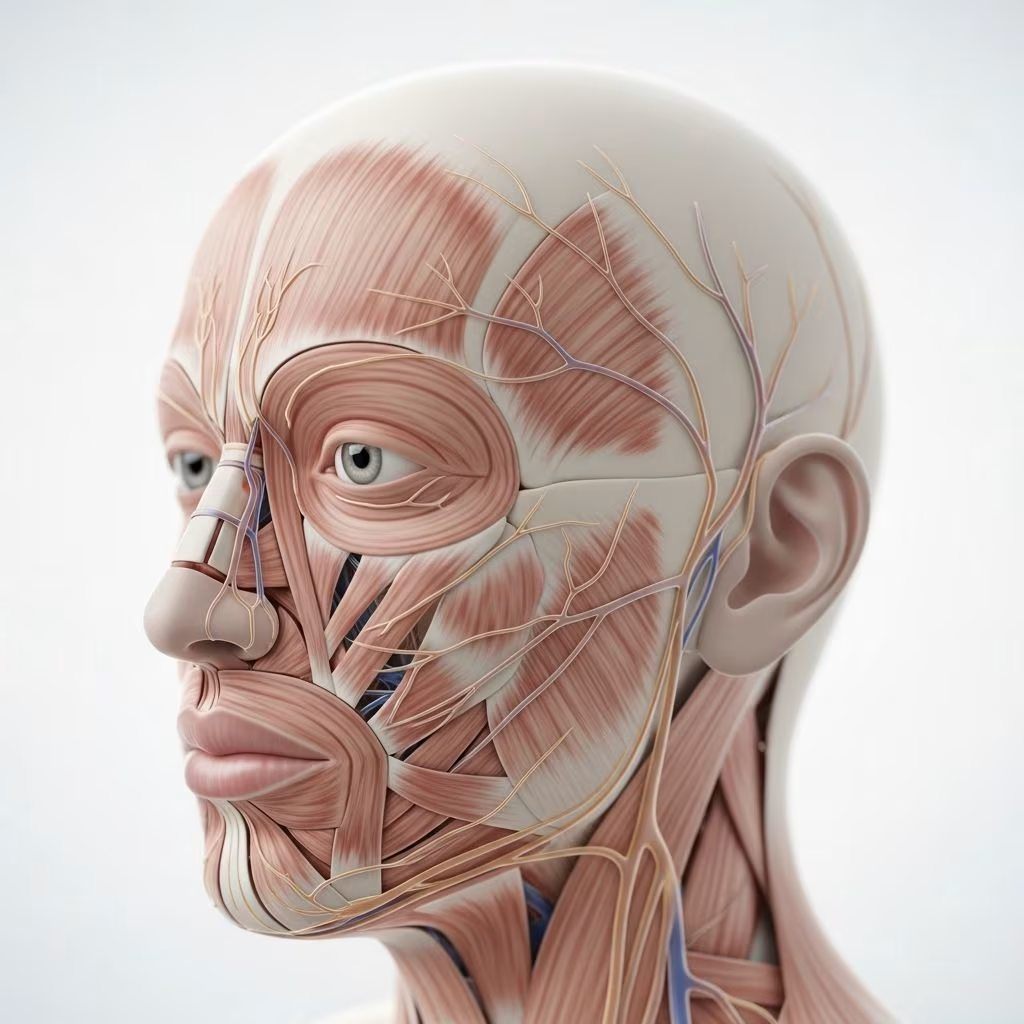
Bell’s palsy is an acute, idiopathic peripheral facial nerve palsy causing unilateral facial muscle weakness or paralysis, affecting 15-30 per 100,000 people annually.
This condition, named after Sir Charles Bell, results from inflammation at the geniculate ganglion, leading to nerve compression, ischemia, and demyelination. It typically resolves with treatment, but requires prompt care to protect the eye and optimize recovery.
Symptoms of Bell’s Palsy
Symptoms develop rapidly, often peaking within 72 hours, with facial weakness or paralysis on one side. Patients report:
- Drooping of the eyelid or mouth corner
- Inability to close the eye fully (Bell’s phenomenon: eye rolls upward)
- Flattening of nasolabial fold and forehead wrinkles
- Drooling and food pooling due to weak mouth muscles
- Altered taste (anterior two-thirds of tongue)
- Dry mouth or eye; paradoxical tearing from poor lid closure
- Hyperacusis (sensitivity to sound)
- Ear pain or facial numbness sensation (sensation intact)
Symptoms rarely bilateral; insidious onset suggests alternative diagnosis like tumor or stroke.
Causes of Bell’s Palsy
The exact cause remains idiopathic, but inflammation of the facial (seventh cranial) nerve in the facial canal is key. Viral triggers suspected:
- Herpes simplex virus (HSV)
- Varicella-zoster (Ramsay Hunt if vesicles present)
Risk factors include diabetes, pregnancy, upper respiratory infection. Differential includes Lyme disease (tick exposure), otitis media (ear pain), sarcoidosis (bilateral), stroke (central, forehead spared).
Risk Factors for Bell’s Palsy
Affects all ages, peaks over 65 or under 10; equal in sexes. Increases with:
- Diabetes mellitus
- Pregnancy (third trimester)
- Recent viral infection (cold)
- Immunocompromise (HIV)
- Lyme-endemic areas
Annual incidence: 15-30/100,000; recurrence ~8%.
Diagnosis of Bell’s Palsy
Clinical: unilateral peripheral facial palsy without other causes. Exclude stroke (FAST: face droop, arm weakness, speech) – call 999 if present.
Exams:
- Full neuro exam: forehead weakness confirms peripheral
- Ear inspection for vesicles/otitis
- Parotid palpation for mass
Tests if atypical:
- EMG/nerve conduction velocity
- Lyme serology
- Imaging (MRI/CT) for tumor/stroke
House-Brackmann scale grades severity (I-VI).
Bell’s Palsy vs. Stroke
| Feature | Bell’s Palsy (Peripheral) | Stroke (Central) |
|---|---|---|
| Forehead | Weak | Spared |
| Onset | Rapid (hours-days) | Sudden |
| Other symptoms | Eye dry/tear; taste loss | Limb weakness; speech |
| Progression | Peaks 72h | Max at onset |
Central lesions affect forehead bilaterally.
Treatment for Bell’s Palsy
Start within 72 hours:
- Corticosteroids: Prednisone 60mg/day x5-10 days; improves recovery (85% partial in 3 weeks).
- Antivirals: Acyclovir/valacyclovir if HSV suspected; optional.
Eye protection critical:
- Lubricating drops/ointment
- Tape eyelid shut at night
- Moisture chamber
Severe cases: surgery rare (decompression unproven).
Recovery from Bell’s Palsy
71% full recovery; 85% substantial by 3 weeks untreated. Better prognosis if incomplete palsy and early improvement.
Timeline: 3-6 months typical; physical therapy aids. Persistent issues (12%):
- Crocodile tears
- Synkinesis (abnormal movements)
- Facial spasms
- Taste changes
See GP if no improvement by 3 weeks.
Complications of Bell’s Palsy
- Corneal abrasion from exposure
- Chronic weakness/synkinesis (4-13% severe)
- Postherpetic neuralgia (Ramsay Hunt)
- Psychosocial: cosmetic distress
When to See a Doctor for Bell’s Palsy
Seek immediate care for facial droop + arm/speech issues (stroke). Otherwise, GP promptly for steroids. Urgent if bilateral, slow onset, vesicles, fever.
Frequently Asked Questions (FAQs)
What is Bell’s palsy?
Sudden weakness/paralysis of one side of the face from facial nerve inflammation.
How long does Bell’s palsy last?
Most improve within weeks; full recovery 3-6 months.
Is Bell’s palsy permanent?
Rarely; 71% fully recover, others partial sequelae.
Can Bell’s palsy be cured?
Yes, with early steroids; 85% recover substantially.
Does stress cause Bell’s palsy?
Not directly; viral triggers more likely, stress may predispose.
Can Bell’s palsy happen twice?
Yes, ~8% recurrence.
Is Bell’s palsy contagious?
No, but possible viral trigger.
References
- Bell’s Palsy: Diagnosis and Management — American Academy of Family Physicians (AAFP). 2007-10-01. https://www.aafp.org/pubs/afp/issues/2007/1001/p997.html
- Bell Palsy — MedlinePlus, U.S. National Library of Medicine. (Updated within last 24 months as of 2026). https://medlineplus.gov/ency/article/000773.htm
- Bell’s Palsy — National Health Service (NHS), UK Government. (Updated within last 24 months as of 2026). https://www.nhs.uk/conditions/bells-palsy/
- Bell Palsy — JAMA Network. 2020. https://jamanetwork.com/journals/jama/fullarticle/2786242