Your blood type is a key part of your medical profile, influencing transfusions, organ transplants, pregnancy care, and even disease risks. Knowing it empowers informed health decisions. Common types fall under the ABO system (A, B, AB, O) combined with Rh factor (+ or -), yielding eight main types: A+, A-, B+, B-, AB+, AB-, O+, O-.
What Are Blood Types?
Blood types are classified by antigens—proteins on red blood cells that trigger immune responses if mismatched. The ABO system identifies A and B antigens, while O lacks both. The Rh factor adds a D antigen, making blood Rh-positive (85% of people) or negative. Type O- is the universal red cell donor; AB+ is the universal recipient.
Inheritance is genetic: parents pass alleles determining your type. For example, two O parents yield O children; A and B can produce AB. Rare types exist beyond ABO/Rh, with over 600 antigens in 30+ systems, some ethnic-specific.
Why Knowing Your Blood Type Matters
Beyond transfusions—where mismatches cause dangerous reactions—blood type affects health. Non-O types face higher risks: venous thrombosis (OR=1.79), coronary heart disease (OR=1.25), stroke (AB highest). O types have lower clotting factors (FVIII, vWF 25-30% less), reducing thromboembolism but increasing bleeding risk.
Infections vary: O links to plague/cholera; A to smallpox; B to gonorrhea/tuberculosis; AB to E. coli. Cancers show patterns, e.g., higher ALL in O, lower in A. Hyperlipidemia and diabetes links are mixed: some studies show higher cholesterol in A/B, others no association. Prevalence differs: O+ most common (37-57% by ethnicity), AB- rarest (~1%).
Methods to Find Your Blood Type
Several reliable ways exist, from free to paid, clinical to home-based.
1. Ask Your Doctor
Your primary care provider’s records often include it from past tests. Request via patient portal or call—quick and free if documented. If not, they can order a simple blood draw.
2. Check Medical Records
Past labs, prenatal screens, or surgeries note it. Access via hospital portals or request copies. Pregnancy Rh testing is routine to prevent hemolytic disease.
3. Donate Blood or Platelets
Organizations like the Red Cross test donors free and share results via app/letter within weeks. O- and O+ are high-demand. Eligibility: healthy adults 17+, 110+ lbs.
- Find drives: redcrossblood.org
- Process: 10-min draw, snacks provided
- Bonus: saves lives
4. Get a Blood Test at a Lab
Walk-in labs (Quest, LabCorp) offer typing for $20-100. Phlebotomist draws blood; results in days via portal. No doctor order needed in most states.
5. Buy an At-Home Blood Typing Kit
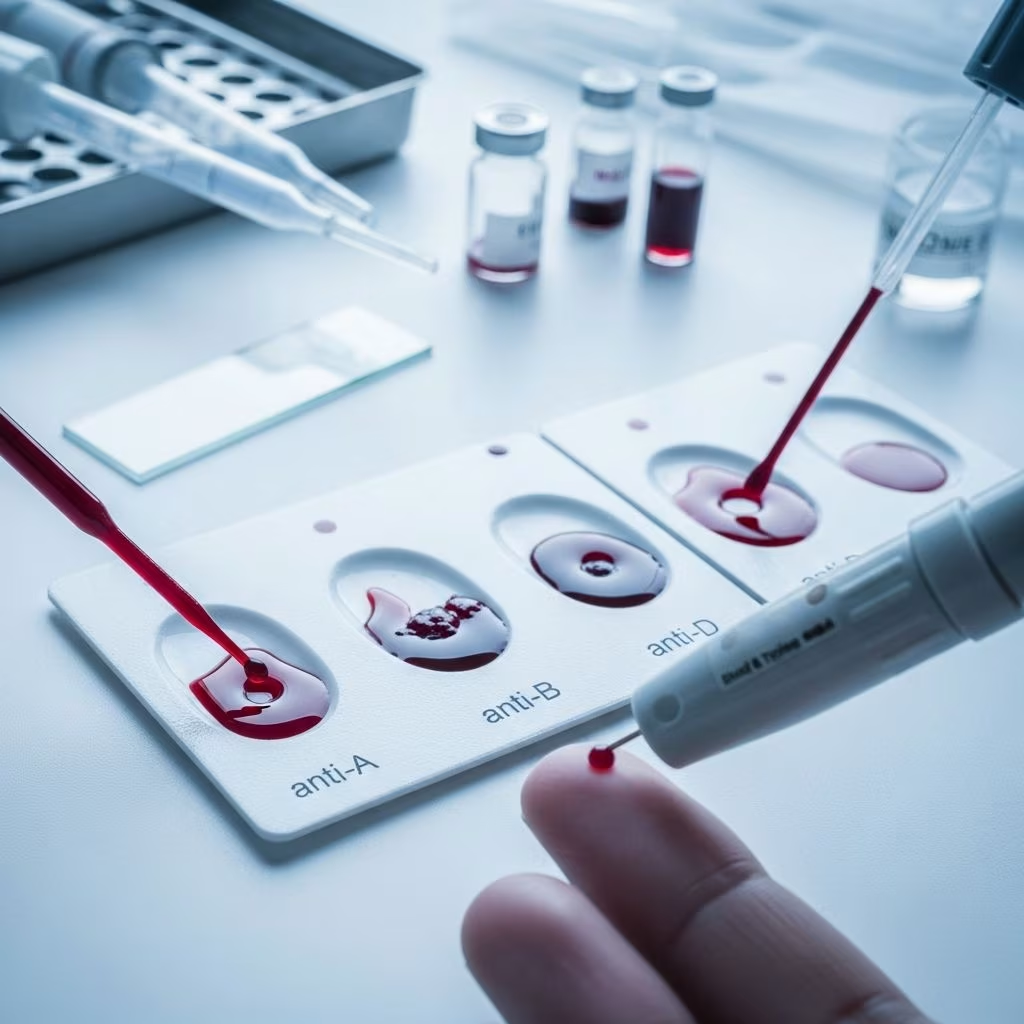
Amazon kits (~$10-20) use antibodies on finger-prick samples. Results in 2-5 minutes: clumping indicates antigens. Accurate for ABO/Rh if instructions followed.
Steps:
- Wash hands, prick finger
- Mix drops with anti-A, anti-B, anti-Rh sera
- Observe agglutination (clumps = positive)
- No clumps = negative/O
Limitations: Not for rare types; confirm clinically if critical.
Blood Type Compatibility Chart
Crucial for transfusions:
| Blood Type | Can Receive From | Can Donate To |
|---|---|---|
| A+ | A+, A-, O+, O- | A+, AB+ |
| A- | A-, O- | A+, A-, AB+, AB- |
| B+ | B+, B-, O+, O- | B+, AB+ |
| B- | B-, O- | B+, B-, AB+, AB- |
| AB+ | All types | AB+ |
| AB- | AB-, A-, B-, O- | AB+, AB- |
| O+ | O+, O- | O+, A+, B+, AB+ |
| O- | O- | All types |
Plasma reverses: AB universal donor, O recipient.
Health Implications by Blood Type
Research links types to risks (odds ratios vs. O):
- Cardiovascular: Non-O: thrombosis (1.79), heart disease (1.25), stroke (1.14).
- Cancer: B higher Hodgkin’s; O higher ALL (56.5%).
- Infections: Type-specific susceptibilities (e.g., B: E. coli).
- Metabolic: A/B higher cholesterol; mixed diabetes data.
Ethnic variations: Higher B/AB in Blacks, possibly elevating stroke. Consult doctors; types are one factor.
Frequently Asked Questions (FAQs)
What is the rarest blood type?
AB- is least common (~1% U.S.).
Can blood type change?
Rarely; usually fixed post-infancy except chimerism or bone marrow transplant.
Does blood type affect diet?
“Blood type diet” lacks evidence; eat balanced.
Is O- really universal?
Yes for red cells in emergencies; no antigens trigger reactions.
How accurate are home kits?
95%+ for ABO/Rh if used correctly; verify medically.
Final Thoughts
Determining your blood type is straightforward and valuable. Use donations for free testing while helping others. Stay informed on personal risks.
References
- Blood Type Biochemistry and Human Disease — PubMed Central/NIH. 2016-09-30. https://pmc.ncbi.nlm.nih.gov/articles/PMC5061611/
- Blood Types Explained – A, B, AB and O — American Red Cross. 2024-01-01. https://www.redcrossblood.org/donate-blood/blood-types.html
- Blood Types: What They Are and Mean for Your Health — Cleveland Clinic. 2023-11-05. https://my.clevelandclinic.org/health/treatments/21213-blood-types