Body folds, also known as flexures, are areas where skin surfaces rub together, creating warm, moist environments prone to irritation, inflammation, and infection. Common sites include behind the ears, neck folds, underarms (axillae), under the abdomen, groin, gluteal cleft, finger webs, and toe spaces. These regions favour the development of specific dermatoses due to friction, occlusion, sweat accumulation, and microbial overgrowth.
What are Body Folds?
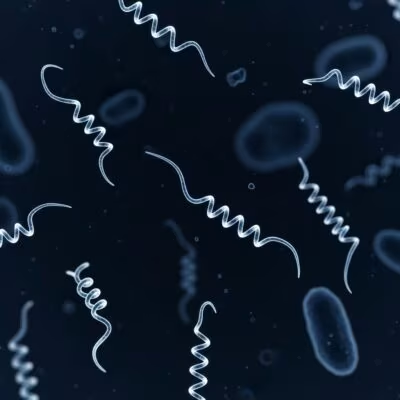
Body folds occur in areas of skin apposition, particularly in individuals with obesity, infants, or those with skin redundancies. The flexural skin has unique characteristics: thinner stratum corneum, higher pH, richer vascularity, and a distinct microbiome dominated by Corynebacterium, bacteria, and yeasts like Candida. Moisture from sweat exacerbates maceration, leading to barrier disruption and susceptibility to pathogens.
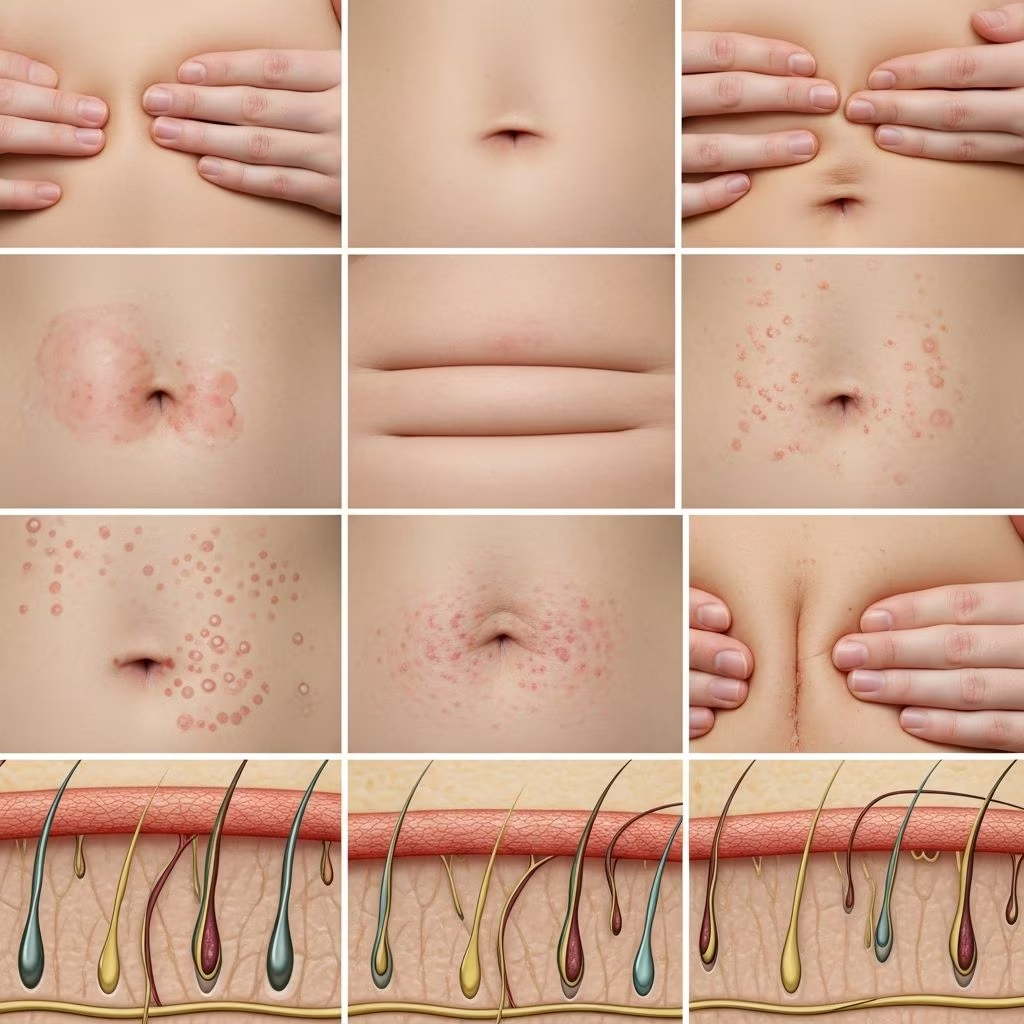
Conditions in these areas often present as erythematous plaques, erosions, or satellite pustules, differing from dry, scaly lesions elsewhere on the body.
Common Infectious Conditions
Intertrigo
Intertrigo is the most prevalent inflammatory condition in body folds, characterised by red, macerated plaques with possible fissuring and odour. It affects all ages but is common in overweight individuals and infants (napkin dermatitis). Acute cases arise suddenly, relapsing ones recur, and chronic persist beyond six weeks.
- Symptoms: Itching, burning, soreness; secondary infection may cause foul smell (e.g., Pseudomonas).
- Causes: Friction, moisture, microbiome imbalance; often compounded by Candida, bacteria, or fungi.
Candidal Intertrigo (Thrush)
Infection by Candida albicans thrives in occluded areas, presenting with bright red plaques, white scale at edges (‘macerated cornflakes’), and satellite pustules. Common in axillae, groin, inframammary folds.
Erythrasma
Caused by Corynebacterium minutissimum, this appears as well-demarcated brown/red patches in axillae or groin, fluorescing coral-pink under Wood’s lamp. Often asymptomatic but may itch.
Tinea (Dermatophyte Infection)
Trichophyton rubrum or T. interdigitale cause annular plaques with advancing borders, central clearing, and vesicles in toe webs or groin (tinea cruris).
Bacterial Infections
- Impetigo: Staphylococcus aureus, Streptococcus pyogenes – honey-crusted erosions.
- Folliculitis/Boils: S. aureus – pustules around follicles, furuncles.
Inflammatory and Irritant Conditions
Inverse Psoriasis
Smooth, shiny red plaques without scales in flexures; associated with plaques elsewhere. Triggered by Koebner phenomenon from friction.
Seborrhoeic Dermatitis
Affects nasolabial folds, post-auricular areas with greasy yellow scales. Linked to Malassezia yeast overgrowth in sebaceous-rich skin.
Contact Dermatitis
Irritant from soaps, wipes; allergic from nickel, fragrances. Presents as eczematous changes in affected folds.
Hidradenitis Suppurativa
Chronic inflammatory disease of apocrine glands in axillae/groin, forming nodules, abscesses, sinus tracts.
Rare and Systemic Conditions
- Hailey-Hailey Disease: Genetic acantholysis causing erosive plaques in intertriginous areas.
- Pemphigus Vegetans: Vegetating lesions in flexures.
- Extramammary Paget Disease: Eccrine carcinoma mimic with eczematous changes.
Risk Factors and Predispositions
| Risk Factor | Description | Examples |
|---|---|---|
| Obesity | Increases fold depth/moisture | Abdominal apron, pannus |
| Infancy | Diaper area exposure | Napkin dermatitis |
| Diabetes | Impaired immunity, hyperglycaemia favours Candida | Recurrent infections |
| Immunosuppression | HIV, steroids | Severe candidiasis |
| Footwear | Tight shoes cause toe-web tinea | Athlete’s foot extension |
Diagnosis
Clinical examination suffices for most, focusing on morphology, distribution, odour, and satellite lesions. Aids include:
- Wood’s Lamp: Coral-red for erythrasma.
- KOH Prep: Hyphae in tinea/Candida, spores.
- Culture/Swab: For bacteria/yeast.
- Biopsy: If psoriasis, hidradenitis, or malignancy suspected.
Management and Treatment
General Measures
- Keep folds dry: Absorbent powders (talc-free), barrier creams (zinc oxide).
- Reduce friction: Loose clothing, weight loss.
- Hygiene: Gentle cleansing, avoid occlusives.
Specific Treatments
| Condition | First-Line Treatment | Alternatives |
|---|---|---|
| Intertrigo (uncomplicated) | Low-potency steroid + antifungal combo (e.g., clotrimazole/betamethasone) | Drying agents |
| Candidal | Topical azoles (clotrimazole 1% bd 2-4w) | Oral fluconazole |
| Erythrasma | Topical erythromycin; fusidic acid | Oral erythromycin/clindamycin |
| Tinea | Terbinafine cream 1-2w | Oral terbinafine (severe) |
| Bacterial | Mupirocin ointment | Systemic antibiotics |
| Inverse Psoriasis | Topical calcineurin inhibitors (tacrolimus); vit D analogues | Biologics |
Avoid prolonged steroids in flexures to prevent atrophy/striae.
Prevention
- Daily Care: Pat dry after bathing, use breathable fabrics.
- Lifestyle: Weight management, diabetes control.
- Infants: Frequent diaper changes, barrier protection.
Frequently Asked Questions (FAQs)
What causes rash in body folds?
Primarily moisture, friction, and microbial overgrowth leading to intertrigo, often secondarily infected.
Is intertrigo contagious?
Not itself, but secondary infections like tinea or Candida can spread.
How long does it take for intertrigo to heal?
1-2 weeks with treatment; chronic cases may recur without addressing predispositions.
When to see a doctor for body fold rash?
If persistent >2 weeks, spreading, painful, feverish, or unresponsive to OTC antifungals.
Can diet affect skin folds conditions?
Yes, high sugar promotes yeast; obesity exacerbates folds.
References
- Intertrigo (Rash in body folds): Causes, Images, and More — DermNet NZ. 2023. https://dermnetnz.org/topics/intertrigo
- Skin diseases and conditions affecting body folds — DermNet NZ. 2015. https://dermnetnz.org/topics/skin-diseases-and-conditions-affecting-body-folds
- Seborrheic Dermatitis: Symptoms, Causes & Treatment — Cleveland Clinic. 2023-10-12. https://my.clevelandclinic.org/health/diseases/14403-seborrheic-dermatitis