
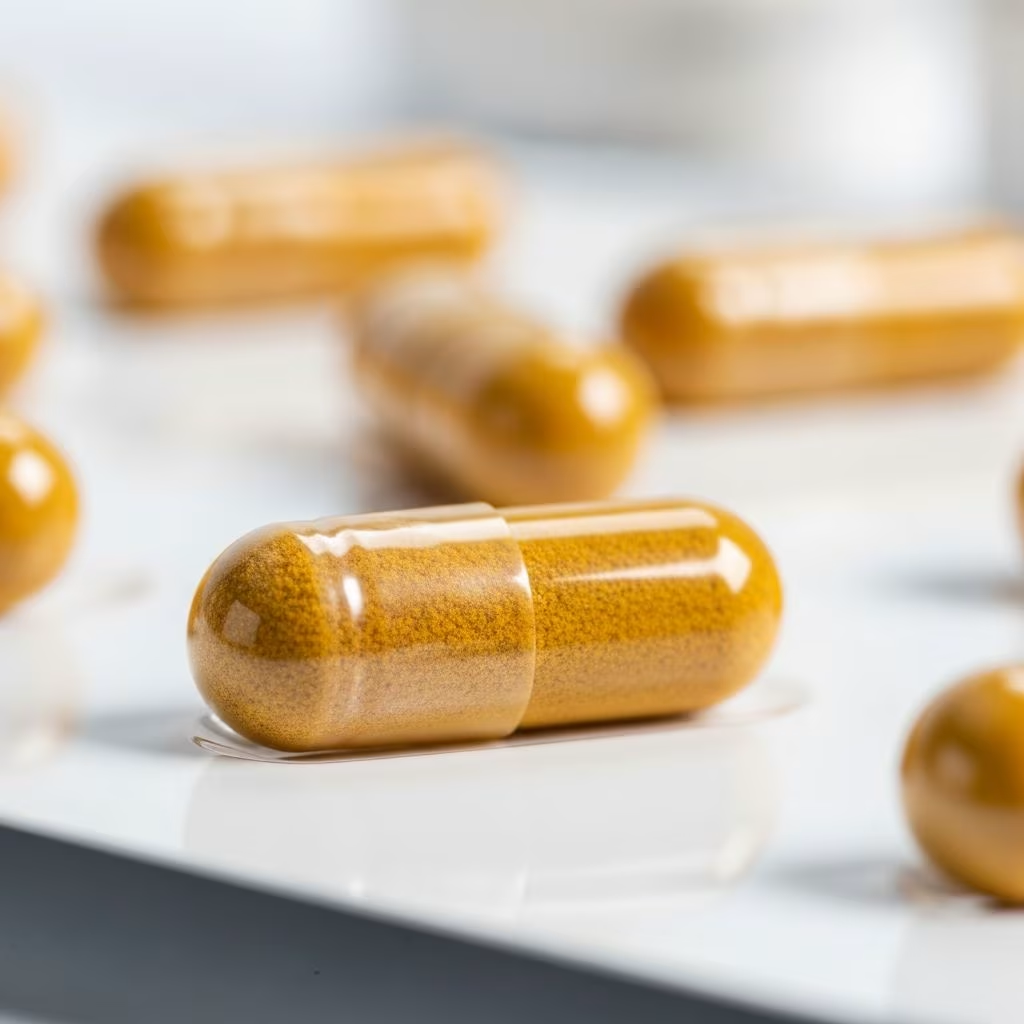
Clindamycin stands as a vital lincosamide antibiotic employed to combat various bacterial infections, particularly those involving anaerobic bacteria and certain gram-positive organisms. Derived semi-synthetically, it targets conditions ranging from skin infections to severe intra-abdominal issues.
Understanding Clindamycin’s Core Applications
This medication proves effective against a spectrum of infections where other antibiotics may fall short, especially in penicillin-allergic patients. It addresses respiratory tract infections, skin and soft tissue disorders, bone and joint ailments, and pelvic inflammatory conditions.
- Anaerobic infections: Including dental abscesses, peritonitis, and lung abscesses caused by organisms like Bacteroides and Fusobacterium.
- Gram-positive coverage: Effective against Staphylococcus aureus (including some MRSA strains) and Streptococcus species, but not Enterococcus.
- Topical uses: Widely prescribed for acne vulgaris through creams, gels, or lotions, often combined with benzoyl peroxide.
- Other indications: Bacterial vaginosis via vaginal formulations and prophylaxis for endocarditis in high-risk surgeries.
In combination therapies, clindamycin pairs with agents like vancomycin for toxic shock syndrome, leveraging its toxin-suppressing properties.
How Clindamycin Targets Bacteria
Clindamycin operates primarily as a bacteriostatic agent, halting bacterial growth by disrupting protein synthesis. It binds to the 50S subunit of the bacterial ribosome, specifically the 23S rRNA, preventing ribosomal translocation and peptide chain elongation.
This mechanism mirrors macrolides but offers superior activity over lincomycin. At high concentrations, it can become bactericidal. Its structural mimicry of tRNA molecules further impairs bacterial translation processes.
| Aspect | Description |
|---|---|
| Binding Site | 50S ribosomal subunit (23S rRNA) |
| Primary Effect | Bacteriostatic; inhibits protein synthesis |
| Key Targets | Gram-positive cocci, anaerobes |
| Resistance Mechanism | Ribosomal RNA modification; cross-resistance with macrolides |
Susceptibility varies: strong against pneumococci, streptococci, and most anaerobes, though Bacteroides fragilis resistance is rising.
Available Forms and Dosage Guidelines
Clindamycin comes in multiple formulations to suit diverse needs: oral capsules, injectable solutions, topical gels/lotions, and vaginal creams/suppositories.
- Oral: 150-450 mg every 6-8 hours for adults; adjust for children based on weight (8-25 mg/kg/day).
- Intravenous/Intramuscular: 600-2700 mg/day divided doses for severe infections.
- Topical for acne: Apply thin layer 1-2 times daily.
- Vaginal: One applicatorful nightly for 7 days.
Dosages must account for infection severity, patient age, renal/hepatic function, and obesity, as volume of distribution remains consistent. Always complete the full course to prevent resistance.
Critical Safety Considerations and Side Effects
While effective, clindamycin carries risks, notably Clostridium difficile-associated diarrhea (CDAD), ranging from mild to fatal colitis. This stems from gut flora disruption favoring C. difficile overgrowth.
Common adverse effects include:
- Gastrointestinal: Nausea, vomiting, diarrhea (up to 20% of users).
- Skin: Rash, pruritus; rare Stevens-Johnson syndrome.
- Hematologic: Transient neutropenia, eosinophilia.
- Hepatic: Elevated enzymes.
Serious risks: Pseudomembranous colitis, anaphylaxis in hypersensitive individuals. Monitor for bloody stools persisting post-treatment.
Interactions and Contraindications
Avoid in patients with prior hypersensitivity to clindamycin or lincomycin, or history of regional enteritis/ulcerative colitis.
| Drug Class | Interaction | Management |
|---|---|---|
| Neuromuscular Blockers | Potentiates effects | Use caution; monitor respiration |
| Erythromycin | Antagonism via shared binding | Avoid concurrent use |
| Kaolin/Pectin | Reduces absorption | Separate by 2 hours |
| Live Vaccines | May diminish efficacy | Defer vaccination |
Adjust in renal impairment; no routine dialysis removal. Pregnancy category B: use if benefits outweigh risks.
Special Patient Populations
Pregnancy and Breastfeeding
Limited human data; animal studies show no fetal harm. Excreted in breast milk—consider alternatives for nursing mothers.
Pediatrics and Elderly
Safe in children over 1 month; weight-based dosing. Elderly face higher CDAD risk due to comorbidities.
Obese Patients
Pharmacokinetics similar when normalized to total body weight; standard dosing applies.
Practical Tips for Effective Use
Take oral doses with full glass of water to prevent esophageal irritation. For capsules, avoid lying down for 30 minutes post-dose. Topical applications: cleanse area first, avoid eyes/mouth.
- Store at room temperature; protect from light/moisture.
- Report severe diarrhea, jaundice, or allergic signs immediately.
- Probiotics may mitigate GI upset, though evidence varies.
Resistance concerns: Reserve for confirmed susceptible infections via culture.
Frequently Asked Questions (FAQs)
What if I miss a dose?
Take as soon as remembered unless near next dose; do not double up. Consult prescriber for IV misses.
Can clindamycin treat viral infections like colds?
No—it targets bacteria only. Misuse promotes resistance.
How long until improvement?
Symptoms often ease in 48-72 hours; complete therapy regardless.
Is it safe for acne in pregnancy?
Topical use generally preferred over systemic; discuss with doctor.
Does alcohol interact?
No direct interaction, but avoid excess to support immunity.
Monitoring and Follow-Up
Liver/kidney function tests for prolonged use. Stool tests if persistent diarrhea. Culture sensitivities guide therapy adjustments.
Clindamycin remains a cornerstone antibiotic when used judiciously, balancing efficacy against risks like CDAD.
References
- Clindamycin – Wikipedia — Wikipedia. 2023. https://en.wikipedia.org/wiki/Clindamycin
- Clindamycin: Uses, Interactions, Mechanism of Action | DrugBank — DrugBank. 2023. https://go.drugbank.com/drugs/DB01190
- Clindamycin | Bacterial Targets, Mechanism of Action, Adverse Effects — JJ Medicine (YouTube). 2019-02-23. https://www.youtube.com/watch?v=PvSNGf8jGEs
- CLEOCIN HCl® clindamycin hydrochloride capsules, USP — FDA (Pfizer). 2020. https://www.accessdata.fda.gov/drugsatfda_docs/label/2020/050162s102lbl.pdf
- Clindamycin – Molecule of the Week — American Chemical Society. 2023. https://www.acs.org/molecule-of-the-week/archive/c/clindamycin.html
- Clindamycin – Infectious Diseases — Merck Manual Professional Edition. 2023. https://www.merckmanuals.com/professional/infectious-diseases/bacteria-and-antibacterial-medications/clindamycin