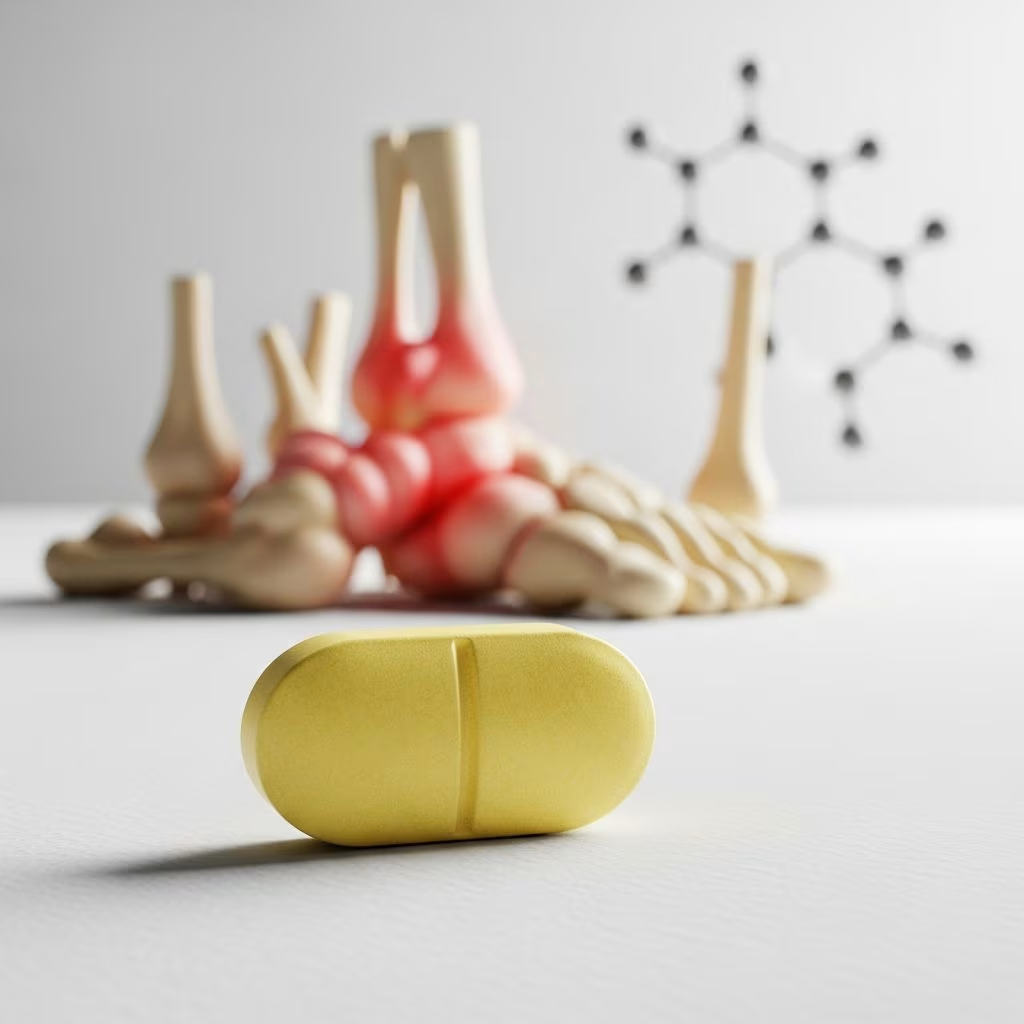
Colchicine serves as a key medication for managing gout, a form of inflammatory arthritis caused by uric acid crystal buildup in joints. It effectively reduces the pain and swelling of acute attacks and helps prevent future flares, particularly during uric acid-lowering therapy.
Understanding Gout and Colchicine’s Role
Gout occurs when monosodium urate crystals deposit in joints, triggering intense inflammation. This leads to sudden, severe pain often in the big toe, known as podagra. Colchicine targets the underlying inflammatory processes rather than lowering uric acid levels directly, making it ideal for rapid symptom relief and long-term prevention.
Unlike painkillers or NSAIDs, colchicine specifically disrupts neutrophil activity and other inflammatory pathways activated by these crystals. Its use dates back centuries, but modern research confirms its efficacy in contemporary treatment protocols.
How Colchicine Works Against Gout Inflammation
Colchicine’s primary action involves binding to tubulin, a protein essential for microtubule formation in cells. Microtubules are crucial for cell structure, movement, and division. By inhibiting β-tubulin polymerization, colchicine disrupts these functions, particularly in inflammatory cells.
- Neutrophil inhibition: Prevents activation, migration, and degranulation of neutrophils, key players in gout flares.
- Inflammasome blockade: Stops NLRP3 inflammasome activation, reducing interleukin-1β release and subsequent inflammation.
- Chemotaxis disruption: Limits white blood cell movement to affected joints.
- Cytokine and leukotriene reduction: Lowers production of pro-inflammatory mediators.
These effects begin within hours of dosing, with peak benefits in 12-72 hours for acute flares. At low doses, it blocks microtubule growth; at higher concentrations, it causes depolymerization.
Dosing Guidelines for Acute Gout Flares
For treating an active gout attack, start colchicine at the first sign of symptoms to maximize effectiveness. The standard regimen is 1.2 mg initially, followed by 0.6 mg one hour later, not exceeding 1.8 mg in the first hour.
| Scenario | Initial Dose | Follow-up Dose | Max Daily Dose |
|---|---|---|---|
| Acute Flare (no prophylaxis) | 1.2 mg | 0.6 mg after 1 hour | 1.8 mg/day |
| Acute Flare (on prophylaxis) | 1.2 mg | 0.6 mg after 1 hour | Wait 12 hours before prophylaxis dose |
| Severe Hepatic Impairment | Same as above | Monitor closely | Repeat only every 2 weeks |
Take orally with or without food. Effects typically improve symptoms within 12-24 hours, though full resolution may take days.
Prophylactic Use to Prevent Gout Flares
Long-term low-dose colchicine (0.6 mg once or twice daily) prevents flares, especially when initiating urate-lowering drugs like allopurinol. Uric acid fluctuations during therapy can mobilize crystals, provoking attacks; prophylaxis mitigates this risk for at least 6 months.
Studies show it significantly reduces flare frequency when combined with uric acid-lowering agents. Adjust doses for kidney or liver issues to avoid accumulation.
Who Benefits Most from Colchicine
Ideal candidates include those with frequent flares unable to tolerate NSAIDs or steroids. It’s FDA-approved for gout prophylaxis, acute treatment, and familial Mediterranean fever. Off-label uses extend to pseudogout and cardiovascular risk reduction in high-risk patients.
- Patients starting allopurinol or febuxostat.
- Those with contraindications to other anti-inflammatories.
- Individuals with multiple cardiovascular risk factors.
Potential Side Effects and Safety Concerns
Colchicine has a narrow therapeutic window; overdosing risks severe toxicity. Common issues include gastrointestinal upset: diarrhea, nausea, vomiting, and abdominal pain, often dose-related.
Serious risks involve myopathy (muscle weakness), neuropathy, bone marrow suppression, and organ failure in overdose or with interacting drugs. Monitor for rhabdomyolysis in elderly or renally impaired patients.
- Mild effects: Resolve with dose reduction.
- Severe toxicity: Treat with supportive care; no specific antidote.
Avoid in severe kidney/liver disease without adjustment. It’s metabolized by CYP3A4 and excreted renally, so interactions matter.
Drug Interactions to Watch For
Colchicine levels rise with CYP3A4 inhibitors (e.g., clarithromycin, ketoconazole) or P-gp inhibitors (e.g., cyclosporine), increasing toxicity risk. Strong inhibitors contraindicate use; moderate ones require dose halving.
| Drug Class | Examples | Recommendation |
|---|---|---|
| CYP3A4 Inhibitors | Clarithromycin, itraconazole | Avoid or halve dose |
| P-gp Inhibitors | Cyclosporine, verapamil | Contraindicated |
| Statins | Atorvastatin | Monitor for myopathy |
| HMG-CoA Reductase Inhibitors | Simvastatin | Limit colchicine to 0.3 mg/day |
Always review medications with a healthcare provider.
Special Considerations for Patient Groups
Kidney Impairment: Reduce dose by 50-75% if CrCl <30 mL/min; avoid in end-stage disease.
Liver Impairment: No adjustment for mild-moderate; cautious use in severe, with close monitoring.
Pregnancy/Breastfeeding: Category C; use only if benefits outweigh risks. Limited data on excretion in milk.
Elderly: Start low due to higher toxicity risk from reduced clearance.
Lifestyle Tips Alongside Colchicine Therapy
Combine medication with gout-friendly habits: maintain healthy weight, limit alcohol and purine-rich foods (red meat, shellfish), stay hydrated, and exercise regularly. These enhance long-term control.
Monitoring and When to Seek Help
Track symptoms, side effects, and blood tests for kidney/liver function. Contact a doctor for worsening pain, persistent diarrhea, muscle pain, or signs of infection.
Frequently Asked Questions (FAQs)
What if I miss a prophylactic dose of colchicine?
Take it as soon as remembered unless near the next dose. Do not double up to avoid toxicity.
Can colchicine cure gout?
No, it manages symptoms and prevents flares. Uric acid-lowering drugs address the root cause.
How quickly does colchicine work for a gout flare?
Improvement often starts in 12-24 hours, peaking at 48-72 hours.
Is colchicine safe long-term?
Yes, at low prophylactic doses, with monitoring for side effects.
Can I drink alcohol while on colchicine?
Limit intake, as alcohol worsens gout and may increase side effects.
Emerging Research and Broader Applications
Beyond gout, colchicine shows promise in cardiovascular disease prevention by reducing inflammation in atherosclerotic plaques. Trials indicate lower risks of heart attacks and strokes in at-risk patients. Ongoing studies explore its role in pericarditis and other autoinflammatory conditions.
In summary, colchicine remains a cornerstone of gout management due to its targeted anti-inflammatory effects. Proper dosing and monitoring ensure safety and efficacy.
References
- Mechanism of action of colchicine in the treatment of gout — PubMed. 2014-08-26. https://pubmed.ncbi.nlm.nih.gov/25151572/
- Colchicine – StatPearls — NCBI Bookshelf, NIH. 2023. https://www.ncbi.nlm.nih.gov/books/NBK431102/
- Colchicine: Uses, Interactions, Mechanism of Action — DrugBank. Recent. https://go.drugbank.com/drugs/DB01394
- Colchicine — Wikipedia (informed by primary sources). Recent. https://en.wikipedia.org/wiki/Colchicine
- The Therapeutic Potential of the Ancient Drug Colchicine — American College of Cardiology. 2021-04-19. https://www.acc.org/latest-in-cardiology/articles/2021/04/19/11/52/the-therapeutic-potential-of-the-ancient-drug-colchicine
- Colchicine: the good, the bad, the ugly and how to minimize the risks — Rheumatology (Oxford Academic). 2024. https://academic.oup.com/rheumatology/article/63/4/936/7455266