
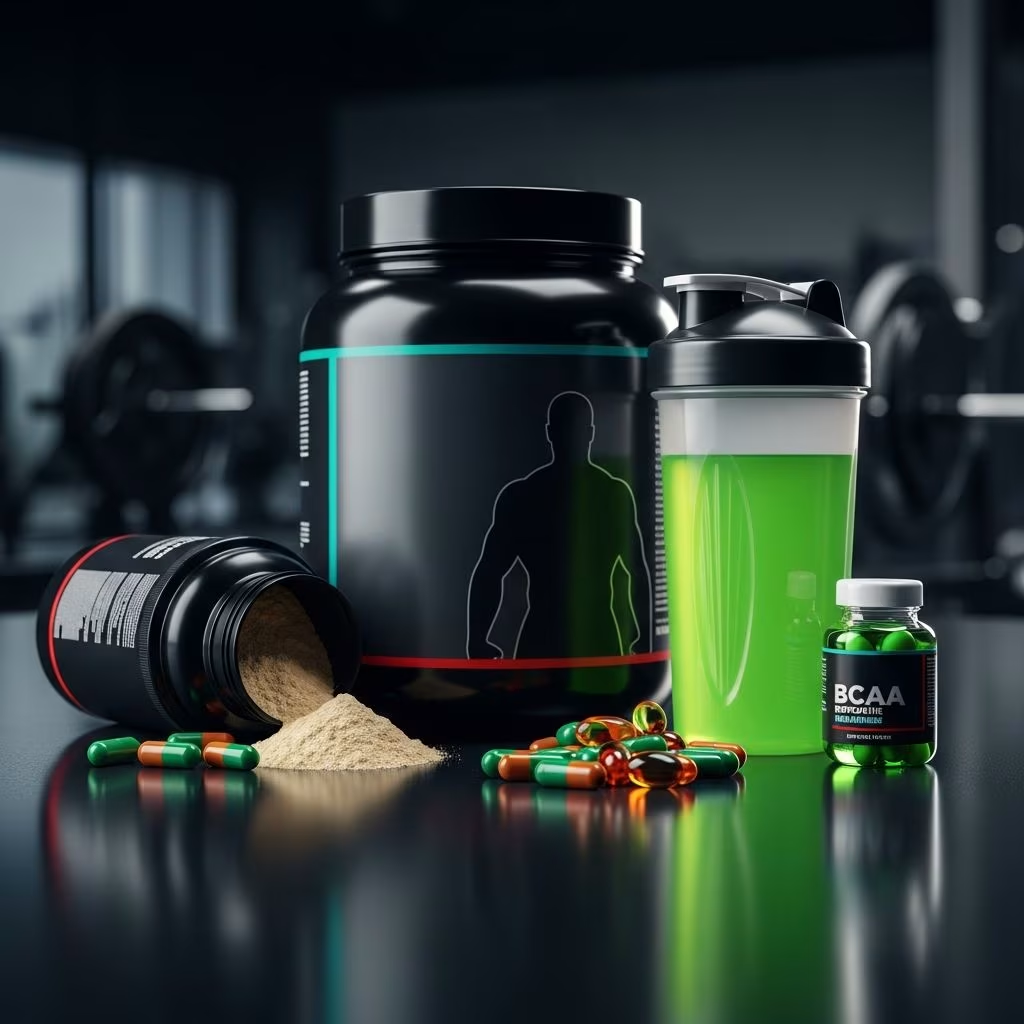
Creatine emerges as the most effective workout supplement according to fitness experts and scientific research, consistently shown to boost muscle growth, strength, power output, and exercise performance across various training modalities. This naturally occurring compound, found in meat and fish, supports high-intensity efforts by replenishing ATP energy stores in muscles, leading to noticeable gains in as little as four weeks with proper supplementation.
Why Creatine Tops the List of Workout Supplements
Among dozens of supplements marketed for athletic performance, creatine monohydrate receives unanimous praise from sources like the National Academy of Sports Medicine (NASM) and the National Institutes of Health (NIH) Office of Dietary Supplements for its robust evidence base. Unlike many alternatives with mixed or limited results, creatine has been extensively studied in thousands of trials, demonstrating reliable ergogenic effects for both trained athletes and beginners.
Creatine’s primary mechanism involves increasing phosphocreatine stores in skeletal muscle, which rapidly regenerates adenosine triphosphate (ATP)—the key energy currency for short, explosive activities like weightlifting, sprinting, and high-intensity interval training (HIIT). This leads to improved work capacity, allowing users to perform more reps, lift heavier loads, and recover faster between sets.
How Creatine Works in the Body
During intense exercise, muscles deplete ATP within seconds, shifting to less efficient anaerobic pathways that produce lactic acid and fatigue. Creatine supplementation elevates intramuscular phosphocreatine levels by 20-40%, delaying this fatigue and enabling sustained high-output performance. Over time, this translates to greater training volume and progressive overload, the cornerstones of muscle hypertrophy and strength adaptation.
Research highlights additional benefits: creatine draws water into muscle cells (cell volumization), promoting an anabolic environment that enhances protein synthesis. It also buffers hydrogen ions to reduce acidity, further combating fatigue. Long-term use supports neuromuscular adaptations, increasing fast-twitch fiber recruitment for explosive power.
Scientific Evidence Backing Creatine
Meta-analyses confirm creatine’s efficacy. A review by the International Society of Sports Nutrition (ISSN) notes 4-15% improvements in strength and 1-3 kg lean mass gains over 4-12 weeks. NASM cites studies showing muscle mass increases in just four weeks, particularly when paired with resistance training.
In one NIH-referenced trial, participants supplementing 5g daily post-workout experienced faster recovery and higher mean power output in cycling sprints compared to placebo. For women and vegetarians—who often have lower baseline creatine levels—benefits are even more pronounced, with up to 20% greater strength gains.
| Study Focus | Key Findings | Source |
|---|---|---|
| Muscle Mass | 1-3kg gain in 4-12 weeks | |
| Strength | 4-15% increase | |
| Power Output | Improved in sprints/HIIT | |
| Recovery | Faster post-exercise |
Recommended Dosing and Timing for Creatine
Experts recommend a loading phase of 20g daily (split into 4x5g doses) for 5-7 days to saturate muscles quickly, followed by a maintenance dose of 3-5g daily. Alternatively, 3-5g daily without loading yields full effects in 3-4 weeks. Post-workout timing maximizes uptake, especially with carbohydrates or protein to spike insulin and enhance transport.
- Loading: 20g/day (4x5g) for 5-7 days
- Maintenance: 3-5g/day indefinitely
- Best Timing: Post-workout with carbs/protein
- Hydration: Drink extra water to support cell volumization
Micronized creatine monohydrate is the gold standard—pure, affordable, and most researched form. Cycle off every 8-12 weeks if desired, though continuous use is safe for healthy adults.
Who Benefits Most from Creatine?
Strength athletes, bodybuilders, sprinters, and CrossFitters see the biggest gains due to creatine’s focus on anaerobic performance. Endurance athletes may use it for high-intensity intervals within longer sessions. Vegetarians/vegans, older adults combating sarcopenia, and females often experience amplified effects from low baseline levels.
Even non-athletes benefit: clinical trials show creatine aids rehabilitation, cognitive function under fatigue, and bone health when combined with resistance training.
Safety Profile and Common Myths
Creatine is among the safest supplements, with over 30 years of data showing no adverse effects on kidneys, liver, or heart in healthy users at recommended doses. Myths about hair loss, bloating, or compartment syndrome stem from misuse (e.g., excessive loading without hydration). The NIH confirms doses up to 30g/day short-term are safe.
- Myth: Causes kidney damage – Debunked; only risky for pre-existing conditions
- Myth: Only for young men – Effective across ages/genders
- Fact: Weight gain – Initial 1-2kg water weight, then lean mass
Consult a doctor if you have renal issues. Pair with 3-4L daily water intake.
Creatine vs. Other Popular Workout Supplements
While effective, creatine outperforms many rivals:
| Supplement | Benefits | Evidence Strength | Vs. Creatine |
|---|---|---|---|
| Protein Powder | Muscle repair | Strong | Complements creatine |
| Beta-Alanine | Endurance >60s | Moderate | Less versatile |
| HMB | Recovery, anti-catabolic | Moderate | Beneficial for novices |
| L-Arginine | Blood flow | Weak | Limited results |
| BCAAs | Reduce soreness | Moderate | Redundant with protein |
Stacking creatine with whey protein or carbs amplifies results via insulin-mediated uptake. Beta-alanine (4-6g/day) pairs well for buffering in longer efforts.
Expert Quotes on Creatine
“Creatine is one of the most widely studied supplements—namely for its ability to increase muscle mass! Research has shown increases in as little as 4 weeks.” – NASM
“Beta-alanine and creatine improve high-intensity performance, but creatine shows broader strength and hypertrophy benefits.” – NIH/ISSN
Practical Tips for Maximizing Creatine Results
To optimize gains:
- Combine with progressive resistance training 3-5x/week
- Track progress: Log reps, weights, body comp
- Eat surplus calories/protein (1.6-2.2g/kg bodyweight)
- Sleep 7-9 hours for recovery
- Reassess every 4 weeks; adjust training
Avoid caffeine excess during loading, as it may blunt uptake.
Frequently Asked Questions (FAQs)
Is creatine safe for long-term use?
Yes, studies support safe continuous use for years in healthy individuals, with no organ damage at 3-5g/day.
Do I need to load creatine?
Loading accelerates saturation but isn’t mandatory; steady 5g/day works over 28 days.
Will creatine make me look bloated?
Intracellular water retention enhances fullness, not subcutaneous bloat; stay hydrated.
Can women take creatine?
Absolutely—women gain similar strength/muscle benefits, often more due to lower natural levels.
What’s the best creatine form?
Micronized monohydrate: purest, cheapest, most effective.
Conclusion: Make Creatine Your Go-To Supplement
With unmatched evidence for performance, growth, and safety, creatine deserves a spot in every serious fitness regimen. Start today for measurable results backed by experts and science.
References
- The 8 Best Supplements for Muscle Growth — National Academy of Sports Medicine (NASM). 2023. https://www.nasm.org/resource-center/blog/supplements-for-muscle-growth
- Dietary Supplements for Exercise and Athletic Performance — National Institutes of Health (NIH), Office of Dietary Supplements. 2023-10-12. https://ods.od.nih.gov/factsheets/ExerciseAndAthleticPerformance-HealthProfessional/
- Maximizing Performance: Discover the Best Supplements — NDL Pro Health. 2024. https://ndlprohealth.com/en-mx/blogs/tips/maximizing-performance