Dermatophyte infections, commonly known as ringworm or tinea, are superficial fungal infections caused by dermatophytes—filamentous fungi specialized in degrading keratin in skin, hair, and nails. These infections are among the most prevalent worldwide, affecting millions annually, with classification, transmission, and clinical patterns varying by species.
What are dermatophytes?
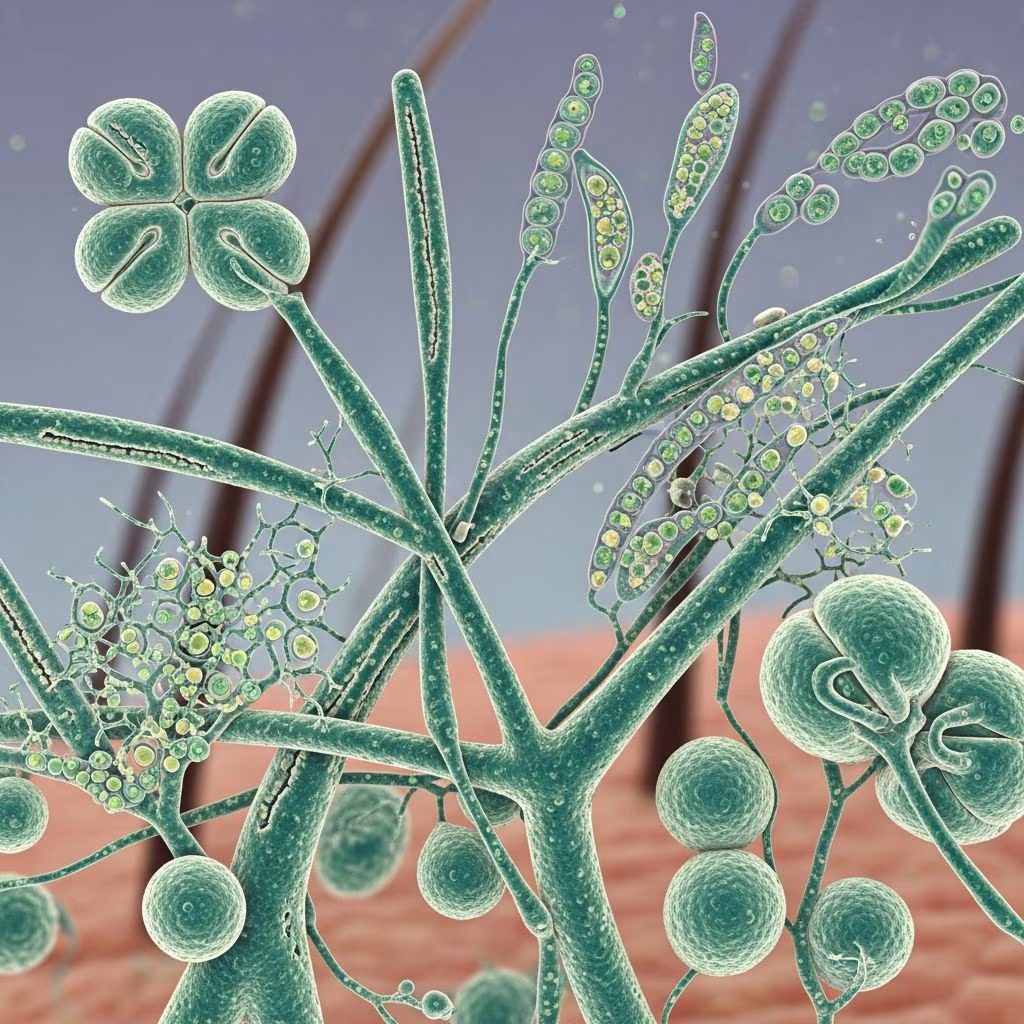
Dermatophytes are a group of closely related filamentous fungi belonging to the genera Trichophyton, Microsporum, Epidermophyton, and emerging genera like Nannizzia, Paraphyton, Lophophyton, and Arthroderma, capable of invading keratinized tissues such as the stratum corneum, hair, and nails. Unlike other fungi, they produce keratinases that enable tissue invasion without penetrating viable epidermis, leading to superficial infections. There are over 40 species, categorized by habitat: anthropophilic (human-adapted), zoophilic (animal-adapted), and geophilic (soil-dwelling), influencing infection severity and transmission.
Classification of dermatophytes
Dermatophytes are classified by genera, ecological habitat, and disease patterns. Genera-based classification includes Trichophyton (skin, hair, nails), Epidermophyton (skin, nails), and Microsporum (skin, hair). Habitat classification is clinically vital: anthropophiles cause chronic, mild infections; zoophiles inflammatory, acute ones; geophiles severe but rare.
Classification based on genera
- Trichophyton: Over 20 species; infects skin, hair, nails (e.g., T. rubrum, T. mentagrophytes).
- Microsporum: Infects skin and hair (e.g., M. canis, M. gypseum).
- Epidermophyton: Primarily E. floccosum; skin and nails, not hair.
Modern taxonomy incorporates molecular methods, recognizing seven genera.
Classification based on habitat
Anthropophilic species (human-to-human): T. rubrum (most common globally), T. tonsurans, E. floccosum, causing mild, chronic infections like tinea pedis.
Zoophilic (animal-to-human): M. canis (cats/dogs), T. verrucosum (cattle), leading to acute, inflammatory lesions.
Geophilic (soil): M. gypseum (now Nannizzia gypsea), rare but severe.
| Habitat | Examples | Common Infections | Prevalence |
|---|---|---|---|
| Anthropophilic | T. rubrum, E. floccosum | Tinea pedis, unguium | Worldwide |
| Zoophilic | M. canis, T. verrucosum | Tinea capitis, corporis | Worldwide |
| Geophilic | N. gypsea | Tinea corporis | Rare |
Classification based on disease patterns
- Tinea pedis: Feet (athlete’s foot).
- Tinea unguium: Nails (onychomycosis).
- Tinea corporis: Body ringworm.
- Tinea cruris: Groin (jock itch).
- Tinea manuum: Hands.
- Tinea capitis: Scalp.
- Tinea barbae: Beard area.
- Tinea faciei: Face.
Epidemiology
Dermatophytoses affect 20-25% of the world population, with T. rubrum predominant (up to 70% of cases). Prevalence varies: tinea pedis common in adults (men > women), tinea capitis in children (endemic in Africa/Asia). Risk factors include humidity, occlusion, immunosuppression, and animal contact. Emerging T. indotineae in South Asia spreads globally. Zoophilic cases rise with pet ownership; geophilic rarer.
Pathogenesis
Dermatophytes adhere to keratinized layers via adhesins, secrete keratinases, elastases, and proteases to degrade keratin, producing nutrients. They evade immunity by downregulating host responses and producing mycotoxins. Hyphae invade stratum corneum/hair cortex; arthroconidia survive in environment. Inflammatory response determines lesion severity: mild in anthropophilic, severe in zoophilic infections.
Clinical features
Infections manifest as annular erythematous plaques with scaling, central clearing (‘ringworm’), pruritus, or vesicles. Site-specific: interdigital maceration (pedis), onychodystrophy (unguium), kerion (capitis). Zoophilic: boggy, pustular; anthropophilic: subtle scaling.
| Infection Type | Site | Features | Common Species |
|---|---|---|---|
| Tinea pedis | Feet | Scaling, fissuring | T. rubrum |
| Tinea capitis | Scalp | Alopecia, scaling | T. tonsurans |
| Tinea corporis | Body | Annular plaques | M. canis |
Laboratory diagnosis
Diagnosis combines microscopy (KOH prep showing hyphae/arthrospores), culture (Sabouraud agar, 4 weeks, macro/micro morphology), and molecular PCR for species ID. Wood’s lamp fluoresces Microsporum. Histopathology shows periodic acid-Schiff (PAS) positive fungi.
Who gets dermatophyte infections?
Anyone, but risks higher in tropics, athletes, diabetics, immunocompromised, children (capitis), elderly (unguium). Close contact, poor hygiene increase susceptibility.
Frequently Asked Questions (FAQs)
Q: What causes ringworm?
A: Dermatophyte fungi like T. rubrum and M. canis invading keratinized tissues.
Q: How are dermatophytes transmitted?
A: Direct contact (human/animal), fomites, soil; autoinoculation possible.
Q: Is tinea capitis contagious?
A: Yes, highly via shared combs/hats; common in children.
Q: Can nails be permanently damaged?
A: Untreated tinea unguium leads to dystrophy; early treatment prevents.
Q: Do pets spread ringworm?
A: Yes, M. canis from cats/dogs is common zoophilic source.
References
- Dermatophytosis classification — Wikidoc. 2023. https://www.wikidoc.org/index.php/Dermatophytosis_classification
- Current Topics in Dermatophyte Classification and Clinical Diagnosis — PMC (NCBI). 2022-09-20. https://pmc.ncbi.nlm.nih.gov/articles/PMC9502385/
- Dermatophyte — Wikipedia. 2024. https://en.wikipedia.org/wiki/Dermatophyte
- Dermatophytes — Johns Hopkins ABX Guide. 2025. https://www.hopkinsguides.com/hopkins/view/Johns_Hopkins_ABX_Guide/540160/all/Dermatophytes
- Overview of Dermatophytoses (Ringworm, Tinea) — Merck Manuals. 2024. https://www.merckmanuals.com/home/skin-disorders/fungal-skin-infections/overview-of-dermatophytoses-ringworm-tinea