
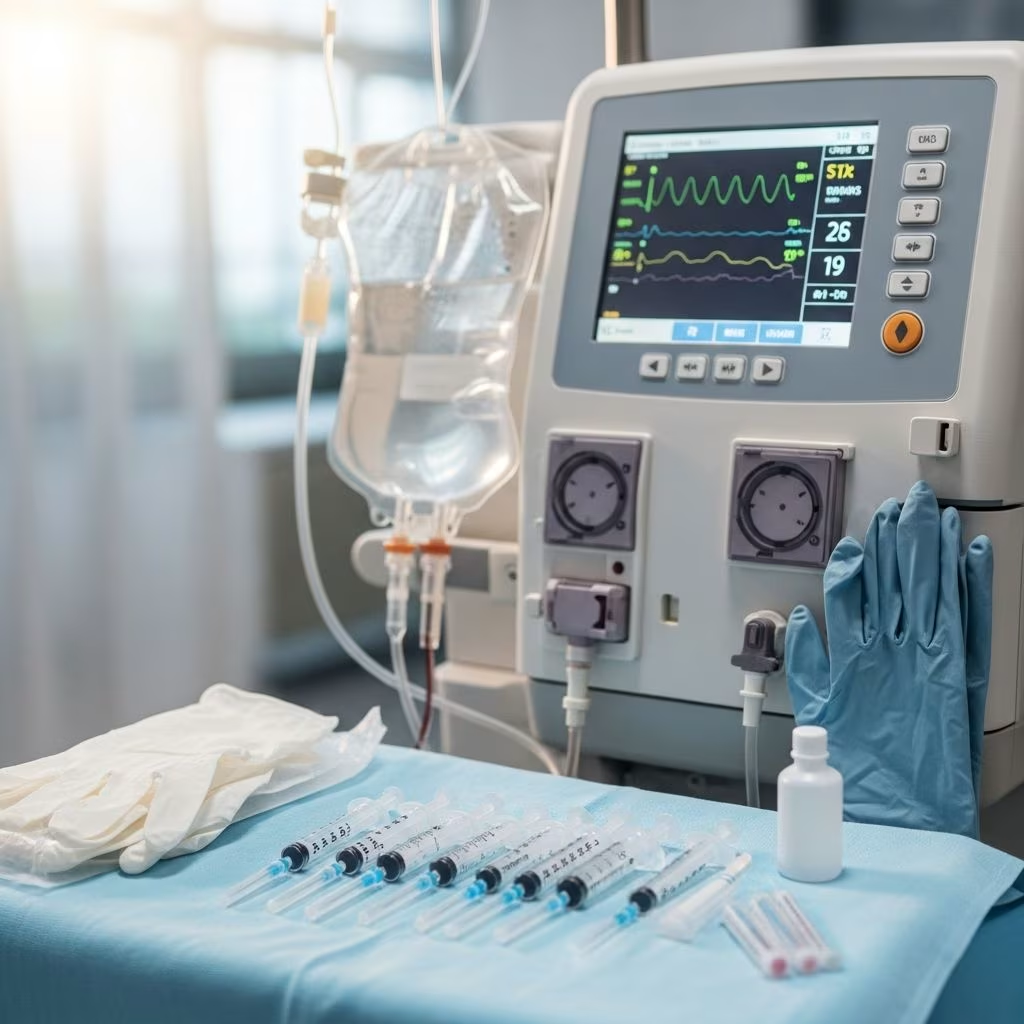
Dialysis serves as a critical lifeline for individuals with kidney failure, artificially performing essential kidney functions like waste removal and fluid balance.
Why Kidneys Fail and When Dialysis Becomes Necessary
The kidneys filter blood to eliminate waste products such as urea and creatinine, regulate electrolytes, and maintain fluid levels. When kidney function drops severely, typically measured by a glomerular filtration rate (GFR) below 10-15 mL/min/1.73 m², toxins accumulate, leading to uremia with symptoms like fatigue, nausea, swelling, and heart issues.
End-stage renal disease (ESRD) affects hundreds of thousands; in 2020, about 69% of nearly 808,000 U.S. ESRD patients relied on dialysis. Acute kidney injury (AKI) from sudden events like severe infection or dehydration may also require temporary dialysis until recovery.
Indications for starting include refractory hyperkalemia, metabolic acidosis, volume overload unresponsive to diuretics, uremic pericarditis, encephalopathy, or malnutrition. Decisions involve assessing symptoms, nutrition, and biomarkers like serum albumin alongside patient input.
Primary Types of Dialysis Therapies
Two main categories exist: hemodialysis, which externally filters blood, and peritoneal dialysis, which uses the abdominal lining.
Hemodialysis: External Blood Purification
In hemodialysis, blood exits the body via vascular access, passes through a dialyzer (artificial kidney) that mimics filtration, and returns cleaned. Sessions last 3-5 hours, typically three times weekly.
Access options include arteriovenous (AV) fistulas (preferred for longevity), AV grafts, or temporary catheters. A surgeon creates the fistula by connecting an artery to a vein, allowing it to mature over weeks.
Variations enhance outcomes:
- Conventional in-center: Supervised by professionals, fostering patient community.
- Nocturnal in-center: Extended overnight sessions (6-8 hours, 3x/week) improve appetite, energy, and daytime freedom.
- Frequent/extended: 5-7 sessions/week or longer durations control phosphorus, blood pressure, and cardiac hypertrophy, potentially reducing mortality.
- Home hemodialysis: Flexible scheduling with training.
Peritoneal Dialysis: Internal Filtration at Home
This needle-free method infuses dialysate into the peritoneal cavity via a catheter, where the peritoneum acts as a filter. Waste diffuses into the solution, drained after dwelling.
Subtypes:
- CAPD (Continuous Ambulatory): Manual exchanges 3-5 times daily.
- APD (Automated): Machine-driven overnight cycles.
PD preserves residual kidney function longer and suits active lifestyles, performable at home or travel.
Comparative Overview of Dialysis Modalities
Choosing depends on lifestyle, health, and support. Here’s a comparison:
| Aspect | Hemodialysis | Peritoneal Dialysis |
|---|---|---|
| Location | Center or home | Home primarily |
| Frequency | 3x/week, 3-5 hrs | Daily exchanges |
| Access | Vascular (needles) | Abdominal catheter |
| Flexibility | Structured | High |
| Kidney Preservation | Moderate | Better |
| Supervision | Often professional | Self-managed |
Preparation and Procedural Details
Pre-dialysis evaluation includes vascular mapping for HD or peritoneal suitability tests. Training is vital for home options.
During HD: Blood flows at 300-500 mL/min through the dialyzer; ultrafiltration removes excess fluid. Monitoring prevents hypotension or clotting.
For PD: Catheter insertion under local anesthesia; exchanges involve warming dialysate, infusing 2-3 liters, dwelling 4-6 hours, then draining.
Potential Complications and Risk Management
Dialysis isn’t perfect; common issues include:
- Hypotension: From rapid fluid shifts; managed by adjusted ultrafiltration.
- Infections: Access-site peritonitis in PD (1-2 episodes/year risk); strict hygiene key.
- Cardiovascular: 35-40% deaths; atrial fibrillation in 27% raises stroke risk.
- Mineral imbalances: Hyperphosphatemia; frequent HD helps.
- Anemia, bone disease: Supplemental erythropoietin, vitamins.
Regular labs, diet, and meds mitigate these.
Daily Life and Lifestyle Integration
Dialysis demands adaptations:
- Diet: Limit potassium, phosphorus, sodium; fluid intake to 1-1.5L/day based on urine output. Protein 1.2g/kg/day.
- Exercise: Moderate activity boosts energy; consult providers.
- Work/Travel: PD excels; HD centers worldwide.
- Emotional health: Support groups combat isolation.
Many maintain jobs, travel, and hobbies with planning.
Effectiveness, Limitations, and Alternatives
Dialysis effectively clears waste but doesn’t replicate all kidney roles like hormone production. Survival: 40-50% at 5 years on HD. No modality superiority proven; personalize.
Alternatives: Kidney transplant offers best long-term; living longer on PD may optimize for it.
Frequently Asked Questions (FAQs)
Is dialysis painful?
Initial access creation stings; treatments discomfort from needles or fullness, but tolerable with numbing.
How long can someone live on dialysis?
5-10 years average, varying by age, health; some 20+ years.
Can I exercise on dialysis?
Yes, intradialytic cycling or post-treatment walks encouraged.
Does dialysis cure kidney failure?
No, it manages; cure via transplant.
PD vs HD: Which is better?
Depends on lifestyle; PD more independent, HD more supervised.
Future Directions in Dialysis Care
Advancements include wearable devices, bioengineered kidneys, and optimized regimens reducing cardiovascular burden. Patient-centered models emphasize quality of life metrics like nutrition and function.
References
- What Are My Dialysis Choices? — DaVita. Accessed 2026. https://davita.com/treatment-options/articles/what-are-my-dialysis-choices/
- Dialysis Treatments | Diagnosis & Disease Information — Renal and Urology News. Accessed 2026. https://www.renalandurologynews.com/ddi/dialysis-treatments/
- Dialysis: Types, How It Works, Procedure & Side Effects — Cleveland Clinic. 2023-10-25. https://my.clevelandclinic.org/health/treatments/14618-dialysis
- Dialysis – Types, effectiveness, side effects — National Kidney Foundation. Accessed 2026. https://www.kidney.org/kidney-topics/dialysis
- Hemodialysis — NCBI Bookshelf (StatPearls). 2023-07-17. https://www.ncbi.nlm.nih.gov/books/NBK563296/