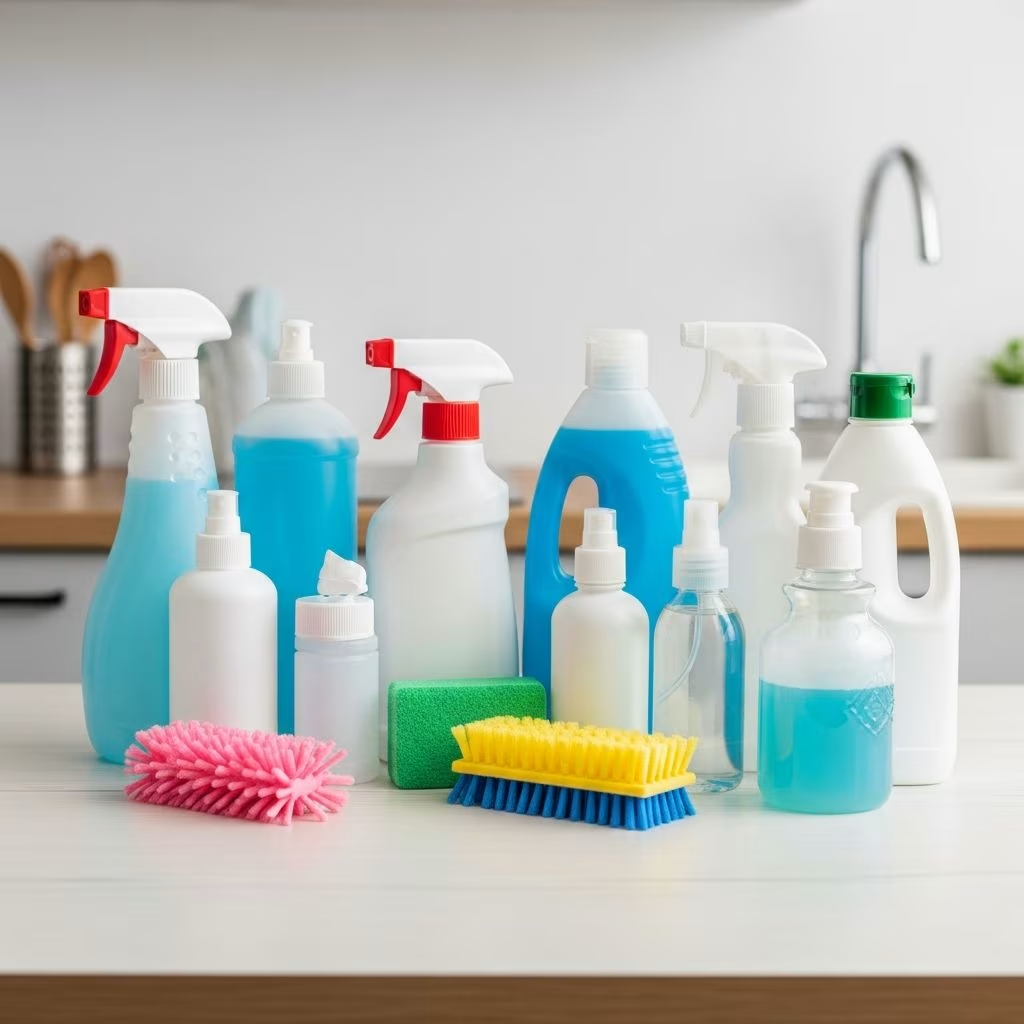
Disinfectants play a crucial role in maintaining hygiene by eliminating harmful microorganisms on surfaces. These chemical agents target bacteria, viruses, fungi, and sometimes spores, reducing the risk of infections in diverse settings from households to hospitals.
Understanding Disinfectants and Their Role
Disinfectants differ from cleaners, which remove dirt, and sanitizers, which reduce germs to safer levels. Disinfectants achieve higher log reductions (e.g., log 4-5 for viruses and bacteria), ensuring surfaces are safe from infection-causing pathogens.
Key microorganisms targeted include enveloped and non-enveloped viruses, gram-positive and gram-negative bacteria, fungi, and mycobacteria. Effectiveness depends on contact time, concentration, surface type, and organic load.
Major Categories of Chemical Disinfectants
Several chemical classes dominate the disinfectant market, each with unique properties suited to specific applications.
Quaternary Ammonium Compounds (Quats)
Quats are cationic surfactants widely used for their broad-spectrum activity against bacteria and some viruses. They disrupt microbial cell membranes, leading to cell death.
- Pros: Odorless, non-corrosive, non-staining, biodegradable (though aquatic toxicity noted), low-cost, suitable for one-step cleaning-disinfection.
- Cons: Less effective against certain non-enveloped viruses, mycobacteria, or spores; potential for resistance buildup with overuse.
- Uses: Floors, walls, furniture, healthcare non-critical surfaces, computer keyboards.
Hypochlorites (Bleach-Based)
Sodium hypochlorite, the active in household bleach, oxidizes microbial proteins and nucleic acids. It’s a powerhouse against a wide array of pathogens.
- Pros: Broad-spectrum (bactericidal, virucidal, fungicidal, sporicidal, tuberculocidal), inexpensive, effective on food surfaces if diluted properly.
- Cons: Corrosive to metals, irritant to skin/eyes, inactivated by organic matter, unstable in light/heat; requires two-step cleaning first.
- Uses: Healthcare spot-disinfection, blood spills (1:10-1:100 dilution), water treatment, countertops.
Iodophors (Iodine Complexes)
Iodophors release free iodine to penetrate and kill microbes. They remain stable in hard water.
- Pros: Effective against bacteria, viruses, fungi; useful for medical equipment.
- Cons: Stains plastics, higher cost, must be diluted.
- Uses: Thermometers, hydrotherapy tanks, endoscopes, blood culture bottles.
Hydrogen Peroxide and Peroxides
Hydrogen peroxide (HP) generates reactive oxygen species that damage microbial components. Stabilized versions enhance efficacy.
- Pros: Broad-spectrum (bactericidal, virucidal, sporicidal, fungicidal), breaks down to water/oxygen (eco-friendly), fast-acting, non-corrosive at low concentrations.
- Cons: Less stable, can be irritant in high concentrations.
- Uses: Healthcare surfaces, vaporized for room decontamination (effective vs. C. difficile, SARS-CoV-2).
Phenolics
Derivatives of phenol disrupt cell walls and precipitate proteins. Effective even with organic soil.
- Pros: Tuberculocidal, broad-spectrum, one-step cleaning-disinfection on many surfaces.
- Cons: Potential skin irritation, lingering odor, less effective against some non-enveloped viruses.
- Uses: Healthcare environmental surfaces like bedrails, tables.
Alcohols
Ethyl or isopropyl alcohol denatures proteins and dissolves lipids. Best at 60-90% concentration.
- Pros: Rapid action, tuberculocidal/virucidal/bactericidal, evaporates quickly.
- Cons: Ineffective against spores, flammable, not for large surfaces.
- Uses: Small non-porous items, skin antisepsis (related).
Comparing Disinfectant Types
Select based on pathogen, surface, and environment. Here’s a comparison:
| Type | Spectrum | Contact Time | Cost | Best For |
|---|---|---|---|---|
| Quats | Bacteria, some viruses | 5-10 min | Low | General surfaces |
| Hypochlorites | Broad (incl. spores) | 10 min | Very low | Blood spills |
| Iodophors | Broad | 10 min | Medium | Equipment |
| Peroxides | Broad (incl. spores) | 1-5 min | Medium | Eco-friendly needs |
| Phenolics | Broad, TB | 10 min | Low | Healthcare |
| Alcohols | Bacteria, enveloped viruses | 30 sec-1 min | Low | Quick wipes |
Effective Application Techniques
Follow label instructions: clean first (remove soil), apply disinfectant, ensure wet contact time, allow to air dry. Factors affecting efficacy include pH, temperature, water hardness.
- Use EPA-registered products for claimed kills.
- Avoid mixing (e.g., bleach-ammonia = toxic gas).
- For high-touch areas: daily disinfection in healthcare.
Safety Precautions and Risks
Handle with PPE: gloves, goggles, ventilation. Store away from children, incompatibles. Hypochlorites corrode metals; quats harm aquatics.
Overuse fosters resistance; rotate types. Vulnerable groups (asthma, skin conditions) need milder options like peroxides.
Choosing the Right Disinfectant
Assess: target pathogens, surface material, cost, eco-impact. Healthcare favors broad-spectrum like hypochlorites/peroxides; homes prefer quats/alcohols.
- Homes: Bleach for bathrooms, quats for floors.
- Healthcare: Peroxides for rooms, iodophors for equipment.
- Food Service: Hypochlorites (proper dilution).
Emerging and Alternative Methods
Beyond liquids: vaporized hydrogen peroxide for whole rooms, ozone for outdoor surfaces (effective vs. SARS-CoV-2). UV light and electrostatic sprayers complement chemicals.
Frequently Asked Questions (FAQs)
What is the difference between cleaning and disinfecting?
Cleaning removes dirt; disinfecting kills germs on clean surfaces.
Can I use bleach on all surfaces?
No, avoid metals, fabrics; test first.
How long do disinfectants last on surfaces?
Until disturbed; reapply as needed.
Are natural disinfectants effective?
Vinegar/tea tree limited; use EPA-approved.[10]
Is alcohol a good disinfectant for COVID-19?
Yes, for enveloped viruses like SARS-CoV-2 at 70%.
Best Practices for Everyday Use
Incorporate into routines: kitchens (bleach), bathrooms (quats), electronics (alcohol wipes). During outbreaks, prioritize high-touch areas.
Word count: 1782 (excluding metadata/HTML tags).
References
- What Are The Types of Commercial Chemical Disinfectants? Pros and Cons — Imperial Dade. 2023. https://www.imperialdade.com/blog/different-types-commercial-chemical-disinfectants
- Back to Basics: Choosing the Appropriate Surface Disinfectant — PMC (NCBI). 2021-07-01. https://pmc.ncbi.nlm.nih.gov/articles/PMC8224088/
- How does a disinfectant work and why does it matter? — Solenis. 2023. https://www.solenis.com/en/resources/blog/what-is-a-disinfectant-how-do-they-work/
- Chemical Disinfectants | Infection Control — CDC. 2024. https://www.cdc.gov/infection-control/hcp/disinfection-sterilization/chemical-disinfectants.html
- Disinfectants Explained – Types, Uses & How to Pick the Best One — Bensano. 2023. https://bensano.com/blogs/disinfectants-meaning-uses-how-to-choose
- Comparing Different Disinfectants — Stanford EHS. 2023. https://ehs.stanford.edu/reference/comparing-different-disinfectants
- Cleaning, Disinfecting, and Sanitizing — MedlinePlus (NIH). 2024. https://medlineplus.gov/cleaningdisinfectingandsanitizing.html