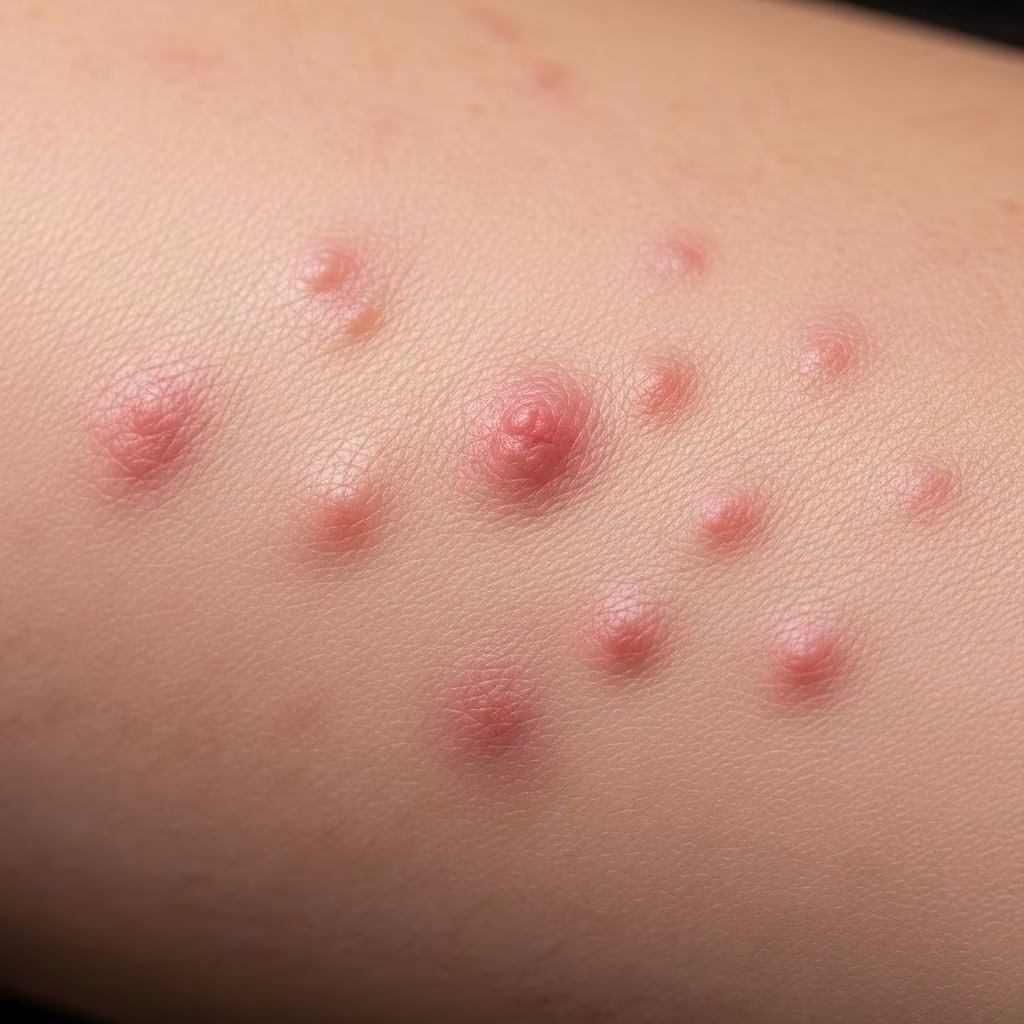
Drug eruptions, also known as drug rashes or cutaneous adverse drug reactions (CADRs), represent a significant category of skin disorders triggered by medications. These reactions affect up to 2-3% of hospitalized patients and are among the most common causes of cutaneous adverse events. Most are mild and resolve upon drug discontinuation, but severe forms can be life-threatening, involving widespread skin detachment and systemic organ damage.
What is a drug eruption?
A drug eruption is any adverse skin reaction resulting from systemic or topical drug administration. These can manifest as macules, papules, urticaria, vesicles, bullae, pustules, or purpura, often accompanied by pruritus or burning. While most are benign, severe variants like Stevens-Johnson syndrome (SJS), toxic epidermal necrolysis (TEN), and drug reaction with eosinophilia and systemic symptoms (DRESS) require immediate intervention.
Drug eruptions differ from drug allergies; not all are immunologically mediated. They can occur with prescription drugs, over-the-counter (OTC) medications, herbal supplements, or even vaccines. Onset varies from hours (immediate hypersensitivity) to weeks (delayed reactions).
Who gets drug eruptions?
Anyone can develop a drug eruption, but risk factors include:
- Age: Extremes of age (children, elderly) are more susceptible due to altered metabolism.
- Genetics: HLA alleles (e.g., HLA-B*1502 in Asians for carbamazepine-induced SJS/TEN) predispose certain populations.
- Comorbidities: HIV/AIDS patients have 1000-fold higher risk of SJS/TEN from sulfa drugs.
- Polypharmacy: Multiple medications increase cumulative risk.
- Previous reactions: History of drug rash heightens recurrence likelihood.
Women may experience higher rates due to autoimmune tendencies and hormonal factors.
Types of drug eruptions
Common (simple) drug eruptions
These account for ~90% of cases and resolve without sequelae upon drug withdrawal.
- Morbilliform (exanthematous) eruption: Most frequent (~70%), resembling measles or rubella with diffuse erythematous macules/papules starting on trunk, spreading to extremities. Antibiotics (e.g., amoxicillin in EBV) common culprits.
- Urticarial: Hive-like wheals with itching; often IgE-mediated (Type I hypersensitivity). Penicillins, NSAIDs implicated.
- Fixed drug eruption: Recurrent oval/round hyperpigmented patches at same sites upon re-exposure. NSAIDs (ibuprofen), acetaminophen, tetracyclines typical.
Severe cutaneous adverse reactions (SCARs)
These immune-mediated reactions involve T-cell activation and cytokine release, with mortality up to 40%.
| Type | Features | Common Drugs | Mortality |
|---|---|---|---|
| Stevens-Johnson Syndrome (SJS)/TEN | Mucocutaneous detachment (<10%/ >30% body surface), fever, Nikolsky sign (+) | Allopurinol, carbamazepine, sulfa drugs, lamotrigine | 5-40% |
| Drug Reaction with Eosinophilia and Systemic Symptoms (DRESS/DIHS) | Exanthem, facial edema, eosinophilia, organ (liver/kidney) involvement; delayed onset (2-8 weeks) | Anticonvulsants, allopurinol, sulfonamides | 10% |
| Acute Generalized Exanthematous Pustulosis (AGEP) | Sterile pustules on erythematous base, fever, neutrophilia; resolves in 2 weeks | Antibiotics (beta-lactams, macrolides), hydroxychloroquine | <1% |
Other patterns
- Lichenoid: Purple polygonal papules mimicking lichen planus; gold salts, beta-blockers.
- Pseudoporphyria: Blistering like porphyria; naproxen, furosemide.
- Drug-induced lupus: Butterfly rash, arthralgias; hydralazine, procainamide.
- Erythroderma: Generalized redness/scaling; anticonvulsants.
Causes
Over 1000 drugs implicated, but high-risk classes include:
- Antimicrobials: Beta-lactams (30%), sulfonamides, macrolides.
- Anticonvulsants: Phenytoin, carbamazepine, lamotrigine (cross-reactivity).
- NSAIDs: Ibuprofen, diclofenac (fixed eruptions).
- Allopurinol: SJS/TEN, DRESS.
- Others: Warfarin (purple toe syndrome), furosemide (photodistributed).
Mechanisms: Pharmacologic interaction (non-immune, e.g., vasodilation), Type I-IV hypersensitivity.
Clinical features
Symptoms: Pruritus (morbilliform), pain (SJS/TEN), fever (SCARs). Prodrome (flu-like) precedes SCARs by 1-14 days. Mucosal involvement (oral/genital) flags severity.
Diagnosis
Primarily clinical, supported by:
- History: Temporal link to new drug (1-3 weeks for delayed).
- Skin biopsy: Interface dermatitis (lichenoid), full-thickness necrosis (TEN).
- Patch testing: For AGEP, fixed eruptions (after rash resolution).
- Labs: Eosinophilia (DRESS), liver enzymes.
Differential: Viral exanthems, autoimmune diseases.
Treatment and management
Mild reactions
- Immediate drug cessation.
- Symptomatic: Antihistamines (loratadine), topical corticosteroids (hydrocortisone).
Severe reactions
- Supportive care: Burn unit for SJS/TEN (fluids, infection control, ophthalmology).
- Immunomodulators: IVIG (controversial), cyclosporine (preferred over steroids).
- DRESS: Systemic steroids, monitor organs.
Avoid re-challenge; desensitization rare.
How can drug eruptions be prevented?
- Screen high-risk drugs/genotypes (HLA testing).
- Slow titration for anticonvulsants.
- Patient education on reporting rashes promptly.
- Alternative therapies for known reactors.
Patient education and FAQs
Frequently Asked Questions
What should I do if I develop a rash while on medication?
Contact your doctor immediately. Do not stop abruptly without advice, especially for critical drugs like anticonvulsants.
How long after starting a drug does a rash appear?
Immediate (hours) for urticaria; 7-21 days for morbilliform; 2-8 weeks for DRESS.
Can OTC drugs cause eruptions?
Yes, NSAIDs and acetaminophen commonly cause fixed eruptions.
Will my skin return to normal after a drug eruption?
Most do, but post-inflammatory hyperpigmentation or scarring possible in severe cases.
Are drug eruptions contagious?
No, they are not infectious.
Related topics
- Stevens-Johnson syndrome / toxic epidermal necrolysis
- DRESS (drug reaction with eosinophilia and systemic symptoms)
- Acute generalised exanthematous pustulosis (AGEP)
- Urticaria
References
- Drug eruption – Wikipedia — Wikipedia contributors. 2023-10-15. https://en.wikipedia.org/wiki/Drug_eruption
- Drug Rashes: 7 Medications That Can Cause Skin Reactions — GoodRx. 2024-05-20. https://www.goodrx.com/health-topic/dermatology/drug-rash-skin-reaction
- What is a Drug Eruption? — Contour Dermatology. 2023-08-12. https://contourderm.com/drug-eruption/
- Drug Eruptions and Reactions — Merck Manual Professional Edition. 2025-01-01. https://www.merckmanuals.com/professional/dermatologic-disorders/hypersensitivity-and-reactive-skin-disorders/drug-eruptions-and-reactions
- Drug Eruptions — Rheumderm. 2022-11-05. https://www.rheumderm.com/drug-eruptions
- Cutaneous Adverse Drug Reaction — NCBI Bookshelf (StatPearls). 2024-07-18. https://www.ncbi.nlm.nih.gov/books/NBK533000/