
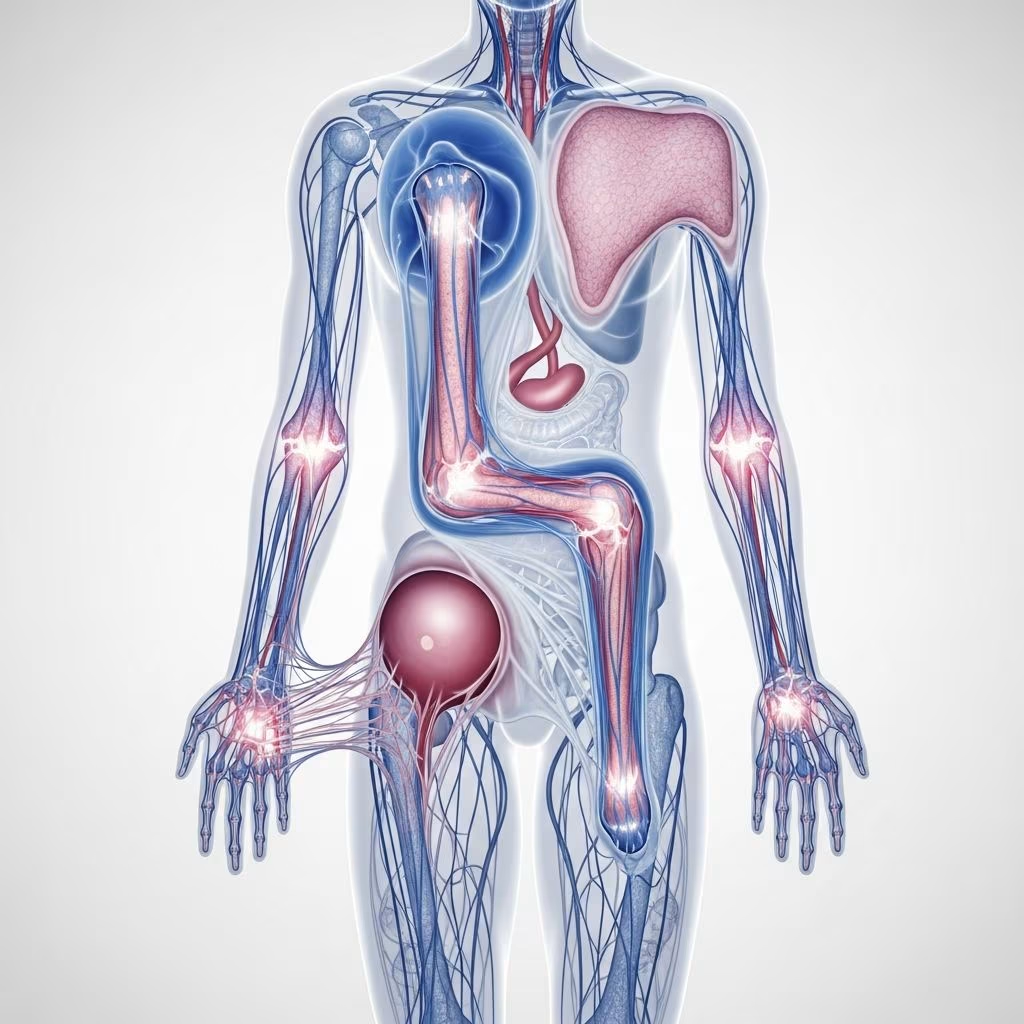
Ehlers-Danlos syndrome (EDS) refers to a group of 13 heritable connective tissue disorders caused by genetic mutations affecting collagen structure or biosynthesis, leading to clinical hallmarks like tissue fragility, joint hypermobility, and skin hyperextensibility. These conditions impact multiple body systems, requiring multidisciplinary management for optimal outcomes.
What Is Ehlers-Danlos Syndrome?
EDS encompasses disorders where connective tissue—providing strength and elasticity to skin, joints, blood vessels, and organs—is compromised due to genetic changes. Tissue fragility manifests as easy bruising, poor wound healing, and vulnerability in organs like blood vessels or eyes in certain types. The 2017 international classification recognizes 13 subtypes, each with distinct genetic causes, inheritance patterns, and features, though overlap exists with other connective tissue diseases.
Joint hypermobility, a key feature, involves excessive joint range of motion, often assessed via the Beighton score. Skin hyperextensibility means skin stretches beyond normal limits, typically over 1.5 cm on the forearm. Prevalence varies; hypermobile EDS (hEDS) affects about 1 in 3,100–5,000 people, while rarer types are much less common. Early diagnosis improves management and prevents complications like chronic pain or organ rupture.
Symptoms and Signs of EDS
Symptoms differ by subtype but commonly include generalized joint hypermobility, instability, chronic pain, and fatigue across all types. Hypermobile EDS presents with joint pains, recurrent dislocations (especially shoulders, knees, hips), soft/velvety skin, mild hyperextensibility, and atrophic scars. Other frequent issues: clumsiness, motor delays in childhood, recurrent hernias, and piezogenic papules (fat herniations on heels).
Systemic involvement is broad. Table 1 summarizes common features in hypermobile EDS:
| Feature | Comment |
|---|---|
| History | Clumsiness, recurrent joint pains, subluxations without trauma, hernias/prolapse |
| Skin | Soft/velvety texture, mild hyperextensibility, atrophic scars, striae |
| Musculoskeletal | Chronic pain, early osteoarthritis, flatfoot, scoliosis |
Table 1: Common presenting features of hypermobile EDS.
Table 2 details organ system symptoms:
| Organ System | Symptoms/Findings |
|---|---|
| Autonomic | Orthostatic intolerance, POTS, syncope |
| Gastrointestinal | Reflux, gastroparesis, IBS-like symptoms, visceroptosis |
| Gynecologic | Dysmenorrhea, prolapse, incontinence |
| Mucocutaneous | Easy bruising, gingival recession, hypoplastic frenulum |
| Neurologic | Migraines, dysautonomia, sleep issues |
| Psychological | Anxiety, depression, ADHD |
Table 2: Multi-system manifestations in EDS.
Comorbidities like dysautonomia (e.g., POTS), mast cell activation syndrome (MCAS), and anxiety amplify symptoms, with orthostatic intolerance causing dizziness, fatigue, and palpitations upon standing. Cardiovascular risks include mitral valve prolapse; gastrointestinal issues range from reflux to delayed transit.
The 13 Types of EDS
Each EDS type has unique genetic underpinnings and distinguishing traits. Hypermobile EDS (hEDS), the most common, features generalized hypermobility, instability, and pain; gene unknown, autosomal dominant. Classical EDS involves markedly hyperextensible skin and atrophic scars (COL5A1/COL5A2 genes). Vascular EDS, rarer and severe, risks arterial/organ rupture (COL3A1).
- Hypermobile EDS (hEDS): Joint hypermobility, chronic pain, fatigue; prevalence 1:3,100–5,000.
- Classical EDS: Skin fragility, easy bruising.
- Vascular EDS: Thin skin, vascular fragility; life-threatening.
- Kyphoscoliotic EDS: Congenital scoliosis, ocular fragility (PLOD1).
- Other types: Arthrochalasia, Dermatosparaxis, Brittle Cornea, Spondylodysplastic, Musculocontractural, Myopathic, Periodontal (10 total rarer types).
Diagnosis relies on clinical criteria plus genetic testing where applicable; hEDS lacks a specific gene test.
Causes and Genetics of EDS
EDS arises from mutations in 19+ genes impacting collagen synthesis, folding, or extracellular matrix. Inheritance is mostly autosomal dominant (one mutated allele suffices), some recessive. For hEDS, the gene remains unidentified, complicating confirmation. Environmental factors may exacerbate but genetics drive the disorders.
Diagnosis of EDS
Diagnosis combines family history, Beighton score (≥5/9 for hypermobility), and subtype-specific criteria per 2017 nosology. For hEDS, criteria include hypermobility plus systemic features (e.g., ≥5 from a checklist: unusual scars, dental crowding, prolapse) and exclusion of other syndromes. Genetic testing confirms 12/13 types; hEDS is clinical.
Challenges: Symptom overlap, age-related hypermobility decline, underrecognition. Refer to specialists (genetics, rheumatology) if suspected.
Treatment and Management
No cure exists; management targets symptoms via multidisciplinary teams (rheumatology, PT, pain specialists, cardiology). Strategies:
- Pain control: Physical therapy for stability, bracing, medications (NSAIDs, gabapentinoids).
- Joint protection: Avoid high-impact activities; strengthen muscles.
- Comorbidities: Beta-blockers for POTS, compression for orthostasis.
- Surgical caution: Poor healing increases risks.
- Lifestyle: Pacing, nutrition, mental health support.
Individualized plans are essential, as responses vary.
Living with EDS
Daily life involves adaptations: ergonomic tools, energy conservation, support networks like The Ehlers-Danlos Society. Prognosis varies; vascular EDS has high mortality, while hEDS focuses on quality-of-life management. Early intervention reduces complications like osteoarthritis or depression.
Frequently Asked Questions (FAQs)
What is the most common type of EDS?
Hypermobile EDS (hEDS) is the most prevalent, affecting 1 in 3,100–5,000, characterized by joint hypermobility and pain.
Can EDS be cured?
No, EDS has no cure, but symptoms are managed through therapy, medications, and lifestyle adjustments.
Is EDS hereditary?
Yes, most types are autosomal dominant, meaning a 50% chance of inheritance from an affected parent.
How is hypermobility diagnosed?
Using the Beighton score: 9-point test assessing joint flexibility; ≥5 indicates hypermobility.
What are life-threatening complications of EDS?
Vascular EDS risks arterial rupture; others include organ fragility.
References
- A review of Ehlers-Danlos syndrome — Malfait F, et al. Orphanet J Rare Dis. 2020-03-15. https://pubmed.ncbi.nlm.nih.gov/32175940/
- Hypermobile Ehlers-Danlos Syndrome and Hypermobility Spectrum Disorders — Tinkle BT, et al. Am Fam Physician. 2021-04-15. https://www.aafp.org/pubs/afp/issues/2021/0415/p481.html
- What is EDS? — The Ehlers-Danlos Society. Accessed 2026. https://www.ehlers-danlos.com/what-is-eds/
- The Ehlers-Danlos syndromes (EDS) GP Toolkit — The Ehlers-Danlos Society. Accessed 2026. https://gptoolkit.ehlers-danlos.org