
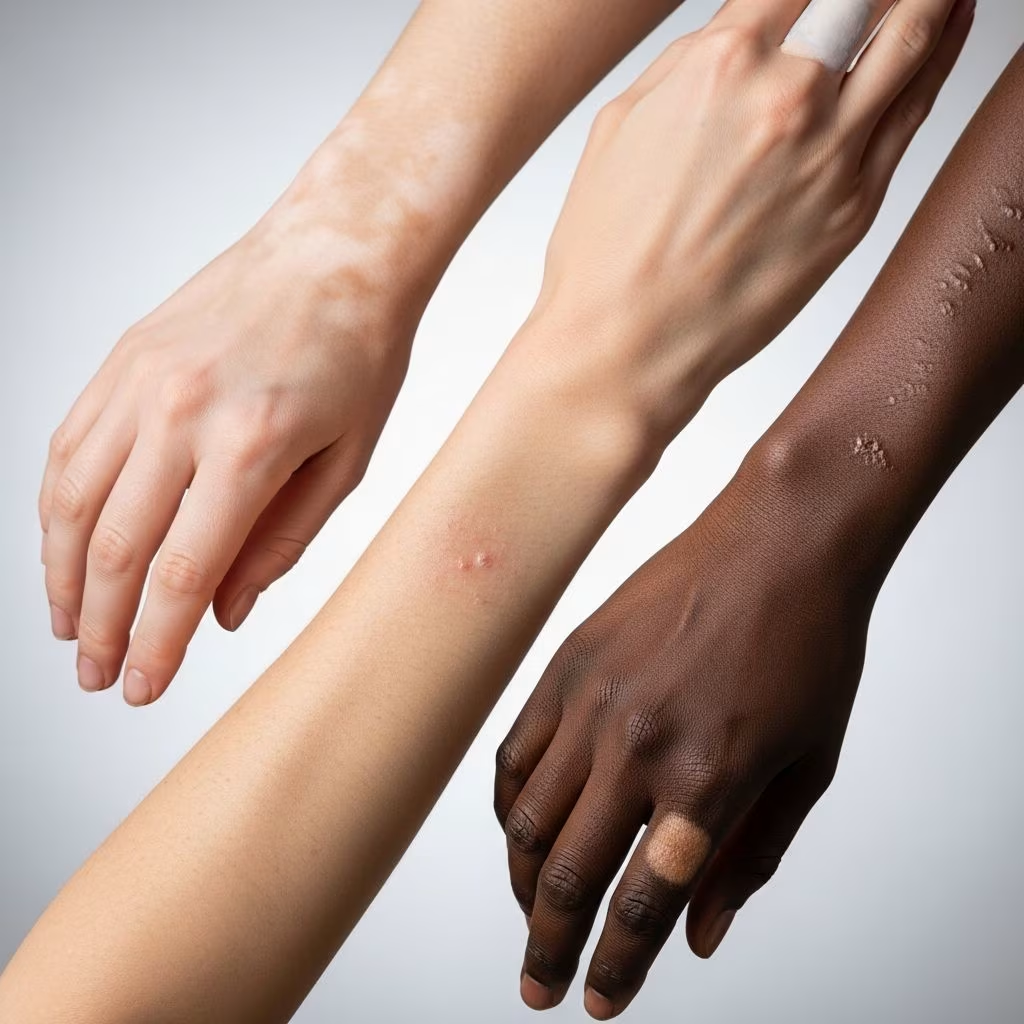
Ethnic dermatology addresses the unique dermatological needs of individuals with non-white skin types, encompassing richly pigmented skin prevalent globally in Asian, African-Caribbean, North African, Latino, Indigenous, and Middle Eastern populations. Unlike traditional dermatology focused primarily on Caucasian skin, this field recognizes variations in skin structure, disease presentation, treatment responses, and cultural practices that influence skin health. With over 80% of the world’s population having skin of color, understanding these differences is essential for equitable care.
Introduction
Richly pigmented skin, characterized by higher melanin content, exhibits distinct epidemiological patterns, clinical morphologies, and therapeutic outcomes compared to lighter skin types. Conditions common in ethnic skin include post-inflammatory hyperpigmentation (PIH), keloids, and pseudofolliculitis barbae, often underrepresented in standard textbooks. This article synthesizes principles from global perspectives, drawing on peer-reviewed resources to guide diagnosis and management.
Skin Structure and Function in Ethnic Skin
Skin of color features increased epidermal melanosomes and melanin production, leading to photoprotection but heightened risks for pigmentary disorders. Asian skin shows compact stratum corneum with higher corneocyte compactness; African skin has more layered stratum corneum; Latino skin blends traits variably. These affect barrier function, transepidermal water loss, and responses to irritants.
- Melanocytes: More active in darker phototypes (Fitzpatrick IV-VI), producing larger melanosomes transferred efficiently to keratinocytes.
- Dermal differences: Increased fibroblasts and collagen in African skin contribute to keloid propensity.
- Transepidermal water loss (TEWL): Lower in Asians, higher in Africans under irritation.
| Ethnic Group | Stratum Corneum | Melanin Features | Barrier Function |
|---|---|---|---|
| Asian | Compact, small corneocytes | High eumelanin | Strong barrier |
| African | Thicker, more layers | Large melanosomes | Variable TEWL |
| Latino | Intermediate | Mixed melanin | Moderate |
| Indigenous | Dense collagen | High pigmentation | Resilient |
Common Dermatological Conditions in Ethnic Skin
Post-inflammatory Hyperpigmentation (PIH)
PIH arises from melanocyte hyperactivity post-injury or inflammation, more pronounced in Fitzpatrick types IV-VI, lasting months to years. Triggers include acne, eczema, and trauma; darker skin shows exaggerated responses.
Keloids and Hypertrophic Scars
Keloids, firm overgrowths beyond wound edges, disproportionately affect African, Asian, and Hispanic individuals due to genetic factors like TGF-β dysregulation. Incidence: 15x higher in Blacks vs. Whites.
Pseudofolliculitis Barbae (Razor Bumps)
Curly hair in African descent ingrows post-shaving, causing papules and scarring; affects 45-83% of Black men.
Acne in Skin of Color
Acne presents with more hyperpigmentation and scarring; Asian skin prone to comedonal forms.
- Other: Melasma (common in Latinos/Asians), vitiligo (perifollicular in darker skin), lupus (discoid in Blacks).
Hair and Scalp Disorders
Ethnic hair varies: African hair is flat, elliptical, fragile with low tensile strength; Asian hair round, thick; Latino intermediate. Traction alopecia from tight hairstyles prevalent in Black women.
- Central centrifugal cicatricial alopecia (CCCA): Scarring from chemical/heat styling in African women.
- Tinea capitis: Higher in children of color.
- Trichorrhexis nodosa: Knotting from manipulation.
Diagnosis Challenges
Missed diagnoses occur due to atypical presentations: e.g., tinea corporis as discoid lupus; melanoma as blue-black macules. Dermoscopy shows differences in skin of color (SOC), like follicular openings in phototypes IV-VI. Grading scales must be validated for SOC.
Treatment Considerations
Treatments risk PIH from lasers/irritants; prefer low-fluence Q-switched lasers for Asians, topical HQ for PIH. Keloids respond to intralesional steroids, cryotherapy. Cultural tailoring: Avoid advising against traditional styles without alternatives.
| Condition | Standard Tx | SOC Adjustment |
|---|---|---|
| PIH | Hydroquinone | Combine with retinoids, sun protection; 4% HQ safe |
| Keloids | Steroids | 5-FU/silicone sheets; surgery last |
| Acne | Topicals | BP over retinoids initially to minimize irritation |
| Hair Loss | Minoxidil | Low pH shampoos, avoid lye relaxers |
Cosmetic Dermatology in Ethnic Skin
Pigmentation risks limit lasers; fractional non-ablative lasers safer for resurfacing. Hair straightening (chemical/thermal) causes breakage in curly hair. Skin lightening agents scrutinized for safety.
Pediatric Dermatology
Mongolian spots persist longer in Asian/Black infants; diaper dermatitis with PIH; atopic dermatitis less lichenified but hyperpigmented.
Dermatology and Systemic Disease
Sarcoidosis shows lupus pernio less in SOC; sickle cell ulcers in Africans; lupus MEPTEL in Asians.
Drug Eruptions
Fixed drug eruptions common on lips/genitals in Indians; pseudoporphyria from NSAIDs in Blacks.
Cultural and Traditional Practices
Scarification in Africans leads to keloids; henna allergies; hair braiding causes traction. Providers must respect while educating on risks.
Frequently Asked Questions (FAQs)
Q: What is post-inflammatory hyperpigmentation?
A: Darkening of skin after inflammation or injury, common in ethnic skin due to melanin overproduction; treat with topicals and sun avoidance.
Q: Why are keloids more common in skin of color?
A: Genetic factors and excessive collagen synthesis; highest in African descent populations.
Q: Can lasers be used safely on darker skin?
A: Yes, with caution using longer wavelengths and low energy to avoid burns/PIH.
Q: How does ethnic hair differ?
A: African hair curly, fragile; Asian straight, thick; requires gentle care to prevent breakage.
Q: Is ethnic dermatology only for non-whites?
A: No, it informs care for all, emphasizing diversity in skin responses.
References
- Skin of Color Resources: Home – Research Guides — University at Buffalo. 2023. https://research.lib.buffalo.edu/skin-of-color-resources
- Ethnic Dermatology: Principles and Practice — Wiley. 2013-01-02. https://onlinelibrary.wiley.com/doi/book/10.1002/9781118497784
- E-Books, E-Chapters – Skin of Color — University of Michigan. 2023. https://guides.lib.umich.edu/c.php?g=1024553&p=7625091
- Ethnic Dermatology: Principles and Practice | Wiley Online Library — Wiley. 2013. https://onlinelibrary.wiley.com/doi/book/10.1002/9781118497784
- Essential Resources for Dermatologists on Skin of Color — MD Anderson Cancer Center. 2023. https://mdanderson.libguides.com/c.php?g=1443953