
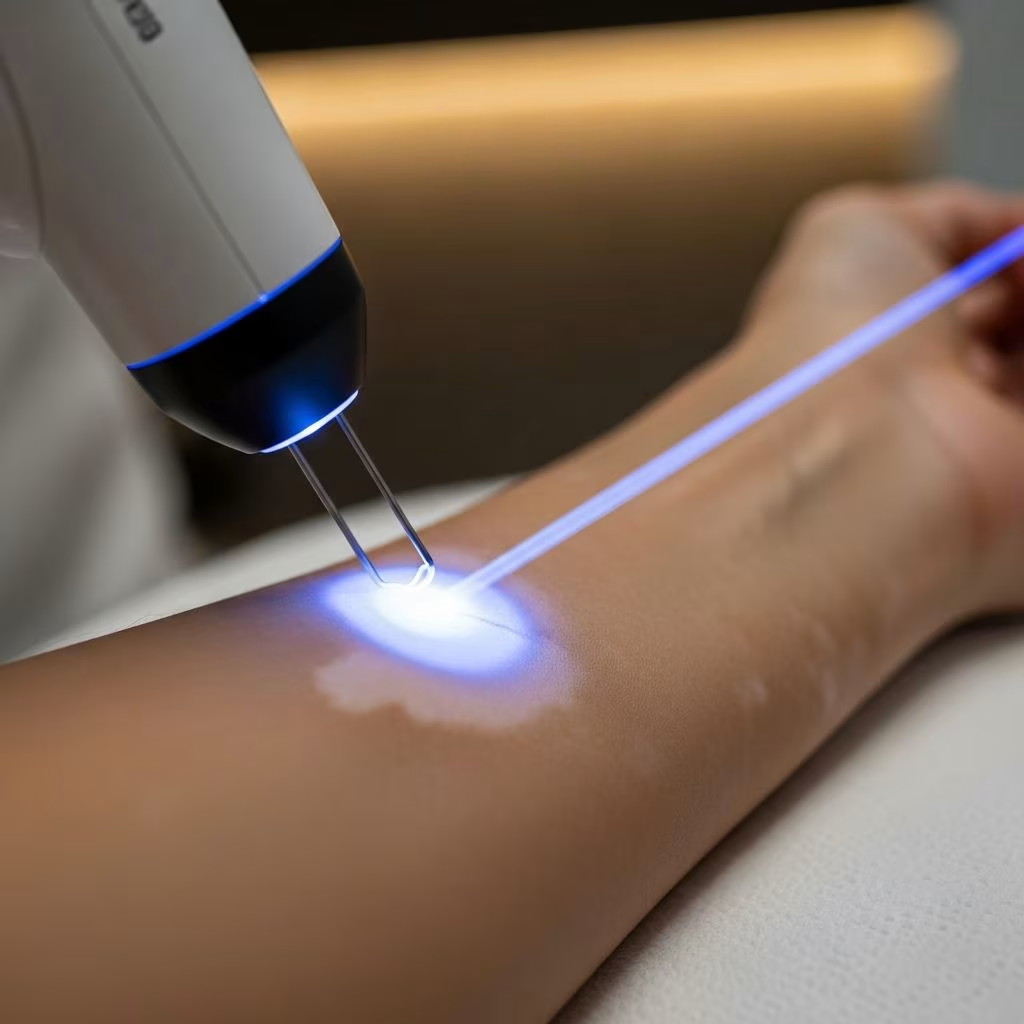
Excimer 308-nm light is a form of targeted phototherapy that delivers a specific wavelength (308 nm) of ultraviolet B (UVB) radiation using an excimer laser or excimer lamp. This therapy is highly effective for treating localized skin conditions such as vitiligo and psoriasis that are unresponsive to topical treatments.
What is excimer 308-nm light?
Excimer light treatment represents an advancement in phototherapy, evolving from whole-body narrowband UVB (311–312 nm), which treats widespread psoriasis and vitiligo but exposes the entire body unnecessarily and requires 15–40 sessions. In contrast, excimer 308-nm therapy uses a handheld device to focus monochromatic UVB precisely on lesions, minimizing exposure to healthy skin.
The excimer laser, often a xenon chloride (XeCl) system like PHAROS EX-308 or XTRAC, generates coherent 308-nm light proven most efficacious for psoriasis clearing and vitiligo repigmentation. Excimer lamps offer similar outcomes with technical differences in beam delivery but equivalent clinical results.
Mechanism of action
The 308-nm wavelength aligns with the action spectrum for psoriasis clearance (300–313 nm), inducing apoptosis in pathogenic T-cells, reducing keratinocyte hyperproliferation, and normalizing epidermal differentiation. In vitiligo, it stimulates melanocyte migration from lesion edges and hair follicles, promoting repigmentation, especially when combined with topicals like tacrolimus.
High doses (3–6 times minimal erythema dose, MED) enable rapid clearing with single or few treatments, as demonstrated in pilot studies where one high-fluence exposure cleared plaques with 6.5-month remission. Mineral oil application enhances penetration by reducing light scattering.
Indications
Excimer 308-nm therapy is FDA-indicated for psoriasis, vitiligo, atopic dermatitis, and leukoderma. It excels in:
- Localized psoriasis: Moderately severe plaques unresponsive to topicals; clears with 1–20 sessions.
- Vitiligo: Stable, localized patches; face achieves 86.7% repigmentation, body 80%, extremities 61.7%; sustained up to 11.3 months.
- Atopic dermatitis/eczema: Resistant hand, foot, scalp lesions.
Off-label uses include alopecia areata, cutaneous T-cell lymphoma, localized scleroderma, and granuloma annulare, supported by case reports.
Treatment protocol
Treatment is outpatient, 1–3 sessions weekly, lasting ~7 weeks (6–30 total). Key steps:
- MED determination: Initial test on uninvolved skin to set safe fluence (minimal dose causing distinct erythema).
- Dosing: Start at 1–2 MED, escalate to supra-erythematous (reddening without blistering); 3–4 MED multiples for psoriasis.
- Session: Clean area, apply mineral oil, deliver via handheld wand (2–10 minutes/lesion).
- Adjuncts: Combine with topical steroids, calcineurin inhibitors (e.g., tacrolimus 0.1%), or pimecrolimus for enhanced response, especially vitiligo.
Response: Psoriasis improves by 6–8 sessions, clears by 20–30; vitiligo shows repigmentation early on face/neck.
Clinical efficacy
| Condition | Response Rate | Remission Duration | Source |
|---|---|---|---|
| Psoriasis | Clearing with 1 high-dose or 20 moderate-dose treatments | 6.5 months (high-dose) | |
| Vitiligo (face) | 86.7% repigmentation | 11.3 months average | |
| Atopic dermatitis | Effective for resistant lesions | Sustained clearance |
Studies confirm superiority over broad UVB: targeted delivery spares normal skin, reduces sessions, and yields longer remissions.
Advantages and disadvantages
Advantages:
- Precise targeting: No systemic exposure, lower carcinogenesis risk.
- Efficient: Shorter duration than whole-body UVB.
- Painless: Minimal warmth, no anesthesia.
- Versatile: Ideal for hands, feet, scalp.
Disadvantages:
- Limited to localized disease (<10% body surface).
- Costlier than cabin phototherapy.
- Requires multiple visits; relapse in 3–6 months for some.
Side effects and risks
Well-tolerated; primary effects are dose-dependent erythema (intended) and rare blistering if overdosed. No anesthesia needed; post-treatment moisturize and sun-protect. Long-term: Lower risk than broad UVB due to selectivity, but cumulative UV exposure warrants monitoring.
Comparison with other treatments
Versus narrowband UVB: Excimer is targeted, fewer treatments, better for localized. Versus topicals: Superior for unresponsive cases; combinations optimal. Future research: Optimal regimens, long-term safety.
Frequently asked questions
What conditions does excimer 308-nm treat?
Primarily localized psoriasis, vitiligo, atopic dermatitis; off-label for alopecia areata, etc.
How many sessions are needed?
6–30 weekly; average 7 weeks.
Is it painful?
No, feels like mild warmth.
Does insurance cover it?
Often for FDA-indications like psoriasis/vitiligo; check provider.
What is the remission period?
Months to over a year; varies by condition/site.
Can it be combined with other therapies?
Yes, enhances with topicals like steroids or tacrolimus.
References
- 308-nm Excimer Laser for the Treatment of Psoriasis — JAMA Dermatology. 2000-09-01. https://jamanetwork.com/journals/jamadermatology/fullarticle/190214
- Excimer 308-nm laser treatment — DermNet NZ. N/A. https://dermnetnz.org/topics/excimer-308-nm-light-treatment
- Excimer Laser Treatment — Advanced Dermatology, P.C. N/A. https://www.advanceddermatologypc.com/service/medical-dermatology/phoros-excimer-laser/
- XTRAC – Excimer Laser — Center for Dermatology. N/A. https://centerforderm.com/xtrac-excimer-laser/
- The Use of Excimer Phototherapy in the treatment of various skin diseases — Aerolase. N/A. https://www.aerolase.com/articles/the-use-of-excimer-phototherapy-in-the-treatment-of-various-skin-diseases