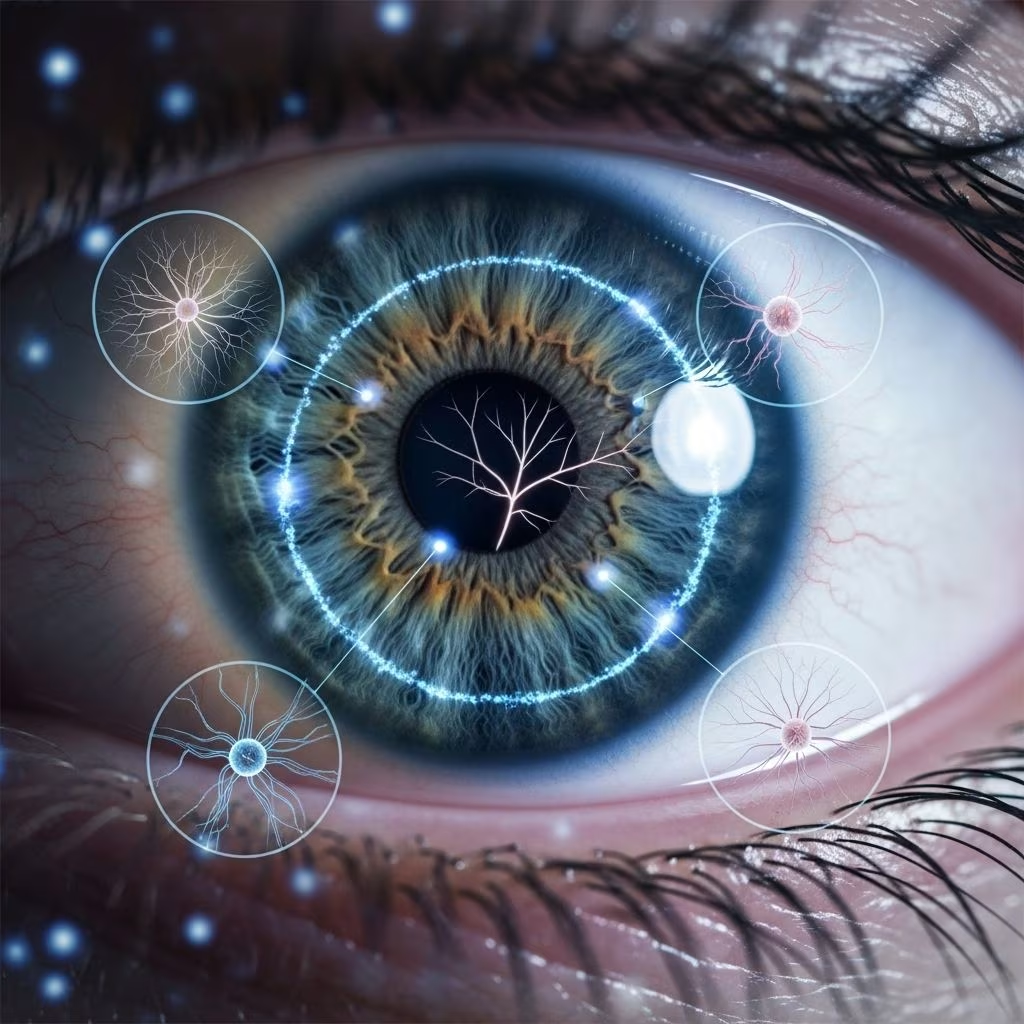
Glaucoma is a group of eye conditions that damage the optic nerve, often due to elevated intraocular pressure from impaired aqueous humor drainage. This pressure buildup leads to progressive vision loss if untreated. Understanding the causes—ranging from primary blockages in the eye’s drainage system to secondary factors like trauma and inflammation—is crucial for prevention and early intervention.
What Is Glaucoma?
Glaucoma refers to a progressive optic neuropathy characterized by retinal ganglion cell degeneration and optic nerve changes, resulting in irreversible vision loss. The core mechanism involves a blockage in the eye’s drainage system, causing fluid (aqueous humor) accumulation and increased intraocular pressure (IOP), which damages the optic nerve. While high IOP is a major factor, glaucoma can occur even with normal pressure due to optic nerve vulnerability.
There are primary glaucomas, with no identifiable cause, and secondary glaucomas linked to known triggers like injury or disease. Early detection through regular eye exams is vital, as symptoms often appear late.
Primary Causes of Glaucoma
Primary glaucoma lacks a clear precipitating event and stems from inherent eye structure or genetic issues. The most common form is primary open-angle glaucoma (POAG), affecting the trabecular meshwork where aqueous humor drains.
Primary Open-Angle Glaucoma (POAG)
In POAG, the drainage angle remains open, but resistance in the trabecular meshwork slows outflow, gradually raising IOP. This imbalance between ciliary body secretion and drainage pathways leads to optic nerve damage via disrupted axonal transport at the lamina cribrosa. Risk factors include elevated IOP, large or thinning optic nerve, family history (especially siblings), African or Hispanic ancestry, thinner corneas, and age over 55.
- Elevated intraocular pressure: Not the same as blood pressure; it’s the primary driver in most cases.
- Optic nerve abnormalities: Increased cup-disk ratio (CDR), asymmetry, or disc hemorrhages heighten risk.
- Closed or narrow drainage angle: Impedes fluid exit.
Primary Angle-Closure Glaucoma
This occurs when the iris bulges, obstructing the drainage angle and blocking aqueous flow, often suddenly in acute cases. Pupillary block is common, causing iris convexity and angle closure. It’s more prevalent in Asian populations due to anatomical factors like shallow anterior chambers.
Secondary Causes of Glaucoma
Secondary glaucoma arises from identifiable triggers that damage the drainage system or raise IOP. Vigilance for these is essential, particularly after injury or with chronic illnesses.
Eye Trauma or Injury
Trauma from accidents, surgery, or laser treatments scars or stretches the trabecular meshwork, slowing drainage. Blood or foreign bodies can clog it further. Gonioscopy is recommended post-injury to assess the angle.
Inflammatory Conditions (Uveitis)
Autoimmune diseases cause eye inflammation, clogging drainage and elevating pressure. Symptoms like light sensitivity may be subtle, underscoring the need for annual exams in chronic illness patients.
Steroid-Induced Glaucoma
Prolonged corticosteroid use (over weeks), common for inflammation, disrupts trabecular function, mimicking primary glaucoma.
Pigmentary Glaucoma
Pigment granules from the iris flake off, especially during exercise like jogging, depositing in the angle and impeding drainage.
Pseudoexfoliation and Other Conditions
Material buildup in pseudoexfoliation blocks outflow. Tumors, pigment dispersion, or systemic issues like diabetes contribute indirectly.
| Cause | Mechanism | Risk Group |
|---|---|---|
| Trauma | Scarring/blockage of trabecular meshwork | Post-injury patients |
| Uveitis/Inflammation | Inflammatory debris clogs drain | Autoimmune disease sufferers |
| Steroids | Trabecular dysfunction | Long-term users |
| Pigmentary | Pigment granule deposits | Active individuals (e.g., joggers) |
Risk Factors for Glaucoma
Beyond direct causes, several factors elevate susceptibility. High IOP remains central, but others amplify vulnerability.
- Age: Risk rises after 55; advanced age correlates strongly with POAG.
- Family history: Siblings at highest risk; genetic links confirmed.
- Ethnicity: Open-angle higher in African/Hispanic; angle-closure in Asian descent.
- Medical conditions: Diabetes, hypertension, migraines, sickle cell anemia.
- Eye traits: Thin central cornea, extreme nearsightedness/farsightedness, prior surgery.
Genetics of Glaucoma
Genetics play a key role, especially in primary forms. Mutations in MYOC (myocilin), OPTN, and WDR36 cause 3-5% of adult POAG, often with high IOP in juveniles. Genome-wide studies identify loci like CAV1/CAV2, interacting with TGF-β. Angle-closure shows heritability in anatomical traits and family clustering. These account for <10% of cases but highlight screening for relatives.
Pathophysiology Insights
Glaucoma’s pathogenesis involves more than IOP: impaired axonal transport, low cerebrospinal fluid pressure creating gradients, vascular issues, oxidative stress, and excitotoxicity contribute. In open-angle, trabecular resistance predominates; in angle-closure, structural obstruction. Normal-tension glaucoma underscores optic nerve sensitivity.
Prevention and Early Detection
Regular eye exams detect changes before symptoms. Those with risk factors should prioritize comprehensive dilated exams, including gonioscopy and IOP measurement. Managing systemic health and avoiding prolonged steroids helps mitigate secondary risks.
Frequently Asked Questions (FAQs)
What is the main cause of glaucoma?
The primary cause is blockage of the eye’s drainage system, leading to elevated intraocular pressure that damages the optic nerve.
Is glaucoma always caused by high eye pressure?
No, normal-tension glaucoma occurs with normal IOP due to optic nerve vulnerability or other factors like low CSF pressure.
Can eye injury cause glaucoma?
Yes, trauma scars the drainage system or introduces blockages, leading to secondary glaucoma. Gonioscopy is advised post-injury.
Does family history increase glaucoma risk?
Strongly yes, especially siblings; genetic mutations like MYOC contribute in some cases.
Who is at higher risk for angle-closure glaucoma?
People of Asian descent, due to anatomical predispositions like shallow anterior chambers.
Can medications cause glaucoma?
Yes, long-term corticosteroids can induce it by impairing drainage.
References
- 6 Primary Causes Of Glaucoma — Glaucoma Research Foundation. Accessed 2026. https://glaucoma.org/understanding-glaucoma/causes
- The Pathophysiology and Treatment of Glaucoma: A Review — PMC (JAMA). 2015-07-08. https://pmc.ncbi.nlm.nih.gov/articles/PMC4523637/
- Glaucoma – Symptoms and causes — Mayo Clinic. Accessed 2026. https://www.mayoclinic.org/diseases-conditions/glaucoma/symptoms-causes/syc-20372839