
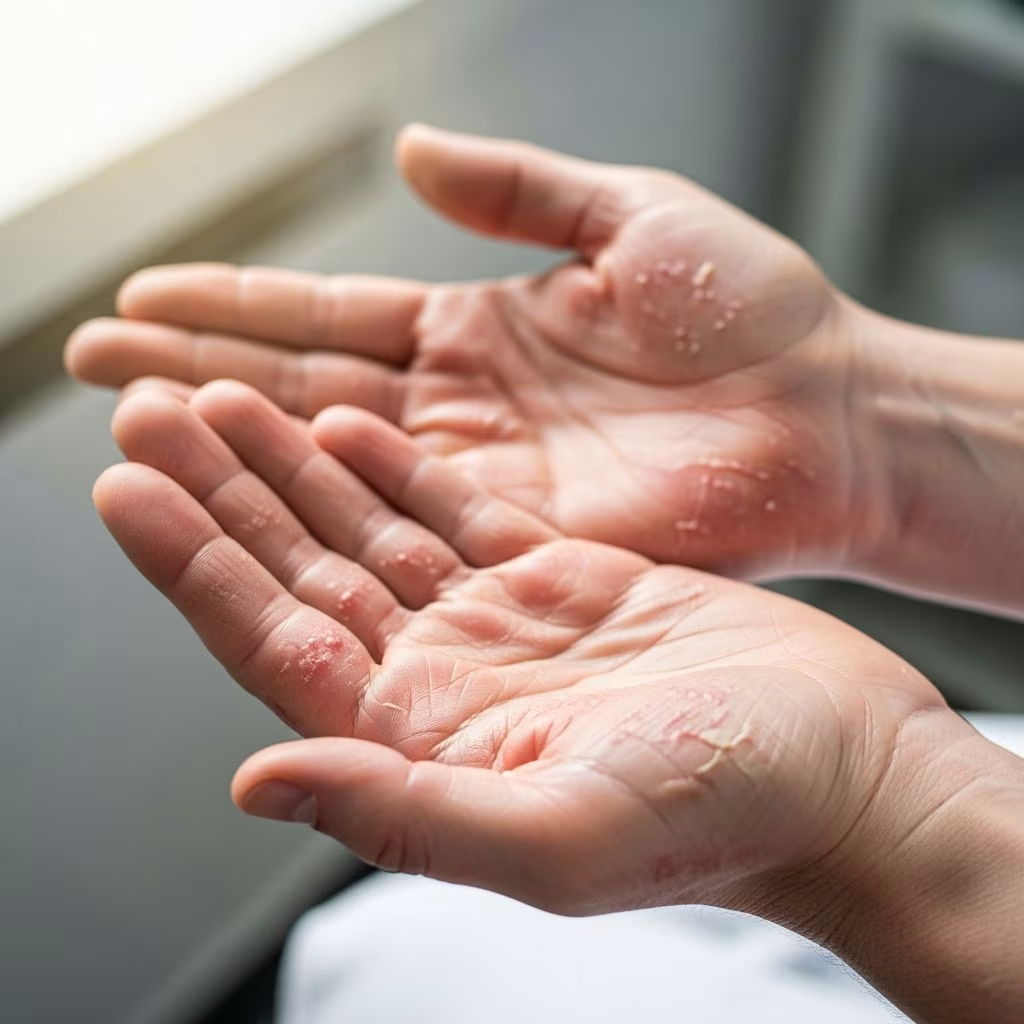
Hand dermatitis, also known as hand eczema, is a prevalent inflammatory skin disorder impacting the hands. It manifests as redness, itching, scaling, and fissuring, often triggered by irritants, allergens, or endogenous factors. Affecting up to 10% of the population, it poses significant challenges for those in wet-work occupations like healthcare, cleaning, and food handling. This condition can be acute, subacute, or chronic, requiring tailored management to restore skin barrier function and prevent recurrence.
What is Hand Dermatitis?
Hand dermatitis refers to a group of eczematous disorders localized to the hands, characterized by a disrupted skin barrier leading to inflammation. It is not contagious but can severely impair quality of life due to pain, itch, and functional limitations. The palms and fingers are commonly affected, with symptoms varying by type and stage. Unlike other eczemas, hand dermatitis often stems from occupational or frequent contact exposures.
Who Gets Hand Dermatitis?
Hand dermatitis affects individuals across ages but peaks in young adults engaged in high-risk occupations. Women are more prone due to roles in cleaning and caregiving. Those with atopic dermatitis history face a 2-4 fold increased risk owing to filaggrin gene mutations impairing skin barrier integrity. Prevalence reaches 20-30% in wet-work professions. Genetic predisposition combined with environmental exposures drives susceptibility.
- Healthcare workers (frequent handwashing)
- Caterers and cleaners (detergents, water)
- Hairdressers (chemicals, dyes)
- Mechanic and florists (oils, plants)
- Individuals with personal or family atopic history
Types of Hand Dermatitis
Hand dermatitis is classified by etiology into several overlapping types, each with distinct features and triggers.
| Type | Key Features | Common Triggers |
|---|---|---|
| Irritant Contact Dermatitis | Most common (80%); dry, fissured skin on backs of hands/fingers | Water, soaps, detergents, solvents |
| Allergic Contact Dermatitis | Vesicles on palms/fingertips; delayed reaction | Nickel, fragrances, rubber, preservatives |
| Atopic Hand Dermatitis | Diffuse, chronic; often with flexural eczema | Endogenous (genetic barrier defect) |
| Hyperkeratotic Fissured Eczema | Thickened palms with deep fissures | Chronic irritation |
| Pompholyx (Dyshidrotic) | Small itchy blisters on palms/sides of fingers | Stress, metals (cobalt/nickel), heat |
| Protein Contact Dermatitis | Rapid urticarial reaction |
Many cases are multifactorial, with irritant dermatitis predisposing to allergy.
Clinical Features
Acute Hand Dermatitis
In the acute phase, skin shows erythema, edema, vesicles, oozing, and crusting. Intense itching and burning are prominent, often following acute exposure.
Subacute Hand Dermatitis
Subacute lesions feature scaling, fissuring, and less intense inflammation as the condition evolves without resolution.
Chronic Hand Dermatitis
Chronic changes include lichenification, hyperkeratosis, painful rhagades (fissures), and nail dystrophy. Skin thickening protects but perpetuates the cycle.
Diagnosis
Diagnosis relies on clinical history and examination. Key questions probe occupation, exposures, atopy, and symptom pattern. Patch testing identifies allergens in 20-70% of cases, using standardized series plus occupational suspects.
- History: Onset, exposures, atopy, family history
- Examination: Distribution, morphology, nail involvement
- Patch tests: TRUE Test or extended series, read at D2/D4
- Differential: Psoriasis, tinea, scabies
Biopsy is rarely needed but shows spongiosis in acute phases.
Investigations
Beyond patch testing, prick testing detects protein contact dermatitis, while culture/swabs rule out secondary infection. Barrier function tests like TEWL (transepidermal water loss) aid research but not routine care.
Treatment – General Principles
Management follows a stepwise approach: identify/avoid triggers, restore barrier with emollients, apply targeted therapies. Patient education on compliance is crucial.
Emollients
Emollients are foundational, applied frequently (10-15x/day) to hydrate and repair the barrier. Opt for fragrance-free, preservative-free ointments like petrolatum. Soak-and-smear technique: 10-min soak, pat dry, apply emollient, occlude with gloves overnight.
Topical Corticosteroids
Potent to very potent TCS (e.g., clobetasol 0.05%) for 2 weeks control flares. Palm thickness requires group III-V potency. Intermittent use prevents tachyphylaxis.
| Potency | Examples | Use |
|---|---|---|
| Mild | Hydrocortisone 1% | Maintenance |
| Moderate | Triamcinolone 0.1% | Mild-moderate |
| Potent | Betamethasone 0.05% | Moderate-severe |
| Very Potent | Clobetasol 0.05% | Acute severe |
Other Topical Therapies
- TCI (Tacrolimus/Pimecrolimus): Steroid-sparing for chronic use
- Coal tar/Dithranol: Keratolytics for hyperkeratosis
- Antibiotics: Mupirocin for infected fissures
Phototherapy
Narrowband UVB (NB-UVB) or PUVA reduces inflammation in refractory cases. Hand-specific delivery (e.g., Psoralen soak + UVA) effective for pompholyx. Typically 2-3x/week for 12-20 sessions.
Systemic Therapy
For severe/refractory disease:
- Alitretinoin (9-cis-retinoic acid): 30mg daily for 24 weeks; 45% clear hyperkeratotic HD
- Cyclosporine/Methotrexate: Short-term immunosuppression
- Biologics (Dupilumab): IL-4/13 inhibition for atopic HD
Treatment of Infection
Secondary bacterial (Staph/Strep) or viral (HSV) infections require systemic antibiotics (flucloxacillin/cephalexin) or antivirals. Signs: pustules, honey crusts, cellulitis.
Management Algorithm
- Trigger avoidance + intensive emollient
- Add potent TCS ± TCPI 2 weeks
- Phototherapy if no response
- Systemic (acitretin/biologics)
Prevention
Primary prevention: Use cotton-lined gloves for wet work (change frequently), soap substitutes, after-work emollients.
Secondary: Patch test follow-up, allergen substitution, protective creams.
- Gloves: Vinyl/nitrile for chemicals, cotton for moisture
- Workstation modifications
- Stress management
Occupational Aspects
Under DDA/ADA, affected workers qualify for accommodations. Compensation claims require patch testing documentation. Job change considered if high-risk.
Patient Education
Empower with handouts on glove use, emollient application, flare recognition. Support groups aid coping.
Prognosis
50-60% achieve remission with management, but 20% persist chronically. Early intervention improves outcomes.
Frequently Asked Questions (FAQs)
Q: Is hand dermatitis contagious?
A: No, it is not infectious; secondary bacterial infections are treatable.
Q: How often should I apply moisturizer?
A: 10-15 times daily, especially after handwashing.
Q: Can diet affect hand dermatitis?
A: Rarely, but protein contact types may react to foods; patch test if suspected.
Q: When to see a dermatologist?
A: If OTC fails after 2 weeks, occupational impact, or signs of infection.
Q: Are gloves always protective?
A: No, occlusive gloves worsen irritation; use cotton liners.
References
- Eczema on hands and fingers: Symptoms, causes, and more — Medical News Today. 2023-10-15. https://www.medicalnewstoday.com/articles/hand-eczema
- Understanding Hand and Wrist Dermatitis: Symptoms, Causes, and… — Dexeryl. 2024-01-12. https://www.dexeryl.com/en/your-skin/atopic-dermatitis/eczema-body/hands-and-wrists-eczema
- Hand Eczema: Causes, Symptoms and Treatment Options — National Eczema Association. 2023-11-08. https://nationaleczema.org/types-of-eczema/hand-eczema/
- Doctor explains how to recognise and treat HAND ECZEMA — YouTube (Doctor O’Donovan). 2022-05-20. https://www.youtube.com/watch?v=LZbExsc-yLI
- Hand eczema — National Eczema Society. 2024-02-14. https://eczema.org/information-and-advice/types-of-eczema/hand-eczema/
- Hand Eczema & Dermatitis — Dermatology Center of Indiana. 2023-09-05. https://dermindy.com/services/medical/hand-eczema-dermatitis/