Lichenoid disorders are a diverse group of inflammatory skin conditions characterized by flat-topped, polygonal papules or plaques that resemble the appearance of lichens, which are symbiotic fungus-alga organisms found on rocks and trees. These disorders primarily involve the dermo-epidermal junction, leading to a lichenoid tissue reaction pattern visible on histopathology. The prototype is lichen planus (LP), but numerous variants and related conditions exist, affecting skin, mucous membranes, nails, scalp, and hair.
What are Lichenoid Disorders?
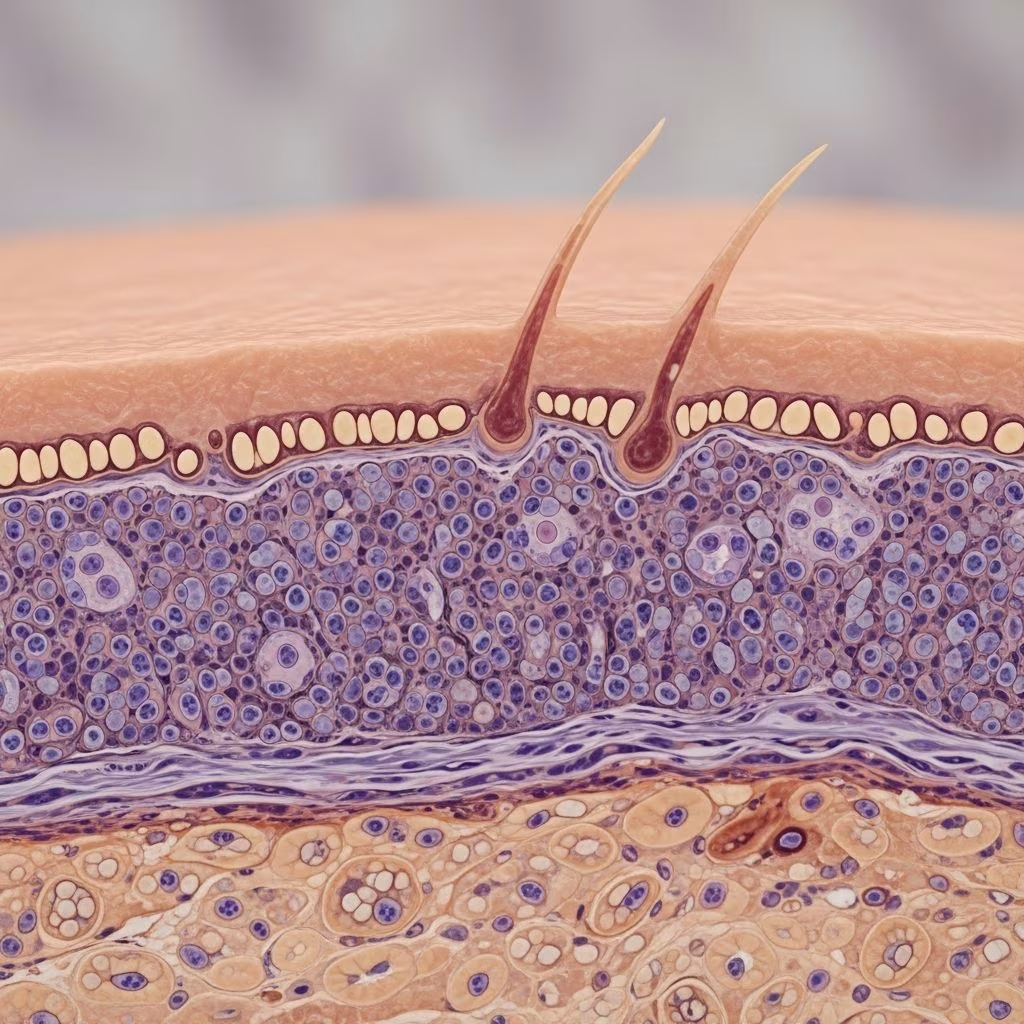
Lichenoid disorders derive their name from their clinical resemblance to lichens—flat-topped, violaceous papules often with a shiny surface and fine Wickham striae. Histologically, they feature a band-like lymphocytic infiltrate at the dermo-epidermal junction, vacuolar degeneration of basal keratinocytes (interface dermatitis), and apoptotic keratinocytes (Civatte bodies). This pattern indicates T-cell mediated cytotoxicity against basal keratinocytes.
These conditions can be idiopathic, drug-induced, or associated with infections like hepatitis C, autoimmune diseases, or malignancies. They range from acute self-limiting eruptions to chronic scarring variants.
Who Gets Lichenoid Disorders?
Lichenoid disorders typically affect middle-aged adults, with a slight female predominance in some variants like lichen planopilaris. Classic lichen planus peaks in the 30-60 age group. Risk factors include genetic predisposition (HLA associations), medications (e.g., beta-blockers, NSAIDs, ACE inhibitors, thiazides, antimalarials), and hepatitis C infection (up to 30% association in some populations).
Children and elderly may develop specific subtypes like annular lichenoid dermatitis of youth or frontal fibrosing alopecia post-menopause. Exposure to photoallergens or contact sensitizers can trigger lichenoid photodermatosis or reactions.
What Causes Lichenoid Disorders?
The exact cause is often unknown (idiopathic), but pathogenesis involves:
- Autoimmune mechanism: CD8+ T-cells target basal keratinocytes, possibly triggered by altered self-antigens.
- Drug-induced: Common culprits include gold, penicillamine, sulfonylureas, and PD-1 inhibitors. Lesions appear 1-3 months after starting the drug.
- Infectious associations: Hepatitis C virus (HCV) in 5-30% of LP cases; treat underlying infection to resolve skin lesions.
- Photoallergic or contact: UV-exposed areas in lichenoid photodermatitis.
Types of Lichenoid Disorders
Lichenoid disorders encompass classic lichen planus and numerous variants. Below is a detailed classification.
Classic Lichen Planus
Characterized by pruritic, violaceous, polygonal, flat-topped papules on flexor surfaces (wrists, ankles), coalescing into plaques. Oral involvement (reticular white lines) in 50%; genital in 25%. Koebner phenomenon (lesions at trauma sites) is common.
Cutaneous Variants
- Hypertrophic LP: Thick, hyperkeratotic plaques on shins, pruritic, prone to squamous cell carcinoma.
- Atrophic LP: Hypopigmented, depressed scars.
- Annular LP: Centrifugal spread with hypopigmented centers, often on genitals.
- Vesiculobullous LP: Tense blisters on normal or lesional skin; histologically resembles lichen planus pemphigoides.
- Ulcerative LP: Painful erosions on soles or mucosa.
Mucosal Lichen Planus
Oral LP: Most common site—lacy white plaques on buccal mucosa, tongue, gingivae. Erosive form causes pain, scarring, 1-2% risk of squamous cell carcinoma.
Genital LP: Vaginal or vulval erosions in women; penile plaques in men. Symptomatic, requires biopsy to differentiate from lichen sclerosus.
Nail and Hair Involvement
Lichen planus of nails: Affects 10%; ridging, thinning, pterygium (scarring), onycholysis. Permanent scarring common.
Lichen planopilaris: Scarring alopecia with perifollicular erythema, scale. Variants: classic, frontal fibrosing alopecia (postmenopausal women), Graham-Little-Piccardi-Lassueur syndrome (scalp + body hair + non-scarring alopecia).
Lichenoid Drug Eruptions
Mimic idiopathic LP but often photosensitive or eczematous. Resolve 1-3 months after drug cessation; biopsy shows more eosinophils.
Other Lichenoid Dermatoses
| Condition | Key Features | Histology |
|---|---|---|
| Lichen nitidus | Minute white papules, trunk/limbs; self-limiting. | Granulomatous, claw-clipping of rete ridges. |
| Lichen aureus | Golden-brown patches on legs; persistent purpura. | Lichenoid infiltrate + hemosiderin. |
| Lichen striatus | Linear Blaschko lines, children; resolves 1-3 yrs. | Mixed spongiotic-lichenoid. |
| Annular lichenoid dermatitis of youth | Annular plaques on trunk; hypopigmented centers. | Lymphohistiocytic, vacuolar change. |
| Lichenoid actinic keratosis | Inflammatory papules on sun-damaged skin. | AK + lichenoid reaction. |
| Lichen planus pemphigoides | LP + bullae; autoantibodies to BP180. | Lichenoid + subepidermal blisters. |
| Lichenoid photodermatitis | Sun-exposed plaques; photoallergic. | Lichenoid pattern in photodamaged skin. |
Clinical Features
Symptoms: Pruritus (intense in hypertrophic), burning, pain (erosive/mucosal). Signs: Violaceous papules/plaques, Wickham striae (white lines, enhanced by iodine), nail dystrophy, scarring alopecia. Distribution: Flexors, oral/genital mucosa, nails.
Diagnosis
Clinical diagnosis in classic cases, confirmed by biopsy showing:
- Band-like lymphocytic infiltrate obscuring dermo-epidermal junction.
- Vacuolar basal degeneration, Civatte bodies.
- Hypergranulosis, saw-tooth rete ridges in LP.
Direct immunofluorescence: Fibrin + IgM at junction. Rule out mimics: Psoriasis, pityriasis rosea, secondary syphilis. Serology for HCV.
Treatment of Lichenoid Disorders
Treatment targets inflammation and symptoms; no cure.
Topical Therapies (First-line for localized)
- High-potency steroids (clobetasol) for skin; lower for face/mucosa.
- Calcineurin inhibitors (tacrolimus) for oral/genital.
- Intralesional steroids for hypertrophic/nail.
Systemic Therapies (Generalized/Severe)
- Oral glucocorticoids (prednisone 0.5-1mg/kg taper).
- Retinoids (acitretin), immunosuppressants (methotrexate, cyclosporine).
- Phototherapy (NB-UVB, PUVA) for cutaneous LP.
Specific Management
- Hep C-associated: Antivirals resolve LP.
- Drug-induced: Discontinue offender.
- Lichen planopilaris: Hydroxychloroquine, doxycycline.
- Mucosal: Monitor for malignancy.
Supportive: Emollients, antihistamines for itch. Refractory cases: Biologics (e.g., dupilumab experimental).
Frequently Asked Questions (FAQs)
Q: Is lichen planus contagious?
A: No, lichen planus and lichenoid disorders are not infectious; they are inflammatory/autoimmune.
Q: Can lichen planus cause cancer?
A: Erosive oral LP has 1-2% risk of squamous cell carcinoma; regular monitoring needed.
Q: How long does lichen planus last?
A: Cutaneous LP resolves in 1-2 years (80%); mucosal/nail can be chronic.
Q: What triggers lichen planus flares?
A: Stress, medications, trauma (Koebner), infections.
Q: Is lichen sclerosus a lichenoid disorder?
A: No, lichen sclerosus is distinct (thinning, sclerosis); though genital overlap, histologically different from LP.
References
- Lichens in dermatology — Indian Journal of Dermatology, Venereology and Leprology. 2017. https://ijdvl.com/lichens-in-dermatology/
- Lichenoid and interface dermatoses — PubMed/International Journal of Dermatology. 2017-05-01. https://pubmed.ncbi.nlm.nih.gov/28396069/
- Lichen Planus – Merck Manual Professional Edition — Merck Manuals. 2023. https://www.merckmanuals.com/professional/dermatologic-disorders/psoriasis-and-other-papulosquamous-disorders/lichen-planus
- Lichen Planus: What It Is, Causes, Types & Treatments — Cleveland Clinic. 2023-07-28. https://my.clevelandclinic.org/health/diseases/17723-lichen-planus
- Lichenoid disorders – DermNet — DermNet NZ. 2023. https://dermnetnz.org/topics/lichenoid-disorders
- Lichen planus and lichenoid dermatoses: Clinical overview — PubMed/Journal of the American Academy of Dermatology. 2018-10. https://pubmed.ncbi.nlm.nih.gov/30318136/
- Lichen planus – Symptoms and causes — Mayo Clinic. 2023-08-01. https://www.mayoclinic.org/diseases-conditions/lichen-planus/symptoms-causes/syc-20351378