
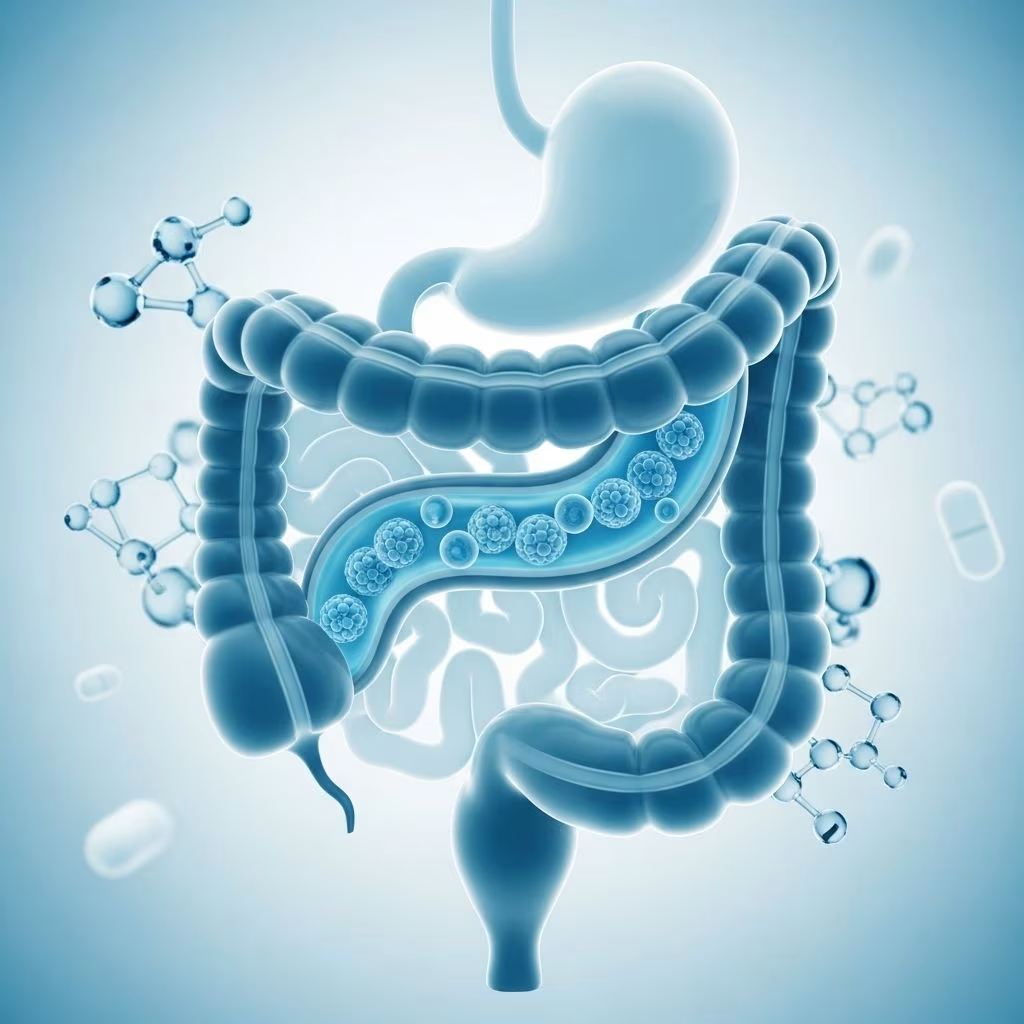
About macrogols
Macrogols, also known as polyethylene glycol (PEG) 3350, are osmotic laxatives widely used to treat constipation and for bowel cleansing before medical procedures like colonoscopy. They work by drawing water into the bowel, softening stools and increasing bowel movements without being absorbed into the body. Brands such as Cosmocol, Movicol, and Laxido contain macrogol 3350 along with electrolytes to maintain balance during use.
Unlike stimulant laxatives, macrogols act physiologically by hydrating stool in the intestinal lumen, promoting natural evacuation. This makes them suitable for chronic use in adults, children, elderly patients, and even during pregnancy. Clinical studies confirm their efficacy in increasing spontaneous bowel movements, improving stool consistency, and reducing straining, particularly in irritable bowel syndrome with constipation (IBS-C).
Key facts about macrogols
- Macrogols soften and bulk stools by retaining water, easing passage through the bowels.
- They typically take 1-2 days to work; consult a doctor if no effect after 3 days.
- Safe for long-term use due to minimal absorption and low side effect profile.
- Common brands: Movicol, Cosmocol, Laxido, available as sachets mixed with water.
- Not absorbed or metabolized; passes through the gut unchanged, non-fermentable.
How macrogols work
Macrogols are high molecular weight polymers (3,500–4,000 Daltons) that bind water molecules tightly. This water cannot be absorbed by the bowel wall, increasing stool volume and hydration primarily in the large intestine. By softening hard stools and distending bowel walls, they stimulate natural propulsive contractions, accelerating transit without irritating the mucosa.
In chronic constipation, this counters fecal dehydration, prevents rectal accumulation, and breaks the cycle of hard, dry stools requiring straining. For bowel cleansing, higher doses empty the bowel effectively, as proven in pre-colonoscopy preparations.
When to take macrogols
For constipation
Taken daily to maintain regular bowel movements. Dissolve one sachet in 125ml water and drink. Adjust dose based on response: start with 1 sachet daily, increase to 2-3 if needed.
| Patient Group | Starting Dose | Max Daily Dose |
|---|---|---|
| Adults | 1 sachet | 3 sachets |
| Children 12+ years | 1 sachet | 2 sachets |
| Children 5-11 years | ½-1 sachet | 2 sachets |
For faecal impaction
A build-up of hard stool in the rectum. Use high-dose regimen: 8 sachets daily for up to 3 days, divided throughout the day. Follow with maintenance dose.
For bowel cleansing before colonoscopy
Higher volumes (e.g., 2-4 liters of solution) taken the day before. Specific instructions from your doctor.
Dosage information
Dosage is individualized. For chronic constipation, low-volume daily use (13.125g macrogol per sachet). Tailor to symptoms: increase if stools remain hard, decrease to avoid diarrhea. Elderly and opioid-induced constipation benefit from dose adjustments without interaction risks.
- Preparation: Always dissolve fully in water; do not store mixed solution beyond 6 hours.
- Duration: Can be used long-term; efficacy does not diminish.
- Special populations: Safe in pregnancy, children, neurological disorders, diabetes.
Who can take macrogols
- Adults and children over 5 years for constipation.
- Pregnant or breastfeeding women – generally safe, consult doctor.
- Elderly – preferred due to hydration benefits without electrolyte imbalance.
- Patients with IBS-C, opioid constipation, diverticula, neurological issues – first-line choice.
- Contraindications: Gut obstruction, perforation, severe inflammatory bowel disease, hypersensitivity.
Who can and cannot take macrogols
Most people can use macrogols safely. Avoid if:
- Suspected bowel obstruction or perforation.
- Severe allergy to ingredients.
- Uncontrolled inflammatory conditions like Crohn’s or toxic megacolon.
Caution in renal impairment (monitor electrolytes) or heart failure. Always check with a healthcare provider.
How and when to take macrogols
Mix sachet with 125ml water, stir until clear. Take at any time, preferably same time daily. Can be flavored or chilled. For impaction, spread doses evenly. Continue until regular pattern established, then adjust.
Dosage for adults
1-3 sachets daily in divided doses. For cleansing, follow procedure-specific regimen.
Dosage for children
Age-appropriate: Under 5 years only on medical advice. Use half sachets for younger children.
Side effects of macrogols
Generally well-tolerated. Common mild effects:
- Abdominal bloating, pain, flatulence.
- Diarrhea (reduce dose).
- Anal soreness (use barrier cream).
Rare: Electrolyte imbalance with overuse, allergic reactions. Long-term studies show safety comparable to placebo.
Pregnancy and breastfeeding
Safe in pregnancy (Category B); preferred for constipation relief. Minimal excretion in breast milk; safe for breastfeeding.
Medicines that interact with macrogols
Few interactions: Does not affect absorption of other drugs if taken 1 hour apart. Safe with opioids.
Common questions about macrogols
How long do macrogols take to work?
1-2 days for regular use; up to 3 days for impaction.
Can you take macrogols every day?
Yes, for chronic constipation; safe long-term.
Do macrogols cause diarrhea?
Possible if dose too high; adjust accordingly.
Are macrogols safe for kidneys?
Generally yes; monitor in severe impairment.
Can children take macrogols?
Yes, from 5 years; doctor advice for younger.
About taking macrogols with other medicines
Minimal interactions due to non-absorption. Separate from other oral meds by 1 hour.
Stopping macrogols
Reduce gradually to avoid rebound constipation. Lifestyle changes help maintain regularity.
Macrogols revolutionized constipation management by enabling safe, effective, first-line therapy across conditions, shifting from diagnostic delays to immediate relief.
References
- Chronic constipation: the role of Macrogol 3350 — PJ Pharma. 2023. https://www.pjpharma.it/en/chronic-constipation-the-role-of-macrogol-3350/
- The macrogol revolution in the treatment of chronic constipation — PMC (NCBI). 2024-10-11. https://pmc.ncbi.nlm.nih.gov/articles/PMC12434198/
- About macrogol — NHS UK. 2024. https://www.nhs.uk/medicines/macrogol/about-macrogol/
- Polyethylene Glycol – StatPearls — NCBI Bookshelf. 2023-05-01. https://www.ncbi.nlm.nih.gov/books/NBK557652/
- Polyethylene glycol: Uses, Interactions, Mechanism of Action — DrugBank. 2024. https://go.drugbank.com/drugs/DB09287
- Understanding Macrogol Laxatives — Bladder & Bowel UK. 2020-09. https://bbuk.org.uk/wp-content/uploads/2020/09/Understanding-Macrogol-Laxatives.pdf
- What is the mechanism of action of macrogol — DrOracle. 2024. https://droracle.ai/articles/123784/what-is-the-mechanism-of-action-of-macrogol-polyethylene-glycol-10g-as-a-laxative