
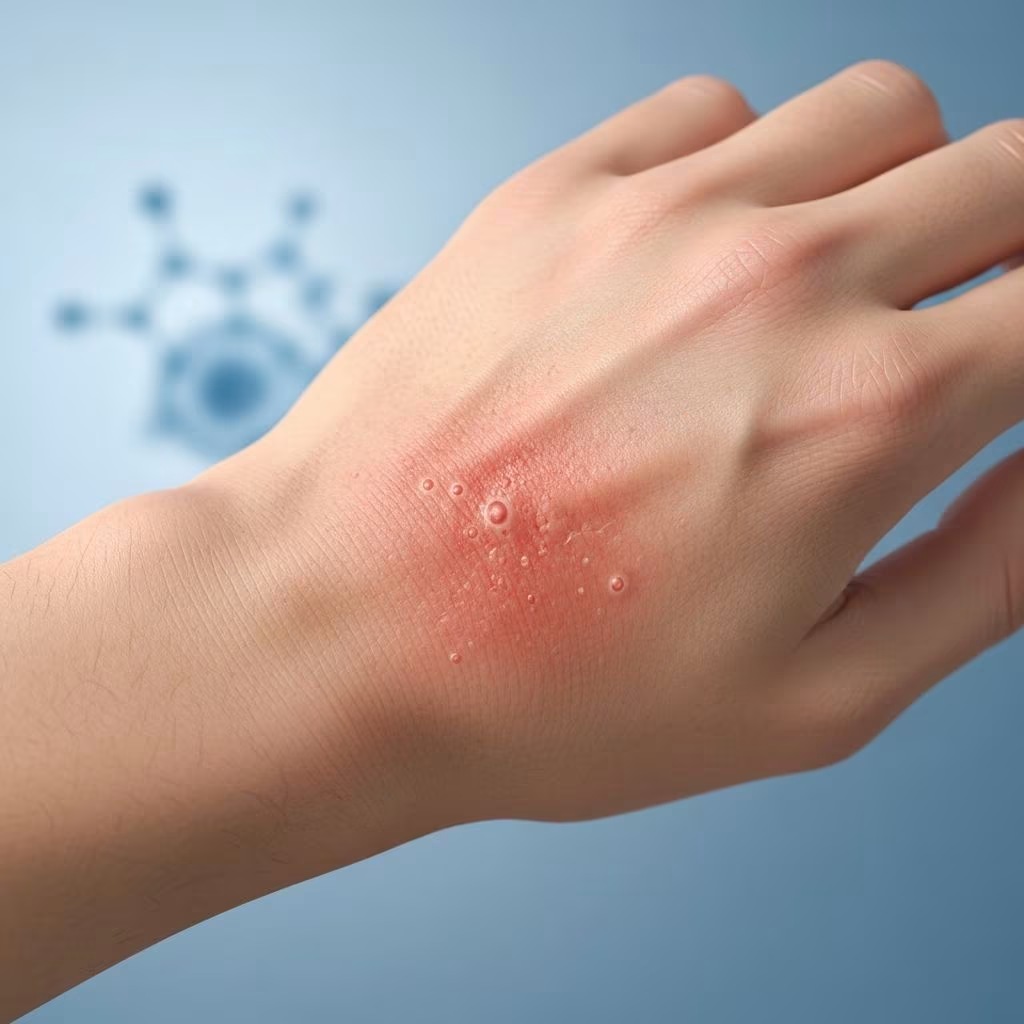
Methyldibromoglutaronitrile (MDBGN) is a preservative used in many cosmetics and personal care products. Allergic contact dermatitis to MDBGN—a type IV hypersensitivity reaction—is common in patients with stubborn or recurrent eczema.
What is methyldibromoglutaronitrile?
Methyldibromoglutaronitrile (CAS 35691-65-7), also called methyldibromo glutaronitrile, is a broad-spectrum antimicrobial preservative effective against bacteria, yeasts, and moulds. It is frequently combined with phenoxyethanol in a 20:80 ratio as the commercial product Euxyl® K 400. MDBGN replaced older preservatives like parabens and formaldehyde-releasers due to its efficacy at low concentrations (50–100 ppm).
Due to high sensitisation rates, the EU banned MDBGN in leave-on products in 2007 and restricted it to 0.1% in rinse-off products. Despite restrictions, MDBGN allergy remains prevalent worldwide.
Who gets methyldibromoglutaronitrile allergy? (Epidemiology)
MDBGN is a leading cause of contact allergy in Europe and North America. Patch test studies report:
- 3–9.3% positive patch test reactions to 0.1–0.5% MDBGN in consecutive patients
- Up to 17% prevalence in selected eczema patients
- One of the top 5 allergens in cosmetics-related dermatitis
Women are affected 3–4 times more often than men, reflecting greater cosmetic use. Hand eczema patients show MDBGN allergy in 4.9–14% of cases. Occupational exposure occurs in healthcare workers using MDBGN-containing soaps and lotions.
Human experimental data confirm MDBGN elicits reactions at low doses: 2.2 µg/cm² in rinse-off products caused dermatitis in 37% of sensitised subjects within 6–34 days.
Products containing methyldibromoglutaronitrile
MDBGN appears in water-based cosmetics at 50–500 ppm. Common sources include:
- Wash-off products: Shampoos, conditioners, liquid soaps, shower gels, wet wipes (predominant exposure in 68% hand eczema cases)
- Leave-on products: Moisturisers, lotions, sunscreens, makeup removers, baby wipes
- Others: Hair styling products, massage oils, eye makeup
Chemical analysis detects MDBGN at 11–473 ppm in implicated products. Even trace amounts (<50 ppm) provoke dermatitis in sensitised individuals.
What does the rash look like?
MDBGN dermatitis mimics other cosmetic allergies:
- Acute: Redness, swelling, intense itching, vesicles, blisters, oozing
- Subacute: Scaling, crusting, dry fissured skin
- Chronic: Thickened lichenified skin, nail dystrophy
Common sites: hands (68% cases), face/neck, eyelids, genitals, axillae. Rinse-off products cause hand/periungual eczema; leave-on products affect face/genitals. Widespread dermatitis occurs from multiple exposures.

How is the diagnosis made?
Suspect MDBGN allergy in:
- Recurrent eczema after using cosmetics despite avoiding fragrances/parabens
- Hand or facial dermatitis improving with product avoidance
Patch testing is diagnostic gold standard:
| Allergen | Concentration | Vehicle |
|---|---|---|
| MDBGN | 0.1–0.5% | Pet. |
| Euxyl® K 400 | 2.5% | Pet. |
Read at D2/D3/D5/D7. Positive reactions (+++/++) correlate with clinical relevance. Use supplemental cosmetics series for confirmation.
ROAT (repeated open application test): 0.1 mL 50 ppm MDBGN lotion 2x daily x 2 weeks on antecubital fossa. 35–61% sensitised patients react positively.
What is the treatment?
- Avoidance: Eliminate ALL MDBGN-containing products. Check ingredient lists for:
- Methyldibromoglutaronitrile
- Euxyl K 400
- INCI names above
- Skin care: Thick emollients (petrolatum), brief lukewarm showers, cotton clothing
- Topical steroids: Potent-medium for 1–2 weeks (e.g., mometasone 0.1% ointment)
- Systemic therapy: Oral prednisone 0.5 mg/kg x 7–10 days for severe cases
Clearance occurs in 70% hand eczema patients after avoidance.
What should you expect?
With strict avoidance:
- 80–90% improve/clear within 4–8 weeks
- Hand eczema resolves in 19/27 patients after stopping MDBGN shampoos/soaps
- Persistent cases may have multiple allergies or chronic actinic dermatitis
Challenges: Cross-reactivity rare; persistent reactions suggest other allergens (e.g., MCI/MI, fragrances).
Prevention of methyldibromoglutaronitrile allergy
- Industry: Use safer alternatives (e.g., iodopropynyl butylcarbamate <0.02%)
- Consumers: Choose MDBGN-free cosmetics; patch test new products
- Regulations: EU limits effective but global products vary
Related topics
- Allergic contact dermatitis
- Cosmetic allergy
- Hand dermatitis
- Preservatives in cosmetics
Frequently Asked Questions
Q: Why is MDBGN allergy increasing?
A: High usage in cosmetics (1990s–2000s), potent sensitiser at low doses. EU bans reduced incidence but legacy cases persist.
Q: Can MDBGN cause eyelid dermatitis?
A: Yes, from shampoos (rinsing), mascara removers, eye creams. Facial products spread easily.
Q: Is Euxyl K 400 safe now?
A: Phenoxyethanol portion safe; MDBGN causes allergy. Avoid entire mix.
Q: How to find MDBGN-free products?
A: Apps like SkinSAFE, contact manufacturers, choose “preservative-free” or natural lines (verify labels).
Q: Does MDBGN allergy affect children?
A: Rare but rising from baby wipes/shampoos. Patch test if suspected.
References
- SCCP Opinion on Methyldibromo glutaronitrile (sensitisation only) — Scientific Committee on Consumer Products, European Commission. 2004-03-24. https://ec.europa.eu/health/ph_risk/committees/04_sccp/docs/sccp_o_00f.pdf
- Allergic Contact Dermatitis From Methyldibromo Glutaronitrile — PubMed (Contact Dermatitis). 2005-02. https://pubmed.ncbi.nlm.nih.gov/15701121/
- Charlotte Devantier Jensen PhD thesis on contact allergy — Videncenter for Allergi. 2004. https://www.videncenterforallergi.dk/wp-content/uploads/files/ph.d-afhandlinger/phd-devantier.pdf
- Methyldibromo glutaronitrile (MDBGN) Assessment Report — Australian Government Department of Health. 2015. https://www.industrialchemicals.gov.au/sites/default/files/Methyldibromo%20glutaronitrile%20MDBGN.pdf
- NA50: Methyldibromo glutaronitrile/phenoxyethanol (MDBGN/PE) — SmartPractice Canada. Accessed 2026. https://www.smartpracticecanada.com/spcanada/pdfs/all-allergens/NA50.pdf