
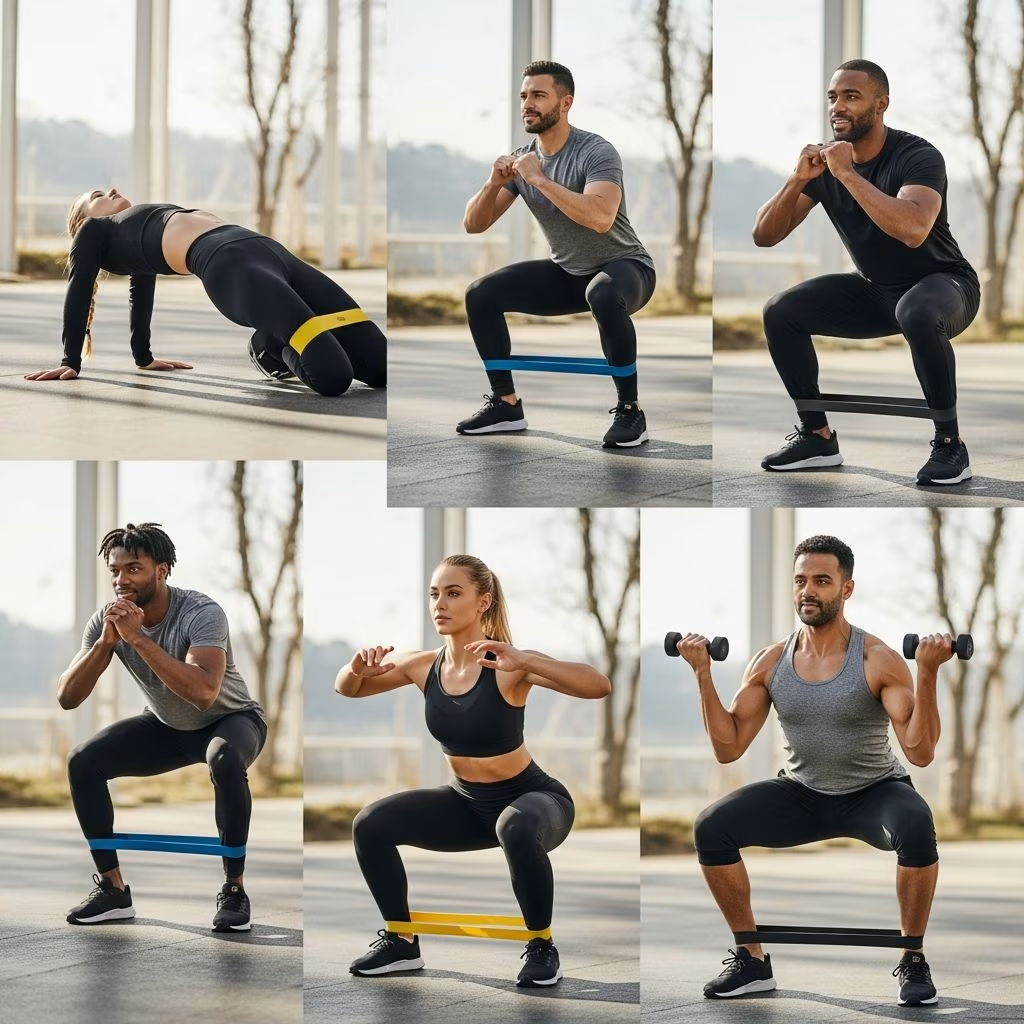
Transform your fitness routine with the mini resistance band challenge, a compact yet powerful workout that delivers full-body strength gains using just one small tool. Ideal for home, travel, or gym sessions, this challenge emphasizes glute activation, core stability, and overall muscle endurance in under 15 minutes.
What You’ll Need
To get started, grab a mini resistance band (also called a booty band or loop band), typically 12-16 inches in diameter. Choose a medium resistance level for beginners—light for warm-ups, heavy for advanced users. You’ll also need an exercise mat for comfort during floor work. No other equipment required, making this accessible and portable .
Why Mini Resistance Bands?
Mini bands provide variable resistance, increasing tension as you stretch them, which challenges muscles more effectively than constant-weight tools like dumbbells. They excel at glute activation—key for better squats, deadlifts, and posture—while being low-impact to protect joints. Studies from the American Council on Exercise show resistance bands build strength comparable to free weights when used progressively . Benefits include improved stability, reduced injury risk, and scalability for all levels.
- Portable: Fits in a gym bag.
- Versatile: Targets lower body, core, and even upper body.
- Progressive: Stack bands or shorten loops for more challenge.
The Workout Structure
This 15-minute challenge follows a circuit format: Perform each of the 6 exercises for 40 seconds work, 20 seconds rest. Complete 3 rounds with 1-minute rest between rounds. Focus on controlled movements and full range of motion. Warm up with 5 minutes of light cardio (marching in place) and dynamic stretches. Aim for 3-4 sessions weekly.
| Exercise | Target Muscles | Reps/Time |
|---|---|---|
| Glute Bridges with Abduction | Glutes, Hamstrings | 40s |
| Lateral Walks | Glutes, Abductors | 40s |
| Donkey Kicks | Glutes, Core | 40s/side |
| Fire Hydrants | Glutes, Hips | 40s/side |
| Clamshells | Glutes, Outer Thighs | 40s/side |
| Banded Squats | Quads, Glutes, Core | 40s |
Exercise Breakdown
1. Glute Bridges with Abduction
Lie on your back, knees bent, feet flat, band above knees. Lift hips into a bridge, then press knees outward against the band for 2 seconds. Lower slowly. This move fires up the gluteus maximus and medius for powerful hips . Do 12-15 reps.
2. Lateral Walks
Place band above knees, feet hip-width. Lower into a quarter squat, step sideways 8-10 times each direction while keeping tension. Mimics real-life movements like side-stepping, strengthening stabilizers . Stay low to maximize burn.
3. Donkey Kicks
On all fours, band above knees. Kick one heel back and up, squeezing glute at top. Switch sides halfway. Targets the posterior chain for better athletic performance . Keep core tight to avoid arching.
4. Fire Hydrants
All fours position, lift bent knee out to side like a dog at a hydrant. Hold band tension. Excellent for hip abductors, reducing knee valgus in squats . Pulse at top for extra challenge.
5. Clamshells
Lie on side, knees bent, band above knees. Keep feet together, lift top knee while stabilizing hips. Switch sides. Builds rotational stability vital for runners and lifters . 15-20 reps per side.
6. Banded Squats
Band above knees, feet shoulder-width. Squat until thighs parallel, driving knees out. Stand explosively. Combines quad and glute work for functional strength . Progress by pausing at bottom.
Progression Tips
Beginners: Use lighter band, reduce time to 30s. Intermediate: Add pulses or holds. Advanced: Double band or slow eccentrics (4s lower). Track progress by increasing rounds to 4 or adding isometric holds. Pair with protein-rich recovery for muscle growth.
Common Mistakes to Avoid
- Holding breath—instead, exhale on effort.
- Knees caving in—push against band actively.
- Rushing reps—prioritize form over speed.
- Skipping warm-up—leads to strains.
Per the National Strength and Conditioning Association, proper form prevents 70% of training injuries.
Benefits Backed by Science
Resistance training like this boosts metabolism, bone density, and mental health. A 2023 study in the Journal of Strength and Conditioning Research found mini-band protocols increase glute activation by 40% over bodyweight alone. Consistent use improves posture and reduces lower back pain.
Frequently Asked Questions (FAQs)
Can beginners do this challenge?
Yes! Start with lighter resistance and fewer rounds. Consult a doctor if new to exercise.
How often should I do it?
3-5 times weekly, with rest days for recovery.
What if I don’t have a mini band?
Sub with a towel for sliders or bodyweight variations, but bands add superior tension.
Does it build muscle?
Absolutely—progressive overload via bands promotes hypertrophy, especially in glutes and legs.
Can I add weights?
Yes, hold dumbbells for squats once form is solid.
Sample Weekly Plan
| Day | Workout |
|---|---|
| Monday | Mini Band Challenge + Cardio |
| Tuesday | Rest or Yoga |
| Wednesday | Mini Band + Upper Body |
| Thursday | Rest |
| Friday | Full Challenge |
| Weekend | Active Recovery |
Customize based on goals: Add volume for hypertrophy, speed for power.
Nutrition for Results
Fuel with 1.6-2.2g protein/kg bodyweight daily. Post-workout: Carbs + protein (e.g., banana + yogurt). Hydrate well—bands increase sweat via constant tension.
Incorporate this challenge into your routine for noticeable strength in 4 weeks. Consistency is key!
References
- Full Body Mini RESISTANCE BAND Workout — Heather Robertson. 2020-07-06. https://www.youtube.com/watch?v=9qqnYOcSpY8
- 12 Resistance Band Moves You Can Do at Home — Men’s Health. 2020-approx. https://www.menshealth.com/fitness/a32093962/resistance-band-workouts/
- 29 resistance band exercises to get strong without weights — Women’s Health UK. 2020-approx. https://www.womenshealthmag.com/uk/fitness/strength-training/a31986994/resistance-band-exercises/