
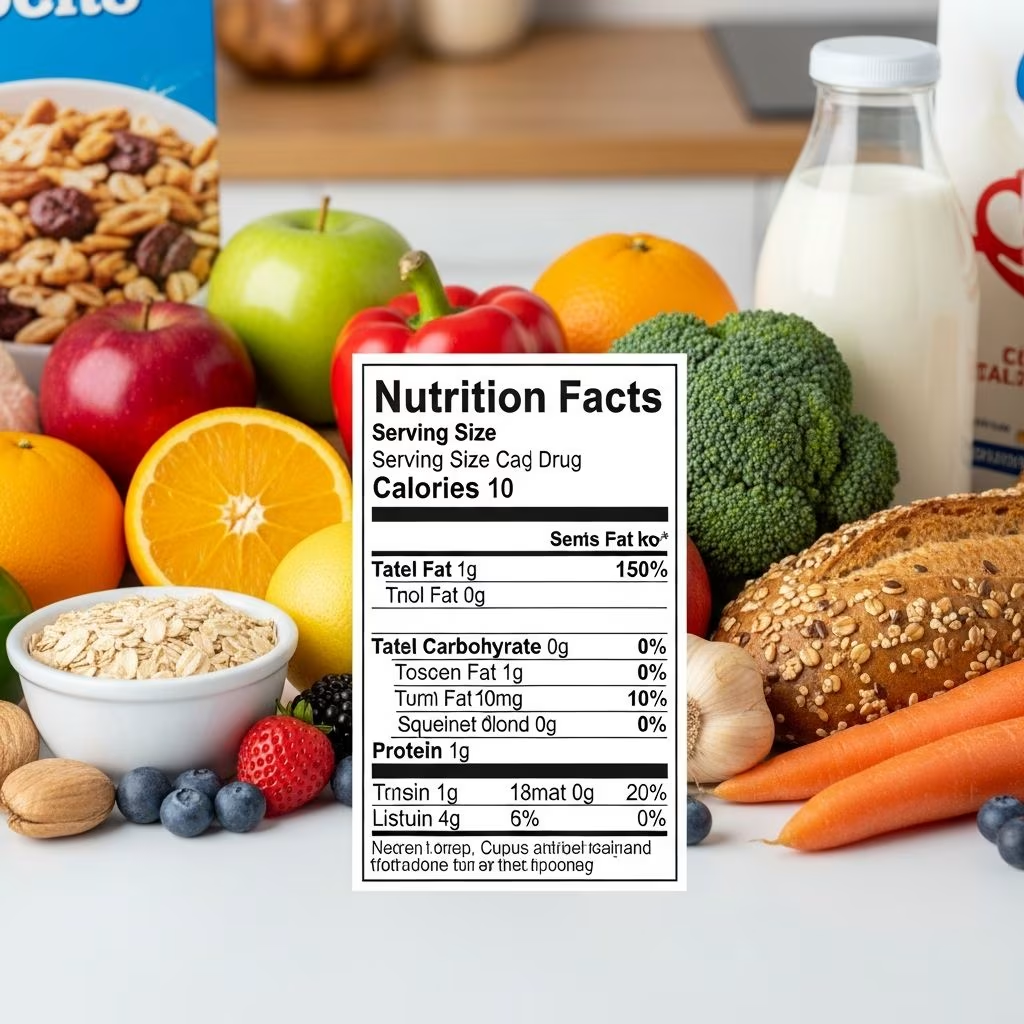
The Nutrition Facts label is a critical tool on packaged foods and beverages, providing essential information to help consumers make informed dietary decisions. Updated by the FDA in 2020, it reflects current science on diet and health, emphasizing nutrients like added sugars, vitamin D, and potassium while highlighting serving sizes that match real-world consumption.
How to Use the Nutrition Facts Label
Start with the top section for serving size and calories, then scan macronutrients and key vitamins/minerals using the % Daily Value (%DV). Aim for low %DV (under 5%) in saturated fat, sodium, and added sugars, and high %DV (20% or more) in fiber, vitamin D, calcium, iron, and potassium. The label’s dual-column format for larger packages shows per-serving and per-container values, simplifying total intake calculations.
- Serving size reflects typical consumption, not recommendations.
- Calories are bolded for quick reference.
- %DV based on a 2,000-calorie diet guides nutrient balance.
Serving Size
The serving size is the first item listed and represents the amount people typically eat at one time, not a recommended portion. Updated sizes are larger for items like ice cream (from 1/2 cup to 2/3 cup) and beverages (12 oz cans now one serving). Check servings per container to avoid underestimating intake—for example, a 20-oz soda has 2.5 servings, multiplying calories accordingly.
Dual-column labels on packages with 2-3 servings (e.g., family-size yogurt) display per-serving and total package nutrition, aiding those consuming the whole item.
Calories
Calories per serving are prominently displayed in bold. Multiply by servings consumed for total calories—eating two servings doubles everything. Calories indicate energy content: 40 calories is low, 100 moderate, 400+ high per serving. This helps manage weight, as excess calories contribute to unhealthy gain.
| Calories per Serving | Guideline |
|---|---|
| 40 or less | Low |
| 100 | Moderate |
| 400 or more | High |
The Deeper Dive
Beyond basics, examine fats, carbs, protein, and micronutrients. Total sugars now separate added from natural sources, as added sugars link to health issues like obesity without nutritional benefits.
Total Fat
Total fat includes saturated, trans, and unsaturated types. Limit saturated fat to under 10% of calories; avoid trans fats (0g ideal). Unsaturated fats (mono/poly) support heart health but check calories.
Saturated Fat
Saturated fat raises LDL cholesterol; aim for <10% DV. Found in meats, dairy, tropical oils.
Trans Fat
Trans fats increase heart disease risk; FDA bans artificial sources since 2021. Labels may show 0g even with <0.5g; check ingredients for ‘partially hydrogenated oils’.
Cholesterol
<300mg DV; dietary cholesterol has less impact than saturated fat for most, but limit if high blood cholesterol.
Sodium
High sodium (>20% DV) links to hypertension; aim <2,300mg daily, ideally 1,500mg. Hidden in processed foods.
Total Carbohydrate
Includes starches, sugars, fiber. For carb-counting (e.g., diabetes), use total grams.
Dietary Fiber
Soluble/insoluble fiber aids digestion, heart health; aim 28g DV. Whole grains, fruits, veggies provide it.
Total Sugars & Added Sugars
Total sugars combine natural (fruit, dairy) and added. Added sugars (syrups, HFCS) should be <10% calories (50g DV); check ‘includes Xg added sugars’.
Example: Yogurt with 15g total sugars might have 7g added (label: ‘Includes 7g Added Sugars’).
Protein
Supports muscle, satiety; DV 50g. Plant/animal sources vary; not all products highlight it yet.
Vitamin D
Newly required; 20mcg DV prevents osteoporosis. Fortified milk, fatty fish.
Calcium
1,300mg DV for bones; dairy, greens.
Iron
18mg DV prevents anemia; meats, beans.
Potassium
4,700mg DV counters sodium, lowers blood pressure; bananas, potatoes.
The Percent Daily Value (%DV)
%DV shows nutrient contribution to a 2,000-calorie diet (adjust for needs). 5%+ low, 20%+ high. Updated for added sugars (50g=100%), vitamin D, etc. Footnote explains: low <5%, high ≥20%.
| Nutrient | 100% DV Amount | Goal |
|---|---|---|
| Added Sugars | 50g | <100% |
| Sodium | 2,300mg | <100% |
| Vitamin D | 20mcg | ≥100% |
| Calcium | 1,300mg | ≥100% |
| Iron | 18mg | ≥100% |
| Potassium | 4,700mg | ≥100% |
Nutrition Facts Label Variations
Small packages may use simplified or linear formats. Single-ingredient sugars (honey) note added sugar contribution with †. Breads/sugars may abbreviate.
Ingredients List & Claims
Ingredients listed by weight descending; watch additives. Claims like ‘low sodium’ (<140mg/serving) are FDA-regulated. Check beyond claims using Nutrition Facts.
Frequently Asked Questions
What is the serving size on a Nutrition Facts label?
It reflects typical consumption amounts updated by FDA, not health recommendations. Always check servings per container.
How do I calculate total calories from a package?
Multiply per-serving calories by servings eaten, or use dual-column for whole package.
What do % Daily Values mean?
Percentage of daily nutrient needs based on 2,000 calories. Low <5%, high ≥20%.
Why separate added and total sugars?
Added sugars lack nutrition and link to health risks; natural sugars from fruit/dairy are healthier.
Are trans fats banned?
Artificial trans fats banned by FDA in 2021; check ingredients for partially hydrogenated oils.
Which nutrients should I prioritize?
Limit saturated fat, sodium, added sugars; seek fiber, vitamin D, calcium, iron, potassium.
Practical Tips for Using Labels
Compare products side-by-side, ignore front claims if contradicted by facts, track added sugars/sodium. Apps can scan labels.
Incorporate into shopping: Choose ≥10% DV fiber/protein, <10% saturated fat/sodium. This supports heart health, weight management, disease prevention.
References
- How to Understand and Use the Nutrition Facts Label — U.S. Food and Drug Administration (FDA). 2023-05-10. https://www.fda.gov/food/nutrition-facts-label/how-understand-and-use-nutrition-facts-label
- Understanding Food Labels — Harvard T.H. Chan School of Public Health. 2024-01-15. https://nutritionsource.hsph.harvard.edu/food-label-guide/
- Understanding Food Nutrition Labels — American Heart Association. 2023-11-20. https://www.heart.org/en/healthy-living/healthy-eating/eat-smart/nutrition-basics/understanding-food-nutrition-labels
- What’s on the Nutrition Facts Label — U.S. Food and Drug Administration (FDA). 2023-07-25. https://www.fda.gov/food/nutrition-facts-label/whats-nutrition-facts-label
- How to Read Nutrition Labels: Carbs, Fiber, and Total Carbohydrates — American Diabetes Association. 2024-02-12. https://diabetes.org/food-nutrition/reading-food-labels/making-sense-food-labels
- Nutrition Facts Label and Your Health — Centers for Disease Control and Prevention (CDC). 2023-09-18. https://www.cdc.gov/healthy-weight-growth/healthy-eating/nutrition-label.html