
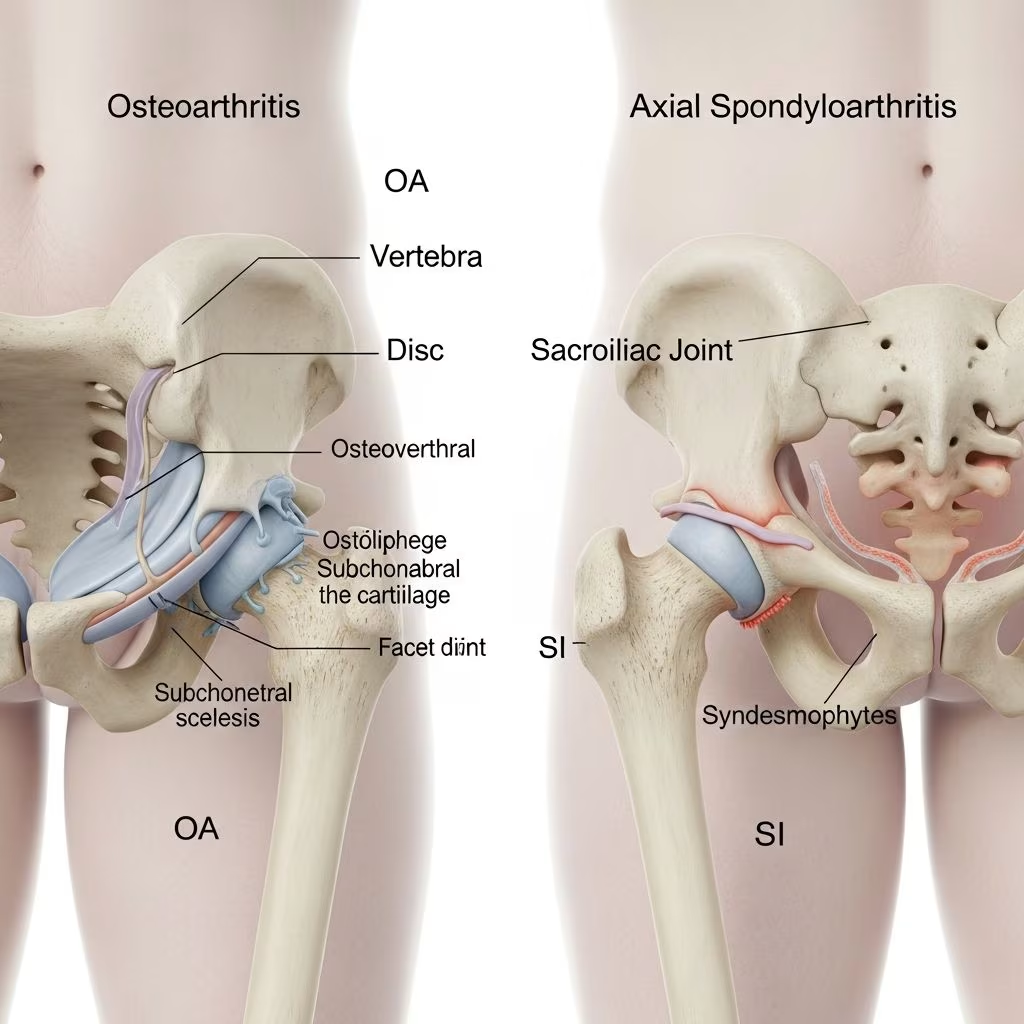
Back pain is incredibly common, affecting four out of five adults at some point in their lives, often linked to osteoarthritis (OA) of the spine, especially in those over 40. However, not all back pain stems from OA; axial spondyloarthritis (axSpA), a type of inflammatory arthritis, can mimic these symptoms but requires different management. Understanding the distinction between OA—a degenerative condition—and axSpA—an autoimmune inflammatory disease—is crucial for accurate diagnosis and effective treatment. This article explores symptoms, causes, diagnostic approaches, and therapies to help you identify whether your back pain is from OA or axSpA.
What Is Osteoarthritis (OA) of the Spine?
Osteoarthritis is the most common form of arthritis affecting the back, occurring anywhere along the spine but most often in the low back or neck. In spinal OA, the cartilage that cushions the facet joints—small stabilizing joints between vertebrae—wears down over time. This degeneration allows bones to rub together, leading to pain, stiffness, and the formation of bone spurs (osteophytes).
These bone spurs are the body’s attempt to stabilize the unstable spine caused by OA, but they can stiffen the area and narrow spaces where nerves exit, potentially causing spinal stenosis. Spinal stenosis pinches nerves, resulting in leg numbness, weakness, or sciatica-like pain radiating down the limbs. OA-related back pain is typically mechanical, worsening with activity and improving with rest.
Symptoms of Spinal OA
Symptoms of back or spine OA develop gradually and intensify over time. Key signs include:
- Pain and stiffness: Worst in the morning, after prolonged sitting, or at the end of a busy day; low back is the primary site.
- Loss of flexibility: Difficulty turning the neck or straightening the back.
- Crepitus: Grinding sensation during movement.
- Tenderness and swelling: Soreness along affected joints.
- Nerve-related issues: Tingling, numbness, or weakness in arms/legs if spurs pinch nerves.
Unlike acute muscle strains, OA pain is chronic, often linked to aging, past injuries, obesity, or repetitive stress.
Risk Factors for OA Back Pain
Several factors increase susceptibility to spinal OA:
- Age over 50.
- Previous back injuries or repetitive motions from work/sports.
- Family history of OA.
- Obesity, which adds stress to spinal joints.
- Associated conditions like scoliosis or leg length discrepancies.
Back pain from OA is multifactorial; fibromyalgia affects 7% of women over 60 and can coexist.
What Is Axial Spondyloarthritis (axSpA)?
Axial spondyloarthritis (axSpA) is an inflammatory arthritis primarily targeting the spine and sacroiliac joints (where the spine meets the pelvis). Unlike OA’s wear-and-tear damage, axSpA involves autoimmune inflammation that can lead to ankylosis—fusion of spinal bones—causing permanent stiffness. It often starts in young adulthood, contrasting OA’s later onset.
Symptoms of axSpA
axSpA symptoms differ markedly from OA:
- Inflammatory back pain: Improves with activity/exercise, worsens with rest; often night pain waking you.
- Morning stiffness: Lasts over 30 minutes.
- Systemic signs: Fatigue, fever, eye inflammation (uveitis), psoriasis, or inflammatory bowel disease.
- Alternating buttock pain or family history of similar conditions.
These features signal inflammation rather than degeneration.
Risk Factors for axSpA
axSpA typically affects people under 45, with genetic links like HLA-B27 gene. Other risks include male gender and family history of spondyloarthritis.
OA vs. axSpA: Key Differences
Differentiating OA from axSpA prevents misdiagnosis. Use this table for quick comparison:
| Feature | Osteoarthritis (OA) | Axial Spondyloarthritis (axSpA) |
|---|---|---|
| Onset Age | Middle-aged/older (>50) | Young adults (<45) |
| Pain Pattern | Worsens with activity, better with rest; end-of-day | Improves with activity, worse at rest/night |
| Stiffness Duration | Short (<30 min) | Prolonged (>30-60 min) |
| Other Symptoms | Mechanical pain, crepitus, possible sciatica | Fatigue, uveitis, psoriasis, bowel issues |
| X-ray Findings | Bone spurs, joint space narrowing | Sacroiliitis, possible fusion |
OA pain often follows injury or strain; axSpA lacks trauma triggers and includes extras like rash or fever.
Diagnosing Back Pain: OA or axSpA?
Diagnosis starts with history and exam. For OA, X-rays reveal spurs and narrowing; MRI/CT show soft tissue damage. axSpA diagnosis uses inflammatory markers (ESR/CRP), HLA-B27 testing, and MRI for sacroiliitis.
80% of back pain is acute (1-7 days), resolving without arthritis; chronic pain warrants evaluation.
Treatment Options for Spinal OA
OA management is multimodal:
- Exercise/PT: Strengthens core, improves flexibility; tai chi aids balance.
- Weight loss: Reduces joint load.
- Pain relief: NSAIDs, heat/cold, acetaminophen.[10]
- Injections: Corticosteroids for inflammation.
- Surgery: Rare, for stenosis (laminectomy).
- Complementary: Acupuncture, massage.
90% of acute pain resolves in 6 weeks with conservative care.
Treatment for axSpA
axSpA focuses on inflammation control:
- Medications: NSAIDs first-line; biologics (TNF/IL-17 inhibitors) if needed.
- Exercise: Essential to maintain mobility.
- PT: Posture training.
Early intervention prevents fusion.
Lifestyle Tips to Ease Back Pain
Regardless of cause:
- Stay active; avoid bed rest beyond 1-2 days.[10]
- Apply heat/cold packs.[10]
- Maintain good posture.
- Quit smoking; manage weight.[10]
Frequently Asked Questions (FAQs)
What causes most back pain in older adults?
OA of the spine is common, with cartilage wear leading to spurs and stenosis.
Does back pain always mean arthritis?
No; 80% is acute from strains, resolving quickly.
How do I know if it’s inflammatory like axSpA?
Pain improving with exercise, night waking, and systemic symptoms suggest axSpA.
Can exercise help OA back pain?
Yes; tai chi and PT reduce pain and improve function.
When should I see a doctor for back pain?
If chronic (>6 weeks), worsening, or with numbness/weakness.
References
- Is Your Back Pain Caused by OA? — Arthritis Foundation. 2023. https://www.arthritis.org/diseases/more-about/is-your-back-pain-caused-by-oa
- Osteoarthritis of the Back/Spine — Arthritis Foundation. 2024. https://www.arthritis.org/health-wellness/about-arthritis/understanding-arthritis/back-oa
- When Back Pain May Mean Arthritis — Arthritis Foundation. 2023. https://www.arthritis.org/health-wellness/about-arthritis/where-it-hurts/when-back-pain-may-mean-arthritis
- Osteoarthritis in Back — Arthritis Foundation. 2024. https://www.arthritis.org/health-wellness/about-arthritis/where-it-hurts/osteoarthritis-in-back
- Back Pain? Find Out If It’s OA or axSpA — Arthritis Foundation. 2024. https://www.arthritis.org/health-wellness/about-arthritis/where-it-hurts/back-pain-find-out-oa-axspa
- Nondrug Therapies for Back Pain — Arthritis Foundation. 2023. https://www.arthritis.org/diseases/more-about/lifestyle-changes-back-pain