
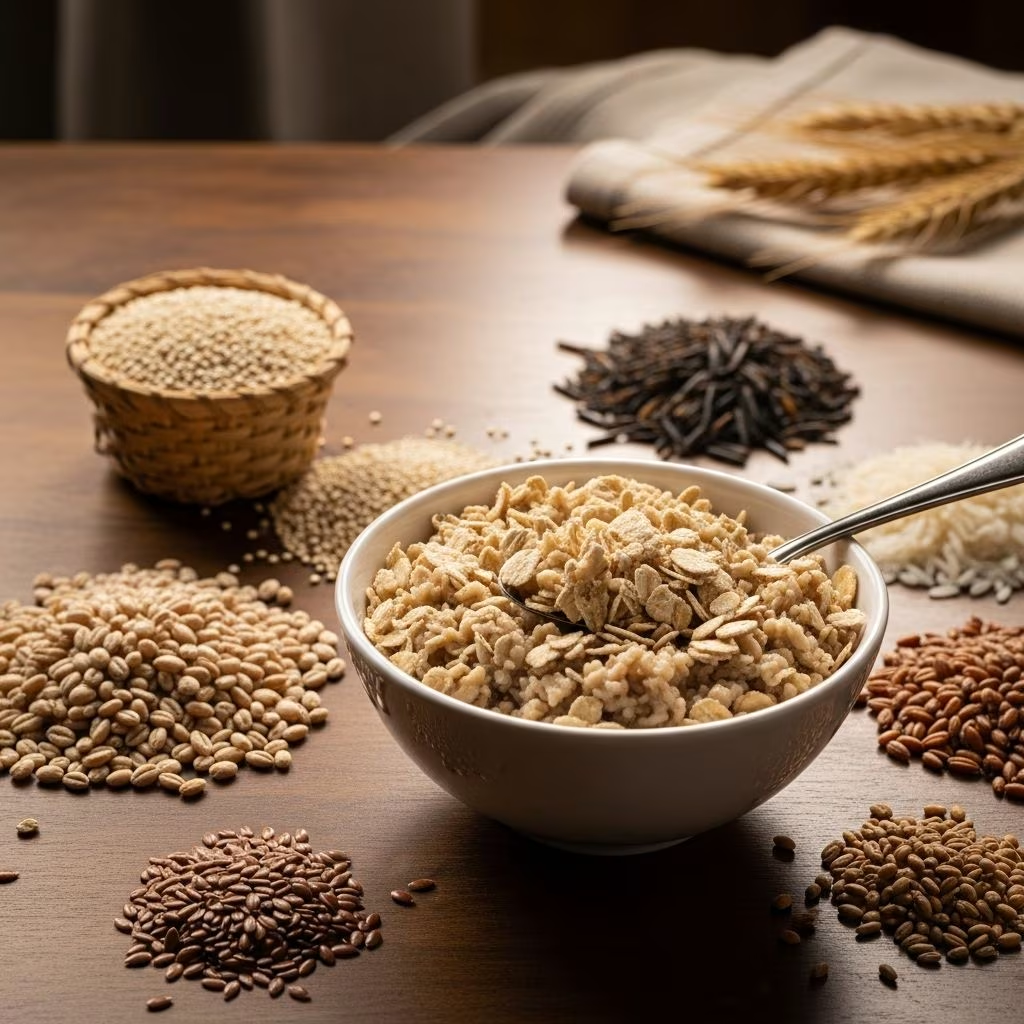
Constipation affects millions, but incorporating the right whole grain can promote regularity. Among various options, oats emerge as the top choice for easing bowel movements thanks to their high soluble fiber content, which softens stool and supports gut health.
What Makes Oats the Best Whole Grain for Poop?
Oats contain beta-glucan, a type of soluble fiber that absorbs water in the intestines, forming a gel-like substance. This increases stool bulk, eases passage, and stimulates peristalsis for smoother digestion. Unlike insoluble fibers that add bulk quickly, beta-glucan gently regulates bowel habits without gas or bloating common in other grains.
Research shows whole grain consumption, particularly oats, alters gut microbiota positively. Studies indicate oats increase beneficial bacteria, enhancing fermentation and short-chain fatty acid production, which supports intestinal motility. A review of clinical trials found whole grains like oats improve satiety and microbiota diversity, indirectly aiding regularity by promoting overall gut balance.
- High beta-glucan levels: 5g per 100g dry oats, far surpassing wheat (2.5g) or barley (4g).
- Water-holding capacity: Forms viscous gel to soften stool effectively.
- Gut microbiota support: Feeds beneficial bacteria, reducing inflammation markers like IL-6.
University Hospitals recommends oats as a top high-fiber food for digestive health, noting 25-31g daily fiber intake prevents constipation. A single serving of oatmeal provides over 4g fiber.
How Whole Grains Support Digestion and Regularity
Whole grains retain bran, germ, and endosperm, delivering 3-8g fiber per serving. Fiber draws water into the colon, softening stool and shortening transit time. Soluble fiber (oats, barley) ferments into SCFAs; insoluble (wheat bran) adds bulk.
Studies confirm whole grains reduce chronic disease risk, including digestive issues, by lowering CVD, diabetes incidence. Gut bacteria thrive on whole grain fibers, producing metabolites that signal satiety and motility. One trial showed barley and brown rice mixtures cut inflammation and improved blood sugar, with intact grains outperforming processed ones.
| Whole Grain | Soluble Fiber (g/100g) | Insoluble Fiber (g/100g) | Best For |
|---|---|---|---|
| Oats | 5.0 | 2.5 | Softening stool, regularity |
| Barley | 4.0 | 3.0 | Motility, satiety |
| Wheat Bran | 1.0 | 12.0 | Bulk addition |
| Brown Rice | 1.5 | 4.5 | Gut diversity |
Data adapted from nutritional analyses; oats excel in soluble fiber for constipation relief.
Comparing Top Whole Grains for Constipation Relief
Oats vs. Barley
Barley boosts GLP-1 hormones for next-day satiety and reduced hunger, with breath hydrogen indicating fermentation. However, oats’ milder profile suits sensitive stomachs better.
Oats vs. Wheat
Whole wheat increases fullness but lacks oats’ gel-forming power. Rye porridge showed superior 4-hour satiety over wheat bread.
Oats vs. Brown Rice
Brown rice combinations with barley improved microbiota most, but solo oats provide consistent, gentle relief.
Winner: Oats for balanced fiber, palatability, and evidence-based regularity support.
Health Benefits Beyond Pooping
Regular oat intake lowers cholesterol via beta-glucan binding bile acids. It stabilizes blood sugar, aiding diabetes prevention, and cuts inflammation, especially in overweight individuals.
- Improved microbiota diversity and SCFA production.
- Better glucose/fat metabolism.
- Reduced constipation risk with 25-31g daily fiber.
How to Incorporate Oats into Your Diet Daily
Start with ½ cup dry oats (4g fiber). Build to 1 cup for 8g+ fiber.
Breakfast Ideas
- Overnight oats: Mix with yogurt, chia seeds, berries (10g fiber).
- Steel-cut oatmeal with nuts, banana.
- Savory oats porridge with veggies, egg.
Lunch/Dinner
- Oat-based veggie patties.
- Add to soups/stews for thickness.
- Oat flour in smoothies or baking.
Snacks
- Homemade oat bars with dates, nuts.
- Baked oat bites with apple.
Choose rolled or steel-cut oats over instant for max fiber. Pair with water (8+ cups daily) to optimize effects.
Sample 7-Day High-Oat Meal Plan for Regularity
| Day | Breakfast | Lunch | Dinner | Fiber Total |
|---|---|---|---|---|
| Monday | Oatmeal + berries (8g) | Oat salad (6g) | Chicken oat stir-fry (7g) | 28g |
| Tuesday | Overnight oats (10g) | Veggie oat soup (8g) | Baked fish with oat crust (6g) | 30g |
| Wednesday | Savory oats (7g) | Oat veggie patties (9g) | Barley-oat pilaf (8g) | 31g |
| Thursday | Smoothie oats (8g) | Lentil oat stew (10g) | Turkey oat meatballs (7g) | 32g |
| Friday | Banana oats (9g) | Oat tabbouleh (7g) | Salmon oat cakes (8g) | 29g |
| Saturday | Chia oat pudding (11g) | Bean oat salad (9g) | Beef oat chili (8g) | 33g |
| Sunday | Apple oats (8g) | Oat flatbread wrap (7g) | Veggie oat bake (9g) | 30g |
Aim for variety; combine with fruits/veggies for 25-38g fiber daily.
Expert Tips for Maximizing Whole Grain Benefits
- Increase gradually: Add 5g fiber/week to avoid bloating.
- Hydrate: 8-10 cups water amplifies fiber’s stool-softening.
- Choose intact: Steel-cut > rolled > instant.
- Combine grains: Oats + barley boosts diversity.
- Monitor portions: 3 servings (48g) daily ideal.
Avoid processed foods; opt for whole swaps like brown rice over white.
Frequently Asked Questions (FAQs)
Can oats relieve constipation overnight?
Not usually, but daily intake softens stool within 1-3 days. Combine with hydration for faster results.
Are instant oats as good for digestion?
Less effective due to processing; choose minimally processed rolled/steel-cut.
How much oats for daily regularity?
½-1 cup dry (40-80g) provides 4-8g fiber; part of 25-31g total.
Do all whole grains help pooping equally?
No, oats’ soluble fiber excels for gentle relief; wheat bran for bulk.
Can too many oats cause issues?
Excess may bloat; increase slowly and stay hydrated.
Potential Side Effects and Precautions
Gas/bloating initial; rare allergies. Consult doctor for IBS or meds.
References
- Does Whole Grain Consumption Alter Gut Microbiota and Satiety? — PMC (NIH). 2016-07-13. https://pmc.ncbi.nlm.nih.gov/articles/PMC4939539/
- My Gut Tells Me Whole Grains are Healthy — Whole Grains Council. 2014-08-01. https://wholegrainscouncil.org/blog/2014/08/my-gut-tells-me-whole-grains-are-healthy
- Eating Well for Digestive Health — University Hospitals. 2023-01-01. https://www.uhhospitals.org/health-information/health-and-wellness-library/article/adult-diseases-and-conditions-v1/eating-well-for-digestive-health
- Health benefits of whole grain: effects on dietary carbohydrate… — Institute of Food Technologists (IFT). 2020-05-01. https://ift.onlinelibrary.wiley.com/doi/10.1111/1541-4337.12728