
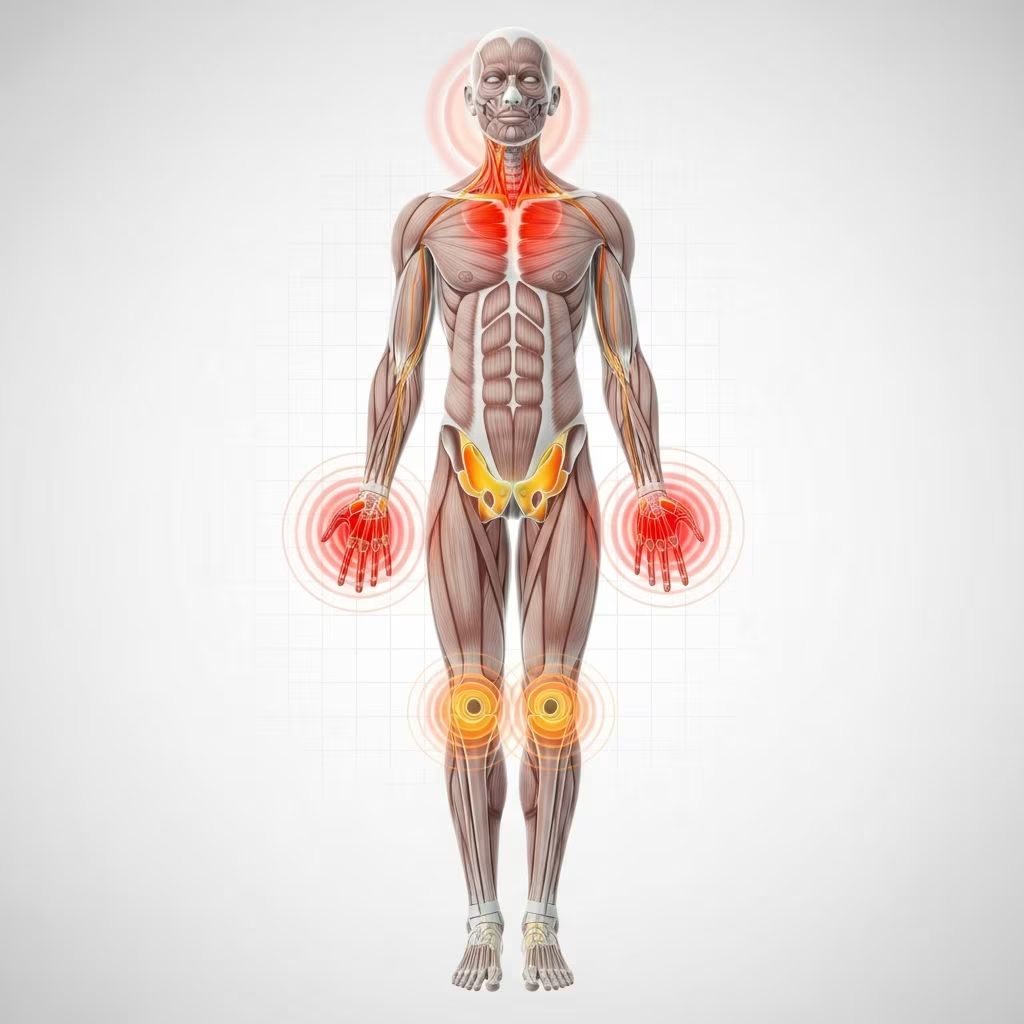
Identifying where pain occurs provides crucial clues for diagnosis, as different body areas correspond to specific organs, nerves, and structures. This guide examines pain across key regions like the abdomen and spine, highlighting common causes and anatomical links.
Understanding Pain Through Location
Pain serves as the body’s alarm system, signaling potential issues in tissues, organs, or nerves. Precise localization helps distinguish between superficial issues and deeper problems, such as visceral pain from organs referred to the skin surface. Medical professionals divide the body into regions for systematic evaluation, aiding in pinpointing causes from muscle strains to serious inflammations.
Anatomically, pain pathways involve primary nociceptors in tissues connecting to spinal cord neurons, then ascending via spinothalamic tracts to the thalamus and cortex for perception. Sharp, localized pain often follows lateral pathways, while diffuse aches use medial routes.
Abdominal Pain Regions: A Detailed Breakdown
The abdomen divides into nine regions or four quadrants, each housing unique organs vulnerable to distinct conditions. This zoning simplifies initial assessments during examinations.
Nine-Region Abdominal Map
Visualize the abdomen as a grid: upper row (regions 1-3), middle (4-6), lower (7-9).
- Right Upper (Region 1): Houses liver, gallbladder, right kidney, and small intestine parts. Pain here often signals gallbladder inflammation (cholecystitis) or liver issues like hepatitis.
- Central Upper (Region 2): Includes stomach, pancreas, duodenum, spleen, and adrenal glands. Common for peptic ulcers or pancreatitis.
- Left Upper (Region 3): Contains spleen, colon flexure, left kidney, and pancreas body. Splenic rupture or gastric problems may manifest here.
- Right Middle (Region 4): Covers gallbladder, liver edge, and right colon. Hepatic or colonic disorders possible.
- Central Middle (Region 5): Centers on navel with jejunum, ileum, and duodenum. Small intestine obstructions frequent.
- Left Middle (Region 6): Features descending colon and left kidney. Kidney stones or colitis likely.
- Right Lower (Region 7): Site of appendix and cecum. Classic for appendicitis.
- Central Lower (Region 8): Involves bladder, sigmoid colon, and reproductive organs. Urinary infections or uterine issues common.
- Left Lower (Region 9): Holds descending/sigmoid colon. Diverticulitis or ovarian cysts typical.
Quadrant Simplification for Quick Assessment
For broader triage, quadrants group these regions: right upper (RUQ), left upper (LUQ), right lower (RLQ), left lower (LLQ).
| Quadrant | Key Organs | Common Pain Causes |
|---|---|---|
| Right Upper | Liver, gallbladder, duodenum, pancreas head, colon flexure | Hepatitis, gallstones, peptic ulcers |
| Left Upper | Stomach, spleen, pancreas body, left kidney, colon | Gastritis, splenic injury, pancreatitis |
| Right Lower | Appendix, cecum, right ovary/tube | Appendicitis, ectopic pregnancy |
| Left Lower | Sigmoid colon, left ovary/tube, bladder | Diverticulitis, kidney stones, PID |
Appendicitis exemplifies RLQ pain: inflammation fills the appendix with pus, starting periumbilical then localizing. Untreated, it risks rupture and peritonitis.
Dermatomes: Nerve Pathways Mapping Pain
Dermatomes are skin areas supplied by single spinal nerves, forming a body map for referred pain. Thoracic dermatomes ring the trunk (T3-T12), lumbar cover hips/legs, sacral the buttocks.
- Cervical dermatomes (C2-C8): Neck, shoulders, arms. Radiculopathy causes arm tingling.
- Thoracic (T1-T12): Chest, abdomen bands. T1 arms, others trunk rings.
- Lumbar (L1-L5): Hips, thighs, calves, feet. Sciatica follows L4-S1.
- Sacral (S1-S5): Posterior legs, perineum. Coccygeal single small area.
Pain in a dermatome suggests nerve root irritation, as from herniated discs. Conus medullaris (T12-L2) influences lower patterns.
Interpreting Pain Characteristics by Area
Upper Body Pain Zones
Chest/upper back pain may arise from cardiac, pulmonary, or musculoskeletal sources. Referred shoulder pain signals diaphragmatic irritation (e.g., gallbladder).[10]
Back and Spine Pain Patterns
Spinal pain maps to levels: cervical (headaches, neck), thoracic (interscapular), lumbar (sciatica). Trapezius pain often cervical origin.[10]
Lower Extremity Pain Referrals
Leg pain follows dermatomes: anterior thigh L3, calf S1. Deep vein thrombosis mimics nerve pain.
Diagnostic Steps for Pain Localization
- History Taking: Note onset, quality (sharp/dull), radiation, triggers.
- Physical Exam: Palpation, percussion for tenderness/rebound.
- Imaging/Tools: Ultrasound for abdomen, MRI for spine.
Frequently Asked Questions (FAQs)
What does right upper abdominal pain indicate?
Often liver/gallbladder issues like stones or hepatitis.
How do dermatomes help diagnose back pain?
They map nerve distributions, identifying root compression levels.
Is all abdominal pain serious?
No, but persistent/severe pain with fever/vomiting warrants urgent care.
Can pain move around the body?
Yes, referred pain or migrating conditions like early appendicitis.
When to seek emergency help for pain?
Sudden severe pain, chest radiation, breathing difficulty—call emergency services.
Self-Care Tips While Awaiting Evaluation
- Track pain details: location, intensity (1-10), duration.
- Avoid self-medication beyond paracetamol if unsure.
- Rest, hydrate; monitor for worsening.
- Consult GP for non-emergencies.
References
- Pain Locator: Where Does it Hurt? — Gastroenterology Associates. 2023. https://www.ligastrohealth.com/abdominal-pain-locator-where-does-it-hurt
- Dermatomes: What They Are & Locations — Cleveland Clinic. 2024-05-15. https://my.clevelandclinic.org/health/body/24379-dermatomes
- The Anatomy and Physiology of Pain — National Center for Biotechnology Information (NCBI), NIH. 1990 (authoritative foundational text). https://www.ncbi.nlm.nih.gov/books/NBK219252/
- Pain Locator: Where Does it Hurt? — Manhattan Gastroenterology. 2023. https://www.manhattangastroenterology.com/pain-locator-where-does-it-hurt/