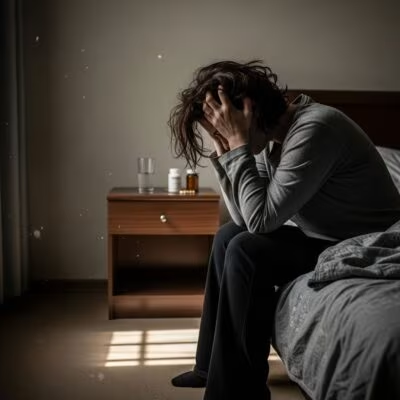

A panic attack strikes suddenly, overwhelming you with intense fear, rapid heartbeat, shortness of breath, and a sense of impending doom. These episodes typically peak within 10 minutes and subside, but they feel endless and terrifying. Affecting millions, panic attacks are not dangerous but can disrupt daily life if frequent. Understanding symptoms and mastering interruption techniques empowers you to regain control quickly.
What Is a Panic Attack?
A panic attack involves a surge of overwhelming anxiety and physical symptoms mimicking a heart attack or life-threatening event. According to the National Institute of Mental Health (NIMH), it features sudden, repeated episodes of fear even without real danger. Unlike general anxiety, panic attacks are abrupt and intense, lasting 5-20 minutes on average.
Common triggers include stress, caffeine, or no identifiable cause. People with panic disorder experience recurrent, unexpected attacks followed by persistent worry about future ones, potentially leading to avoidance behaviors. Distinguishing this from isolated attacks is key: a single episode doesn’t indicate disorder, but patterns may require professional evaluation.
Symptoms of a Panic Attack
Recognizing symptoms early allows immediate intervention. Physical and emotional signs include:
- Rapid or pounding heartbeat (palpitations)
- Sweating, chills, or hot flashes
- Trembling or shaking
- Shortness of breath or feeling smothered
- Chest pain or discomfort
- Nausea or abdominal distress
- Dizziness, lightheadedness, or faintness
- Numbness or tingling sensations (paresthesia)
- Derealization (feeling detached from reality) or depersonalization
- Fear of losing control, going crazy, or dying
These mimic serious conditions, prompting unnecessary ER visits. NIMH notes attacks can occur anytime, even during sleep, and resolve without harm. However, the fear of recurrence often fuels panic disorder.
Immediate Strategies to Stop a Panic Attack
When an attack hits, focus on interrupting the cycle. These evidence-based techniques reduce symptoms rapidly.
1. The 4-7-8 Breathing Technique
Developed by Dr. Andrew Weil, this method calms the nervous system by regulating breath. Steps:
- Exhale completely through your mouth, making a whoosh sound.
- Close your mouth and inhale quietly through your nose for a count of 4.
- Hold your breath for a count of 7.
- Exhale completely through your mouth for a count of 8, with a whoosh.
- Repeat 4-8 cycles.
This activates the parasympathetic response, countering fight-or-flight. Practice daily to build resilience.
2. 5-4-3-2-1 Grounding Technique
Anchors you in the present, disrupting catastrophic thoughts. Identify:
- 5 things you see
- 4 things you can touch
- 3 things you hear
- 2 things you smell
- 1 thing you taste
This sensory exercise shifts focus from internal panic to external reality, effective within minutes.
3. Progressive Muscle Relaxation (PMR)
Tense and release muscle groups to release physical tension. Start from toes to head:
- Tense for 5 seconds, then relax for 30 seconds.
- Progress upward: feet, calves, thighs, etc.
PMR reduces somatic symptoms like trembling and tightness, promoting bodily calm.
4. Cold Water or Ice Technique
Splash cold water on your face or hold ice cubes. This stimulates the mammalian dive reflex, slowing heart rate and redirecting blood flow.
5. Mantra Repetition
Repeat affirming phrases like “This is temporary. I am safe.” or “I’ve gotten through this before.” This reframes fear cognitively.
Long-Term Prevention Strategies
Preventing attacks involves lifestyle and therapeutic approaches. NIMH recommends cognitive behavioral therapy (CBT) as the gold standard, teaching new responses to anxiety cues.
Lifestyle Changes
- Regular Exercise: 30 minutes daily aerobic activity releases endorphins, reducing anxiety baseline.
- Caffeine and Stimulant Avoidance: Limit coffee, energy drinks; they exacerbate symptoms.
- Mindfulness and Meditation: Daily 10-minute sessions build emotional regulation.
- Sleep Hygiene: 7-9 hours nightly prevents fatigue-triggered attacks.
- Balanced Diet: Omega-3s, magnesium-rich foods support nervous system health.
Professional Treatments
For recurrent attacks:
| Treatment | Description | Effectiveness |
|---|---|---|
| CBT | Challenges fear thoughts; includes exposure therapy | High; reduces frequency by 70-90% |
| SSRIs (e.g., sertraline) | Antidepressants balancing serotonin | Effective for panic disorder; 4-6 weeks to work |
| Benzodiazepines | Short-term for acute relief (e.g., lorazepam) | Fast-acting; risk of dependence |
| Beta-Blockers | Control physical symptoms like heart racing | Helpful adjunct |
Consult a healthcare provider for personalized plans. NIMH emphasizes combined therapy and medication for best outcomes.
When to Seek Professional Help
Seek help if attacks are frequent (several per week), interfere with work/school/relationships, or include suicidal thoughts. Co-occurring conditions like agoraphobia or depression complicate cases. Call 988 Suicide & Crisis Lifeline or 911 for emergencies.
Panic Attack vs. Heart Attack: Key Differences
| Aspect | Panic Attack | Heart Attack |
|---|---|---|
| Duration | 5-20 minutes | Hours or ongoing |
| Pain Type | Sharp, stabbing chest pain | Crushing pressure |
| Symptoms | Multiple, resolve quickly | With nausea, arm/jaw pain |
| Triggers | Stress, no clear cause | Exertion, risk factors |
Err on caution: if unsure, seek medical evaluation.
Frequently Asked Questions (FAQs)
Can panic attacks kill you?
No, panic attacks are not life-threatening despite feeling deadly. Symptoms resolve without harm.
How long do panic attacks last?
Typically 5-20 minutes, peaking at 10 minutes. Lingering anxiety may follow.
Can you stop a panic attack completely?
Techniques shorten and lessen intensity; practice prevents recurrence.
Do panic attacks get worse over time?
Without intervention, fear of attacks can worsen panic disorder. Early treatment halts progression.
Are panic attacks and anxiety attacks the same?
Panic attacks are sudden and severe; anxiety builds gradually.
Building Resilience: Daily Practices
Integrate habits like journaling triggers, yoga, or apps (e.g., Calm). Track progress to note improvements. Support groups via NIMH resources foster community.
Panic attacks, while harrowing, are manageable. Empower yourself with knowledge and tools for calmer days ahead.
References
- Panic Disorder: When Fear Overwhelms — National Institute of Mental Health (NIMH). 2023-08-09. https://www.nimh.nih.gov/health/publications/panic-disorder-when-fear-overwhelms
- Panic Disorder and Agoraphobia — National Institute of Mental Health (NIMH). 2024-02-15. https://www.nimh.nih.gov/health/topics/anxiety-disorders
- Cognitive Behavioral Therapy for Panic Disorder — American Psychological Association. 2023-11-20. https://www.apa.org/ptsd-guideline/patients-and-families/cognitive-behavioral
- Breathing Exercises for Anxiety — Harvard Health Publishing. 2025-01-10. https://www.health.harvard.edu/mind-and-mood/relaxation-techniques-breath-control-helps-quell-errant-stress-response
- Treatment of Panic Disorder — National Center for Biotechnology Information (NCBI). 2024-06-12. https://www.ncbi.nlm.nih.gov/books/NBK441870/