
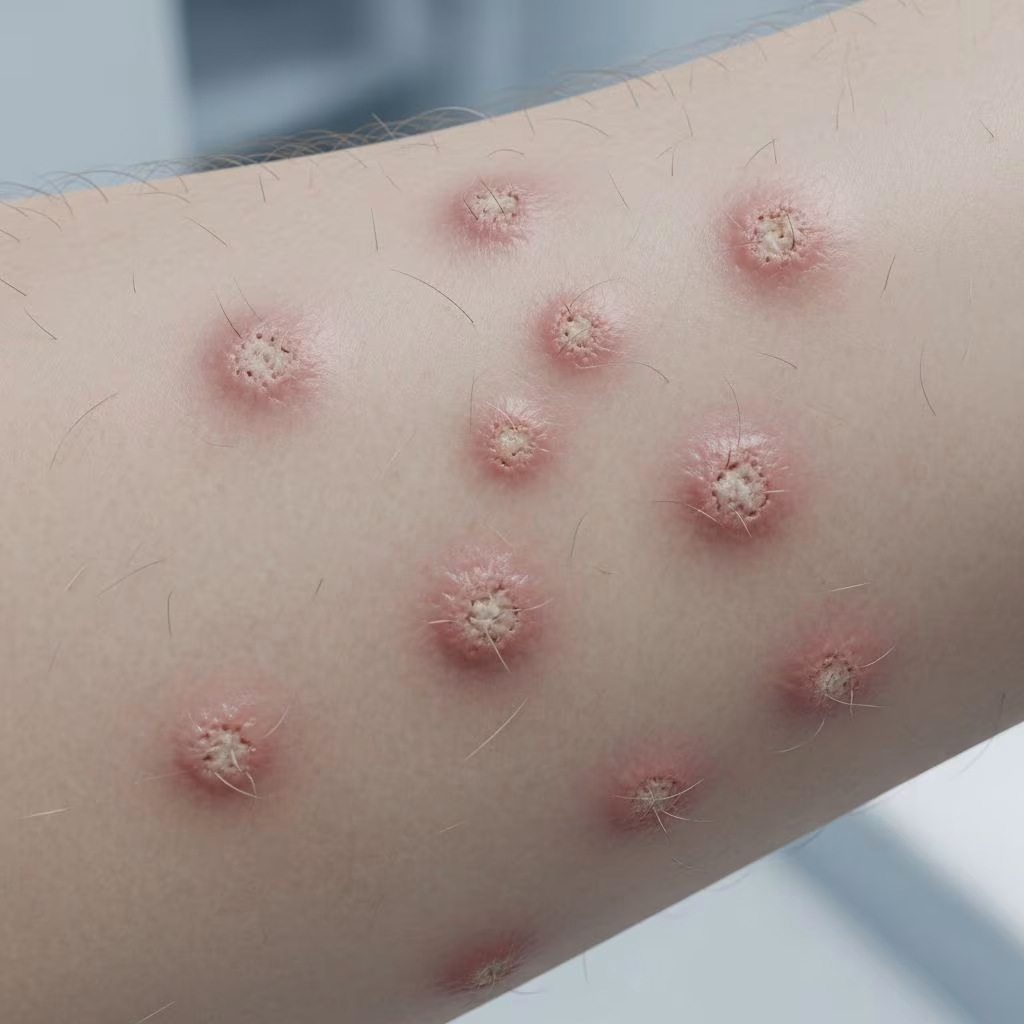
What is papular urticaria?
Papular urticaria is a hypersensitivity reaction to insect bites, characterized by chronic or recurrent itchy papules (small, raised bumps) on the skin. It commonly affects children aged 2–7 years but can occur in adults as well. The condition arises from an exaggerated immune response to saliva or other components injected by biting insects during feeding, leading to persistent eruptions that last days to weeks. Unlike typical urticaria (hives), papular urticaria features more solid, inflammatory papules rather than transient wheals.
This reaction is prevalent in warm, humid climates and areas with high insect populations. It often persists due to repeated bites, creating a cycle of sensitization where each new bite triggers worsening inflammation. Globally, it impacts millions, particularly in tropical regions, though exact prevalence varies.
Who gets papular urticaria?
Papular urticaria predominantly affects young children, with peak incidence between 2 and 7 years, though it can occur at any age. Risk factors include:
- Residing in tropical or subtropical climates with abundant insects.
- Household exposure to pets harboring fleas or mites.
- Living in overcrowded or low-socioeconomic conditions facilitating infestations.
- Atopic family history, such as siblings with dermatitis, increasing hypersensitivity.
- Age under 7 years, as children’s immune systems are more reactive to insect antigens.
- Use of public transport or unscreened sleeping areas like springless mattresses.
Adults may develop it occupationally, such as farmers or those in infested environments. It resolves spontaneously by adolescence in most cases as immunity develops tolerance.
Causes
The primary cause is repeated bites from hematophagous (blood-feeding) arthropods. Common culprits include:
| Insect | Key Features | Prevalence |
|---|---|---|
| Fleas (Ctenocephalides felis) | Cat/dog fleas; jumpers, live in carpets/pet bedding | Most common |
| Bed bugs (Cimex lectularius) | Nocturnal biters; hide in mattresses/furniture | Urban resurgence |
| Mites | Bird/storage mites; poultry-associated | Common in rural areas |
| Mosquitoes/Gnats | Aerial biters; outdoor exposure | Tropical |
| Others | Carpet beetles, caterpillars, sandflies | Less frequent |
Insects inject saliva containing anticoagulants and enzymes, triggering type I (immediate IgE-mediated) and type IV (delayed cell-mediated) hypersensitivity. Initial bites may be asymptomatic, but sensitization leads to exaggerated responses.
Clinical features
Symptoms develop hours to days post-bite, evolving over 24–72 hours:
- Grouped papules (1–5 mm), red-brown, topped with vesicles or crusts.
- Intense pruritus (itching), leading to excoriations and secondary infection.
- Central punctum (bite site) often visible initially.
- Distribution: Exposed areas – legs, arms, trunk; worse in summer.
- Lesions persist days to weeks, resolving with hyperpigmentation.
- Excited by new bites, creating crops of lesions.
In severe cases, angioedema or bullae occur. Children scratch vigorously, risking bacterial superinfection (e.g., impetigo).
Diagnosis
Diagnosis is clinical, based on history of insect exposure and characteristic morphology. Key differentials:
| Condition | Distinguishing Features |
|---|---|
| Scabies | Burrows, interdigital involvement, family cases |
| Atopic dermatitis | Flexural, chronic lichenification |
| Prurigo nodularis | Larger nodules, chronic rubbing |
| Varicella | Systemic symptoms, polymorphic lesions |
| Drug eruption | Recent medication history |
Patch testing or intradermal tests are rarely useful due to non-specific sensitization. Environmental inspection confirms infestation (e.g., flea dirt in carpets). Biopsy shows dermal edema, perivascular lymphocytes/eosinophils.
Management
Treatment targets symptoms, prevention of infection, and eradication of insects.
Symptomatic relief
- Topical corticosteroids (e.g., hydrocortisone 1% mild; potent for severe): Apply thinly to papules twice daily for 7–10 days.
- Oral antihistamines: Sedating (hydroxyzine) at night; non-sedating (cetirizine) daytime to control itch.
- Topical antipruritics: Calamine lotion, menthol/phenol creams.
- Cool compresses, oatmeal baths for soothing.
Infection control
If impetiginized (pus, honey crusts), use topical mupirocin or oral antibiotics (cephalexin).
Insect control (critical)
- Pet treatment: Veterinary flea products (e.g., fipronil).
- Home measures: Vacuum daily, wash bedding >60°C, pyrethroid sprays on carpets/upholstery (vacuum post-spray).
- Mattress encasements for bed bugs; professional extermination if needed.
- Personal: DEET repellent, long clothing outdoors.
Severe/recalcitrant cases: Oral corticosteroids short-course; rarely dapsone.
Prevention
Proactive measures reduce recurrence:
- Screen windows/doors, use bed nets.
- Regular pet flea prevention year-round.
- Avoid infested areas; inspect second-hand furniture.
- Hygiene: Frequent vacuuming, hot-washing fabrics.
- For children: Cover exposed skin, apply repellent safely.
Complications
Main issue is secondary bacterial infection from scratching, causing cellulitis or abscesses. Chronic cases lead to post-inflammatory hyperpigmentation or scarring. Rarely, systemic hypersensitivity.
Patient education and desensitization
Educate on itch-scratch cycle, importance of insect control over symptom suppression. Rarely, desensitization vaccines for fleas (not routine). Resolution occurs with age/tolerance.
Frequently Asked Questions (FAQs)
Q: Is papular urticaria contagious?
No, it is an individual hypersensitivity reaction, not transmissible.
Q: How long do papular urticaria lesions last?
Individual papules last 5–10 days; new bites cause crops over weeks/months until source eliminated.
Q: Can adults get papular urticaria?
Yes, though less common than in children; often linked to occupational exposure.
Q: Is it safe to use steroid creams on children?
Mild steroids are safe short-term under guidance; avoid face/genitals.
Q: What if symptoms persist despite treatment?
Seek dermatologist for biopsy, infestation confirmation, or alternative diagnoses.
References
- Papular urticaria: Symptoms, causes, and treatment — Medical News Today. 2023-10-12. https://www.medicalnewstoday.com/articles/320348
- Household papular urticaria — PubMed (Br J Dermatol). 2002-11-01. https://pubmed.ncbi.nlm.nih.gov/12455178/
- Papular urticaria — Utah Valley Dermatology. 2024-01-15. https://uvderm.com/blog/papular-urticaria/
- Papular Urticaria – Complete Guide — Revival Research. 2023-05-20. https://revivalresearch.org/blogs/are-hives-contagious-managing-papular-urticaria/
- Urticaria, Papular — NORD (National Organization for Rare Disorders). 2022-08-10. https://rarediseases.org/rare-diseases/urticaria-papular/
- Papular Urticaria: Symptoms, Causes, and More — Healthline. 2023-07-22. https://www.healthline.com/health/papular-urticaria
- Papular urticaria — DermNet NZ. 2024-03-05. https://dermnetnz.org/topics/papular-urticaria