
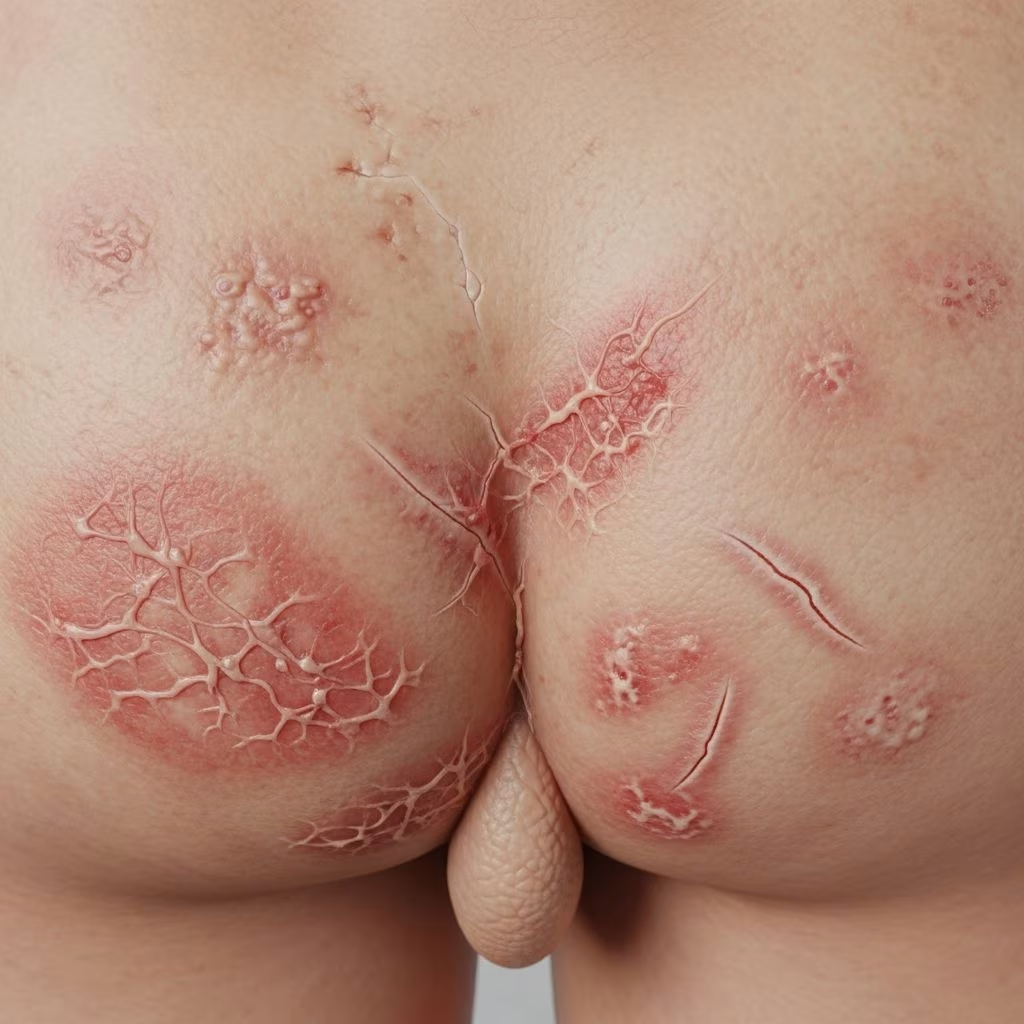
A perianal dermatosis is any rash or skin change affecting the skin around the anus (perianal skin) and between the buttocks (natal cleft or intergluteal fold). These conditions often cause significant discomfort, including itching (pruritus ani), soreness, pain, and irritation, impacting quality of life.
Perianal dermatoses arise from diverse etiologies, including irritation from moisture and friction, infections (bacterial, fungal, viral, parasitic), inflammatory disorders (psoriasis, eczema), and less common conditions like lichen planus or pemphigus. The moist, occluded environment of the perianal area predisposes it to intertrigo—an inflammatory rash in skin folds due to sweat, friction, and secondary infections.
Who gets perianal dermatoses?
Perianal dermatoses affect individuals across all ages and demographics, but certain groups are more susceptible:
- Infants and children: Common due to perianal streptococcal dermatitis, pinworm infestations, or irritant dermatitis from diapers.
- Adults: Often linked to poor hygiene, fecal incontinence, excessive wiping, or underlying conditions like diabetes, Crohn’s disease, or immunosuppression.
- Women: Higher risk from vulvovaginal conditions extending to perianal skin, such as lichen sclerosus or candidiasis.
- Obese individuals: Increased intertrigo from skin folds and sweating.
- Immunocompromised patients: Prone to severe infections like herpes or candidiasis.
Pre-existing skin conditions like atopic dermatitis or psoriasis frequently involve the perianal region.
Clinical features
Symptoms vary by cause but commonly include:
- Itching (pruritus ani): Intense, often nocturnal, leading to scratching and lichenification (skin thickening).
- Burning or soreness: Especially post-defecation.
- Erythema (redness): Sharp or diffuse.
- Scaling, fissuring, or oozing: Indicating chronicity or infection.
- Pain: From fissures or abscesses.
Examination reveals changes in the perianal skin, natal cleft, and sometimes groin. A systematic approach identifies patterns like satellite lesions (candidiasis) or annular borders (tinea).
Causes of perianal dermatoses
Perianal skin conditions stem from multiple categories, often overlapping.
Irritant contact dermatitis
The most frequent cause, resulting from fecal enzymes, moisture, friction, or hygiene products. Symptoms include erythema, soreness, and fissuring. Common triggers: excessive wiping, harsh soaps, wet wipes, or diarrhea.
Allergic contact dermatitis
Rare, triggered by topical allergens like preservatives (e.g., imidazolidinyl urea), fragrances, or rubber in pads. Presents with eczema-like rash.
Intertrigo
Inflammation in the moist intergluteal fold from sweat and friction, often superinfected. Features maceration and erythema.
Inflammatory dermatoses
- Flexural psoriasis: Symmetrical, well-demarcated red plaques without scale due to moisture; associated with scalp/nail psoriasis.
- Seborrhoeic dermatitis: Greasy erythema in folds, scalp.
- Atopic dermatitis: Extends from flexures; red, lichenified.
Lichenoid dermatoses
- Lichen simplex: Thickened skin from chronic scratching.
- Lichen planus: Purple papules; risk of squamous cell carcinoma.
- Lichen sclerosus: White, atrophic patches; female predominance, malignancy risk.
Infections
Bacterial
- Erythrasma: Brown patch with coral-red Wood lamp fluorescence (Corynebacterium minutissimum).
- Perianal streptococcal dermatitis: Beefy red ring in children; group A beta-hemolytic streptococci; pain, fissuring.
Fungal
- Candidal intertrigo: Bright red with satellites.
- Tinea cruris: Annular scaly plaque (T. rubrum); rarely perianal.
Parasitic
- Pinworms: Nocturnal itch.
Viral
- Herpes simplex: Vesicles, ulcers.
- Warts (HPV): Verrucous growths.
Other conditions
- Hidradenitis suppurativa: Nodules, abscesses, fistulae.
- Crohn disease: Fistulae, ulcers.
- Pemphigus vulgaris: Erosions; anogenital onset.
- Hailey-Hailey disease: Vesicles in folds.
Differential diagnosis
| Condition | Key Features | Diagnostic Clue |
|---|---|---|
| Irritant dermatitis | Diffuse erythema, fissuring | History of poor hygiene |
| Streptococcal | Beefy red ring | Swab culture positive for GABHS |
| Candidiasis | Satellites | KOH prep yeast |
| Psoriasis | Well-demarcated | Other sites involved |
| Lichen sclerosus | White atrophy | Biopsy |
Investigations
Diagnosis relies on history, examination, and targeted tests:
- Swabs: Bacterial/fungal culture.
- Wood lamp: For erythrasma.
- KOH prep: Fungi.
- Biopsy: For lichenoid or neoplastic suspicion.
- Stool ova/parasites: Pinworms.
Management
Treatment addresses the underlying cause while providing symptomatic relief. General measures:
- Hygiene: Gentle cleansing with water, pat dry; avoid irritants.
- Barrier creams: Zinc oxide.
- Topical steroids: Mild potency, short-term.
- Antipruritics: Menthol, doxepin.
Specific therapies:
- Infections: Antibiotics (streptococcus), antifungals (candida), antivirals (herpes).
- Psoriasis: Vitamin D analogs, calcineurin inhibitors.
- Malignancy risk: Monitor lichen sclerosus/planus.
Frequently asked questions
What causes perianal itching?
Common causes include irritants, infections (candida, streptococcus, pinworms), psoriasis, and poor hygiene. Nocturnal itch suggests pinworms.
Is perianal streptococcal dermatitis serious?
It responds well to antibiotics but can cause pain and constipation in children. Early swab confirms GABHS.
How to differentiate fungal from eczema?
Fungal shows satellites/white coating; smear test clarifies. Eczema lacks this.
Can steroids worsen perianal rash?
Prolonged use causes atrophy; use low-potency briefly.
When to see a doctor for anal rash?
If persistent >2 weeks, bleeding, pain, or systemic symptoms.
References
- Perianal dermatoses — DermNet NZ. 2023. https://dermnetnz.org/topics/perianal-dermatoses
- What is Causing This Man’s Persistent Perianal Dermatitis? — Consultant360. 2022-05-01. https://www.consultant360.com/articles/what-causing-man-s-persistent-perianal-dermatitis
- Anal eczema: itching and burning — Venaziel.de. 2024. https://venaziel.de/en/proctology/anal-eczema/
- Perianal Streptococcal Dermatitis — MD Searchlight. 2023. https://mdsearchlight.com/infectious-disease/perianal-streptococcal-dermatitis/
- Anal Itching (Pruritus Ani) — Cleveland Clinic. 2023-11-07. https://my.clevelandclinic.org/health/diseases/15574-anal-itching-pruritus-ani
- Perianal Streptococcal Dermatitis — AAFP. 2000-01-15. https://www.aafp.org/pubs/afp/issues/2000/0115/p391.html