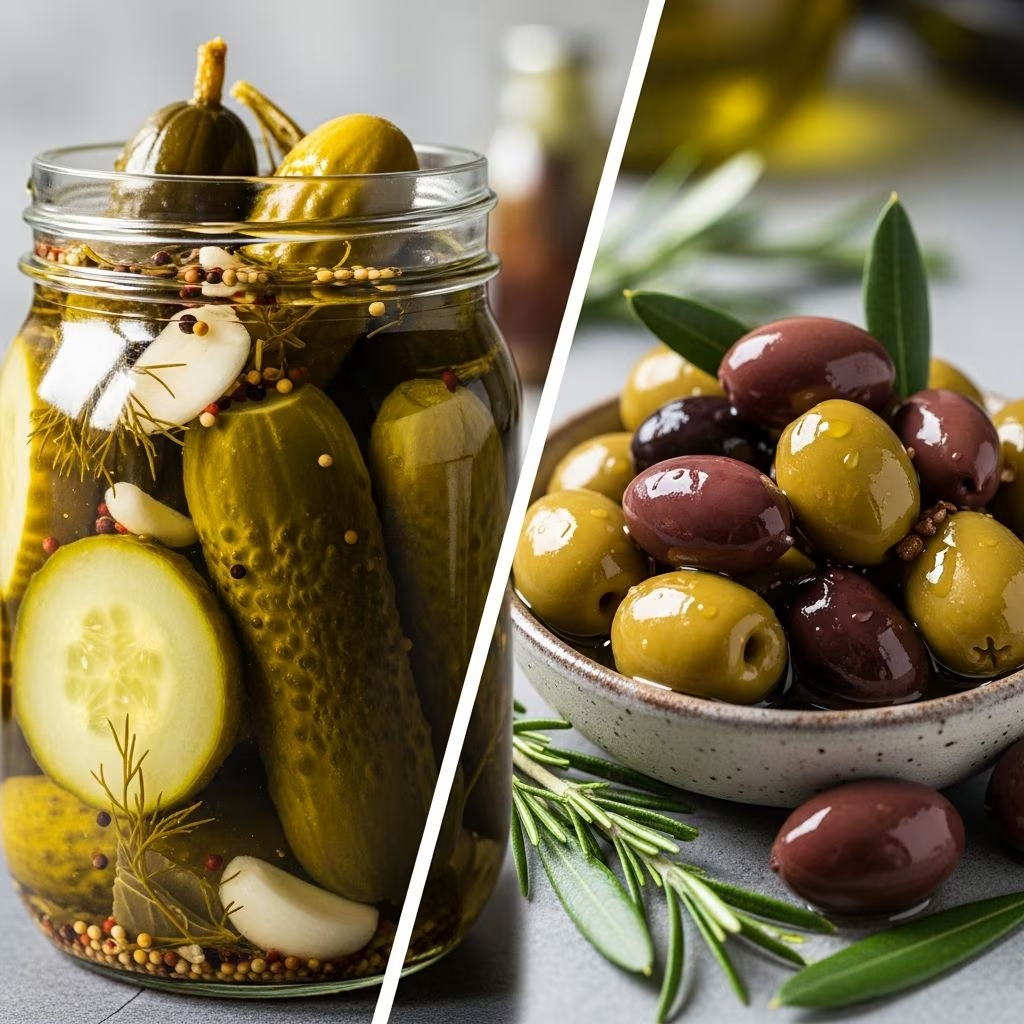
Fermented foods like pickles and olives are celebrated for their potential probiotic content, supporting gut health through beneficial bacteria. This comparison examines their fermentation processes, probiotic levels, nutritional profiles, and health impacts to determine which may offer superior benefits for microbiome support.
What Are Probiotics?
Probiotics are live microorganisms, primarily bacteria like Lactobacillus and Bifidobacterium species, that provide health benefits when consumed in adequate amounts, particularly by balancing the gut microbiome. They aid digestion, enhance immunity, and may reduce inflammation. Fermented foods serve as natural delivery vehicles for these microbes, with lactic acid bacteria (LAB) dominating the process.
According to the International Scientific Association for Probiotics and Prebiotics (ISAPP), probiotics must survive digestion to colonize the gut effectively. Both pickles and olives can harbor such strains if properly fermented, but processing methods influence viability.
How Pickles Are Made
Traditional pickles undergo lactic acid fermentation: cucumbers are brined in saltwater (3-6% NaCl), where naturally occurring LAB convert sugars to lactic acid, preserving the vegetable while producing probiotics. This anaerobic process takes 1-4 weeks, yielding tangy flavor and live cultures.
Key LAB strains in fermented pickles include Lactiplantibacillus plantarum and Pediococcus pentosaceus, which inhibit pathogens and produce bacteriocins—antimicrobial compounds. However, many commercial pickles are vinegar-pasteurized, killing probiotics and reducing them to mere flavorings.
How Olives Are Made
Olives require debittering due to oleuropein, followed by brining and fermentation. Green olives are treated with lye then fermented; black olives often undergo oxidation. Natural lactic fermentation involves LAB like Lpb. plantarum and Lacticaseibacillus casei, fostering probiotics on the olive surface.
Fermentation lasts 3-12 months in 8-12% brine, with yeasts aiding flavor. Studies show table olives promote beneficial microbes such as Lactobacillus spp. and Bifidobacterium spp., enhanced by fiber and polyphenols acting as prebiotics. Probiotic strains adhere to the fruit’s hydrophobic epidermis, surviving to reach the gut.
Do Pickles Have Probiotics?
Yes, traditionally fermented pickles contain live probiotics, with counts up to 10^6-10^8 CFU/g from LAB. They deliver L. plantarum, supporting digestion and immune modulation. Vinegar pickles lack live cultures due to pasteurization and acidity (pH <3.5).
- Probiotic content: High in raw fermented varieties; absent in shelf-stable.
- Survival: LAB withstand gastric acid better in pickled form.
Pickles also provide fiber (1-2g per serving), feeding gut bacteria.
Do Olives Have Probiotics?
Certain naturally fermented olives are probiotic-rich, hosting strains like Lpb. plantarum PGNM8 and Lcb. paracasei IMPC2.1, surviving storage at 10^6 CFU/mL. These olives inhibit spoilage microbes and deliver health-promoting bacteria.
- Probiotic strains: Native LAB with adhesion and anti-pathogen properties.
- Enhanced benefits: Combined with prebiotic fiber (1.5g/10 olives) and polyphenols.
Research validates olives as carriers for probiotics like L. paracasei LMGP22043, recoverable in human feces post-consumption.
Pickles vs. Olives: Key Differences
| Aspect | Pickles | Olives |
|---|---|---|
| Probiotic Content | High in fermented (10^6-10^8 CFU/g); none in vinegar | High in natural lactic-fermented; strain-specific adhesion |
| Fermentation Time | 1-4 weeks | 3-12 months |
| Fiber per Serving | 1-2g (medium pickle) | 1.5g (10 olives) |
| Other Nutrients | Low cal, vitamin K | Healthy fats, vitamin E, polyphenols |
| Shelf Life | Refrigerated: months | Brined: 1-2 years |
Olives edge out with fats and antioxidants; pickles offer crunchier texture and vegetable base.
Health Benefits of Probiotic Pickles
Fermented pickles improve gut diversity, alleviate IBS symptoms, and boost immunity via short-chain fatty acid production. Their fiber supports microbiome nourishment.
- Reduce bloating and enhance regularity.
- Anti-inflammatory effects from LAB.
Health Benefits of Probiotic Olives
Olives promote Lactobacillus and Bifidobacterium growth, with anti-inflammatory synergy in colitis models. Polyphenols and probiotics yield antifibrotic effects.
- Cardiovascular support from monounsaturated fats.
- Antioxidant boost; pathogen inhibition.
Studies show olive probiotics survive GI transit, modulating microbiota.
Nutrition Comparison
| Nutrient (per 100g) | Pickles | Olives (Green) |
|---|---|---|
| Calories | 11 | 145 |
| Fiber | 1g | 3.3g |
| Sodium | 1208mg | 1556mg |
| Fat | 0.2g | 15g |
| Probiotics | Variable (fermented) | Present in natural |
Olives provide more calories from fats but superior antioxidants. Both are sodium-dense; rinse to reduce.
Which Is Better for Probiotics?
Olives may surpass pickles due to longer fermentation fostering robust, adherent probiotics and prebiotic synergies. Pickles excel in accessibility and vegetable nutrients. Choose based on diet: olives for fats, pickles for low-cal crunch.
How to Choose Probiotic-Rich Pickles and Olives
Pickles: Seek “raw,” “fermented,” or “probiotic” labels; refrigerate; check for bubbles/live cultures.
Olives: Opt for naturally fermented (not lye-oxidized); brine-packed; brands listing LAB starters.
- Avoid pasteurized/sterilized products.
- Store cold to preserve viability.
Potential Downsides
High sodium risks hypertension; introduce gradually to avoid bloating. Olives’ calories suit moderation.
Frequently Asked Questions (FAQs)
Are all pickles probiotic?
No, only lacto-fermented ones; vinegar versions are not.
Can olives deliver probiotics to the gut?
Yes, strains like L. paracasei survive and colonize.
Which has more fiber?
Olives (3.3g/100g vs. pickles’ 1g).
Are probiotic olives safe?
Yes, when from reputable sources; LAB inhibit pathogens.
How much to eat daily?
1-2 servings (5-10 olives or 1-2 pickles) for benefits without excess sodium.
References
- 10 Benefits of Eating Healthy Olives — Olive My Pickle. 2023. https://www.olivemypickle.com/blogs/news/10-benefits-of-eating-healthy-olives
- Health benefits of fermented olives, olive pomace and their… — Frontiers in Nutrition. 2024-10-17. https://www.frontiersin.org/journals/nutrition/articles/10.3389/fnut.2024.1467724/full
- Table Olives More than a Fermented Food — PMC – NIH. 2020-03-19. https://pmc.ncbi.nlm.nih.gov/articles/PMC7073621/