
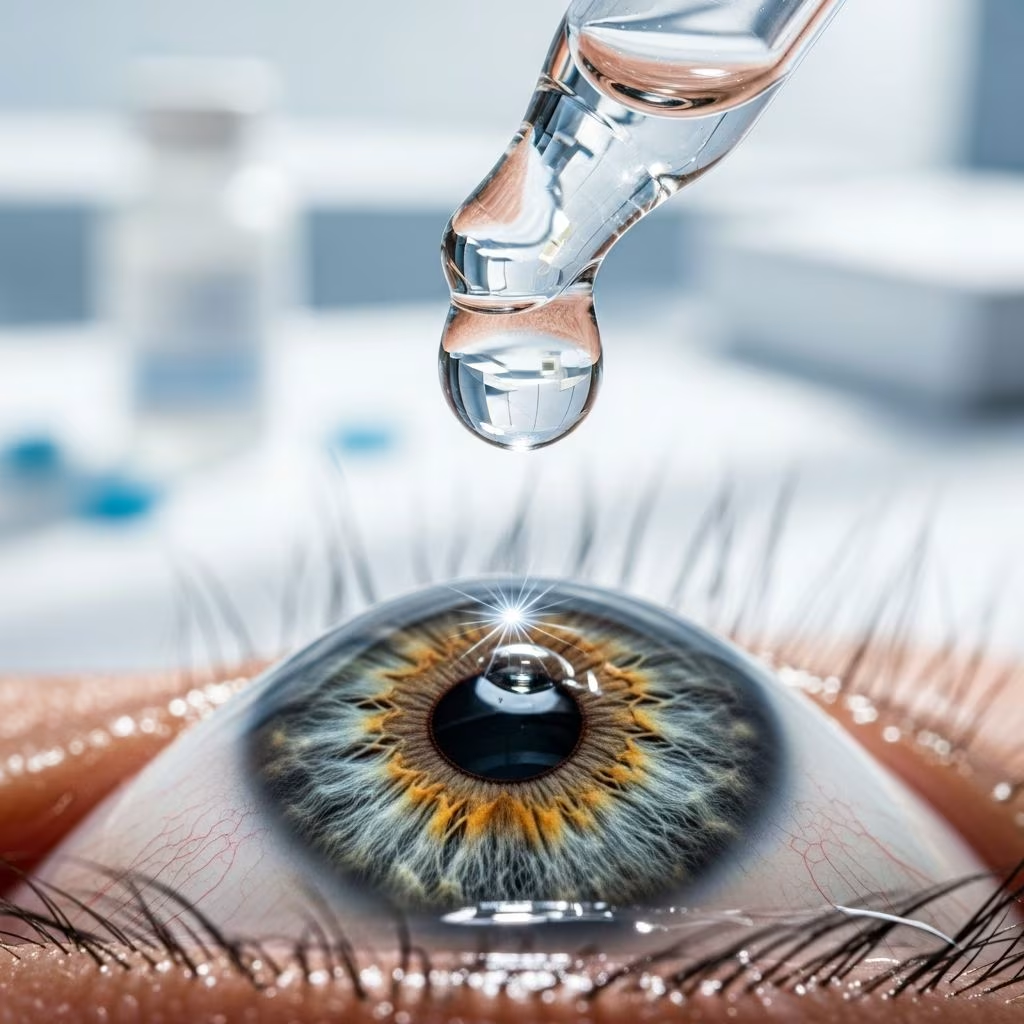
Presbyopia, the age-related decline in near vision affecting most people over 40, now has transformative pharmacologic options. FDA-approved eye drops like Vuity, Qlosi, and VIZZ offer non-invasive relief by improving focus through pupil constriction, reducing reliance on reading glasses.
Understanding Presbyopia and Its Impact
Presbyopia occurs when the eye’s lens loses flexibility, making it hard to focus on close objects. This natural process typically starts in the early 40s, leading to blurry near vision during tasks like reading or using smartphones. Unlike myopia or hyperopia, presbyopia affects everyone eventually due to lens hardening and ciliary muscle weakening.
Symptoms include holding objects at arm’s length, eye strain, and headaches. Traditional aids like bifocals or progressives work but inconvenience active lifestyles. Pharmacologic drops address this by mimicking accommodation via pinhole optics, where a smaller pupil increases depth of field for sharper vision.
How Presbyopia-Correcting Eye Drops Function
These drops primarily use miotics—agents that constrict the pupil—to create a pinhole effect. This enhances near and intermediate vision without altering the lens permanently. For instance, pilocarpine-based drops stimulate iris sphincter muscles, while newer formulations like aceclidine offer gentler action with fewer side effects.
- Pinhole Mechanism: Reduces peripheral light scatter, sharpening focus across distances.
- Onset and Duration: Effects begin in 15-30 minutes, lasting 6-10 hours depending on the product.
- Usage: One drop per eye daily, often before reading-intensive activities.
Patients with mild to moderate presbyopia (add power +1.00D to +2.50D) benefit most, gaining 2-3 lines of near visual acuity.
FDA-Approved Pharmacologic Therapies
Several drops have reached the market, each with unique profiles.
| Product | Active Ingredient | Approval Year | Duration | Key Benefits |
|---|---|---|---|---|
| Vuity (AbbVie) | Pilocarpine HCl 1.25% | 2021 | 6+ hours | First approved; effective for +1.00D to +2.50D adds. |
| Qlosi (Orasis) | Pilocarpine HCl 0.4% | 2023/2025 launch | Up to 10 hours | Lower dose minimizes side effects; preservative-free. |
| VIZZ (LENZ Therapeutics) | Aceclidine 1.44% | 2025 | 8-10 hours | Fewer headaches; aceclidine avoids pilocarpine issues. |
Vuity pioneered this category, with Phase 3 trials showing 66% of users reading at 20/40 or better without glasses three hours post-dose. Qlosi uses a nanoemulsion for better tolerability, ideal for sensitive eyes. VIZZ, approved in 2025, leverages aceclidine for sustained miosis without intense brow ache.
Emerging Drops in the Pipeline
The pipeline brims with innovation, promising longer effects and combinations.
- LNZ100: Aceclidine-based; 71% efficacy in CLARITY trials for 3+ line gains, up to 10-hour duration. FDA decision expected August 2025.
- Brimochol PF (Tenpoint Therapeutics): Carbachol 2.75% + brimonidine 0.1%; BRIO studies confirm 8+ hour superiority. Approval slated for January 2026.
- Nyxol (Opus Genetics): Phentolamine 0.75%; Phase 3 success for night vision and presbyopia reversal.
- MicroLine (Eyenovia): Pilocarpine via Optejet; precise microdosing for consistent results.
These aim to extend wear time and reduce dim-light dimming, a common complaint.
Comparing Drops to Traditional Treatments
Eye drops shine for convenience over glasses or contacts but differ from surgery.
| Treatment Type | Pros | Cons | Cost Estimate (per eye/year) |
|---|---|---|---|
| Eye Drops | Non-invasive, daily use, reversible | Daily application, potential side effects, ongoing cost | $1,000-$2,000 |
| Progressive Lenses | Always on, no maintenance | Adaptation period, distortion | $200-$500 |
| Monovision LASIK | Permanent, glasses-free | Adaptation (6-8 weeks), reduced stereo vision | $1,900-$2,500 |
| Refractive Lens Exchange | Addresses cataracts, multifocal IOLs | Invasive, higher risk/cost | $3,400-$11,730 |
Drops suit early presbyopes preferring minimal intervention; surgery fits advanced cases or high hyperopia.
Patient Selection and Real-World Efficacy
Ideal candidates are 40-65 years old with minimal astigmatism (<0.75D) and no prior iris issues. Efficacy peaks in emmetropes or low myopes. Real-world data from 2024-2026 shows 70-80% satisfaction, with drops complementing contacts or low-power readers.
Age and refractive status guide choices: hyperopes may advance to lens procedures sooner, while myopes tolerate corneal options.
Safety Profile and Common Side Effects
Drops are generally safe, with mild effects resolving quickly.
- Frequent: Brow ache (10-20%), temporary dim vision in low light.
- Rare: Allergic reactions, retinal detachment risk (monitor in narrow angles).
- Comparisons: Qlosi and VIZZ report 50% fewer headaches than Vuity due to lower concentrations.
Contraindications include uncontrolled glaucoma or allergies. Long-term studies (30,000+ days) confirm excellent safety.
Integrating Drops with Lifestyle and Other Therapies
Combine drops with occupational progressives for optimal results. For plano presbyopes, start pharmacologically before surgery. Emerging scleral microporation rejuvenates scleral elasticity non-invasively, pairing well with drops.
Future Directions in Presbyopia Management
By 2026, expect combination therapies dominating, with durations exceeding 12 hours. Allogenic lenticules like PEARL and advanced IOLs expand options internationally. Research focuses on reversing lens stiffening via novel uncrosslinkers.
Frequently Asked Questions (FAQs)
Are presbyopia drops covered by insurance?
Many plans cover them post-deductible, similar to glaucoma meds. Check with providers.
How long do effects last?
6-10 hours typically; LNZ100 hits 10 hours in trials.
Can I use drops with contacts?
Wait 10 minutes post-drop; compatible but consult your doctor.
Do drops work for everyone?
Best for mild-moderate cases; 70-80% gain functional near vision.
What if drops cause headaches?
Switch to lower-dose like Qlosi or aceclidine-based VIZZ.
Consult an ophthalmologist for personalized plans. These therapies herald a glasses-free era for millions.
References
- Presbyopia treatment options now and on the horizon — EyeWorld. 2021. https://www.eyeworld.org/2021/presbyopia-treatment-options-now-and-on-the-horizon/
- Presbyopia: The Future Is Here — Modern Optometry. 2023. https://modernod.com/topics/myopia/presbyopia-the-future-is-here/39835/
- Vision Changes After 40: Complete Presbyopia Treatment Guide — West Broward Eye Care. 2025. https://www.westbrowardeyecare.com/vision-changes-after-40-complete-presbyopia-treatment-guide/
- Presbyopia: Treatment and Advanced Techniques in 2026 — Bata Eye Center. 2026. https://bataleyecenter.com/en/presbyopia-treatment-and-advanced-techniques-in-2026/
- The emerging era of presbyopia-correcting eye drops — Optometry Times. 2025. https://www.optometrytimes.com/view/the-emerging-era-of-presbyopia-correcting-eye-drops-what-s-next-
- Reading Vision Correction — Eye Care of San Diego. 2025. https://eyecareofsandiego.com/reading-vision-correction/