
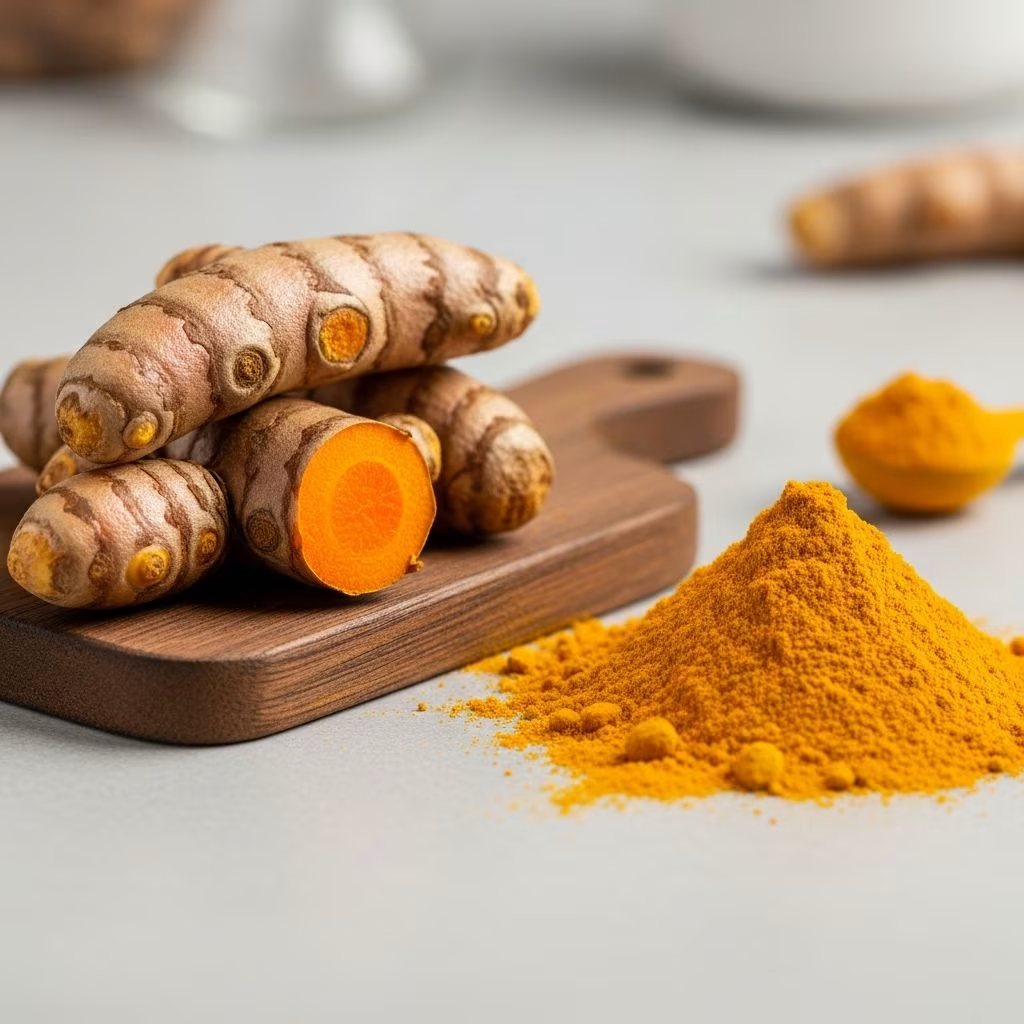
Turmeric, derived from the Curcuma longa plant, has been revered for centuries in traditional medicine, particularly in Ayurveda, for its potent health-promoting properties. The golden spice owes much of its therapeutic potential to curcumin, its primary bioactive compound renowned for antioxidant, anti-inflammatory, and antimicrobial effects. But when choosing between raw turmeric root and turmeric powder, which form delivers superior antioxidant power and health benefits? This comprehensive comparison examines curcumin content, bioavailability, nutritional profiles, storage, usage tips, and scientific insights to help you decide.
What Is Turmeric?
Turmeric is a rhizomatous herbaceous perennial plant native to South Asia, belonging to the ginger family (Zingiberaceae). Its vibrant orange rhizomes are harvested, processed, and used fresh as root or dried and ground into a fine yellow powder. Historically used as a dye, culinary spice, and medicine, modern research highlights its role in combating oxidative stress, inflammation, and chronic diseases like cancer, diabetes, and Alzheimer’s.
Key compounds include curcuminoids (2-5% of turmeric), with curcumin comprising up to 3-5% in high-quality varieties. Other beneficial elements are volatile oils (turmerone), fibers, vitamins (C, E, K), minerals (iron, manganese, potassium), and polysaccharides. Studies confirm turmeric’s ORAC value (Oxygen Radical Absorbance Capacity) at 44,776 μmol TE/100g, ranking it among the top antioxidant-rich spices.
Raw Turmeric vs. Turmeric Powder: A Head-to-Head Comparison
Both forms offer health benefits, but differences in processing, nutrient retention, and practicality influence their efficacy. Below is a detailed breakdown.
| Aspect | Raw Turmeric Root | Turmeric Powder |
|---|---|---|
| Curcumin Content | 2-5% fresh weight; higher volatile oils and enzymes | 1-6% (varies by quality); concentrated but potential degradation |
| Antioxidant Capacity | Superior due to fresh enzymes; ORAC ~40,000+ μmol TE/100g | High (44,776 μmol TE/100g); stable but processing losses |
| Bioavailability | Moderate; enhanced by fresh fibers aiding absorption | Low (1-2% natural); improved with piperine (black pepper) |
| Storage Life | 2-4 weeks refrigerated; prone to mold | 1-2 years in cool, dry place; indefinite if vacuum-sealed |
| Versatility | Juicing, grating; earthy flavor | Cooking, supplements, teas; milder taste |
| Cost | $2-5/lb fresh; seasonal | $1-3/oz; widely available |
Nutritional Breakdown
- Raw Turmeric: Retains water-soluble vitamins, enzymes like superoxide dismutase, and turmerones for neuroprotection. Higher moisture (80-90%) means bulkier volume for equivalent curcumin.
- Powder: Dehydrated at low heat preserves curcumin but may reduce heat-sensitive antioxidants. Standardized extracts offer 95% curcumin for therapeutic doses.
Antioxidant Power: Raw vs. Powder
Antioxidants neutralize free radicals—unstable molecules linked to aging, cancer, and heart disease. Turmeric’s prowess stems from curcumin’s ability to scavenge ROS (reactive oxygen species) like superoxide and hydroxyl radicals.
Raw turmeric edges out in total antioxidant activity due to synergistic fresh compounds. A study embedding curcumin in food matrices showed enhanced stability and 1.5x higher activity compared to free forms. Powder, however, offers consistent dosing; its high ORAC score confirms elite status among spices. Processing (drying, grinding) can degrade 10-20% of curcumin if exposed to light/heat, but quality powders mitigate this.
Key Insight: For maximum antioxidants, combine both: grate fresh root into dishes seasoned with powder.
Bioavailability and Absorption
Curcumin’s poor solubility in water limits absorption (only 1-2% reaches bloodstream). Piperine from black pepper boosts it 2000% by inhibiting liver enzymes.
- Raw: Natural oils and fibers improve gut uptake; chewing releases enzymes.
- Powder: Micronized or liposomal forms enhance delivery; pair with fats (oil, ghee).
Research shows stabilized curcumin with antioxidants like ascorbate increases plasma levels sixfold. Recommended: 1-3g daily powder or 1.5-3g fresh root, with piperine.
Health Benefits of Turmeric
Both forms support:
- Anti-Inflammatory: Curcumin rivals NSAIDs for arthritis, IBD.
- Antioxidant Protection: Reduces oxidative damage, supports liver/heart health.
- Brain Health: Turmerones cross blood-brain barrier; potential Alzheimer’s aid.
- Anticancer: Inhibits tumor growth in studies.
- Metabolic Support: Lowers blood sugar, aids digestion.
How to Use Raw Turmeric
- Grate into smoothies, curries, soups (1-2 inches root/day).
- Juice with ginger, lemon for shots.
- Store whole in fridge (2-4 weeks) or freeze grated.
- Tip: Peel thin skin; organic preferred to avoid pesticides.
How to Use Turmeric Powder
- 1-3 tsp in golden milk, rice, eggs.
- Capsules: 400-600mg curcumin 3x/day.
- Enhancers: Add black pepper, fats.
Storage and Shelf Life
Raw: Refrigerate in paper bag; lasts 2-4 weeks. Freezing extends to 6 months.
Powder: Airtight glass jar in cool, dark pantry (2 years). Vacuum-seal for longevity. Check for clumping/loss of aroma.
Which Is Better: Raw or Powder?
No clear winner—raw for freshness/enzymes, powder for convenience/potency. Best approach: Use both. Fresh for juices/meals, powder for daily seasoning/supplements. Quality matters: Choose organic, high-curcumin (3%+) varieties like Alleppey Finger.
For therapeutic needs (e.g., inflammation), opt for standardized extracts with BioPerine®.
Frequently Asked Questions (FAQs)
Is raw turmeric better than powder?
Raw offers superior enzyme activity and volatile oils, but powder is more concentrated and shelf-stable. Both excel when paired with piperine.
How much turmeric should I take daily?
1.5-3g fresh root or 1-3g powder. Start low to assess tolerance.
Can turmeric stain teeth?
Powder may temporarily yellow teeth; rinse and brush. Raw is milder.
Is turmeric safe for everyone?
Generally yes, but consult doctor if pregnant, on blood thinners, or gallstone-prone. Doses >4g may cause GI upset.
Does cooking destroy curcumin?
Moderate heat preserves it; excessive boiling reduces by 50%. Add late in cooking.
References
- Impacts of turmeric and its principal bioactive curcumin on human health — Goyal S, et al. PMC. 2023-01-26. https://pmc.ncbi.nlm.nih.gov/articles/PMC9881416/
- Curcumin: A Review of Its Effects on Human Health — Hewlings SJ, Kalman DS. Foods (MDPI). 2017-10-22. https://www.ncbi.nlm.nih.gov/pmc/articles/PMC5664031/
- Turmeric — National Center for Complementary and Integrative Health (NCCIH), NIH. 2023-08-01. https://www.nccih.nih.gov/health/turmeric
- Influence of piperine on the pharmacokinetics of curcumin — Shoba G, et al. Planta Medica. 1998-06. https://pubmed.ncbi.nlm.nih.gov/9619120/
- Antioxidant activity of turmeric (Curcuma longa L.) extracts — Ak T, Gülçin İ. Food and Chemical Toxicology. 2008-09. https://doi.org/10.1016/j.fct.2008.04.023