
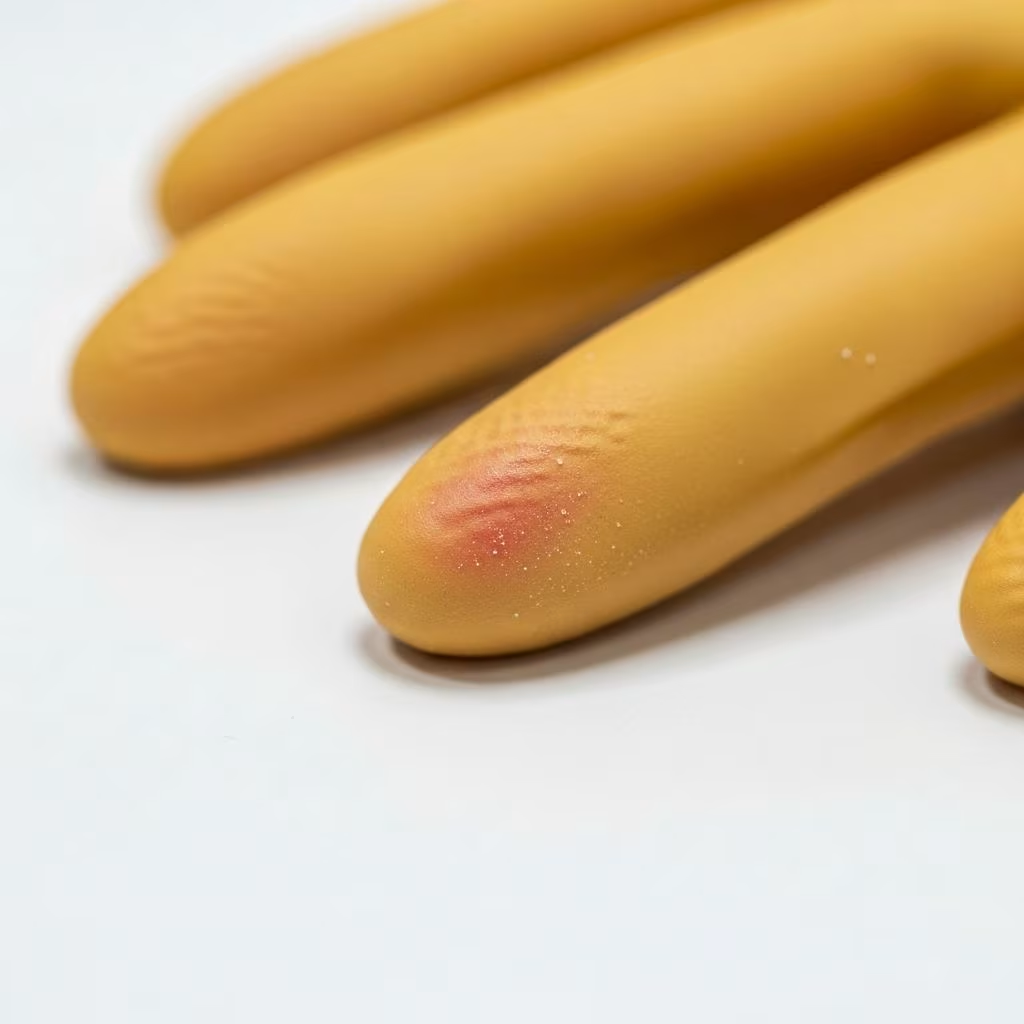
Rubber accelerators are chemicals added to natural and synthetic rubber during manufacturing to speed up vulcanization, the process that makes rubber durable and elastic. These chemicals, including thiurams, carbamates, mercaptobenzothiazole (MBT), and guanidines like 1,3-diphenylguanidine (DPG), are common causes of allergic contact dermatitis (ACD), a type IV delayed hypersensitivity reaction. Unlike latex allergy, which is IgE-mediated (type I), rubber accelerator allergy affects the skin 24-48 hours after exposure, manifesting as itchy, red rashes in areas of contact. Prevalence studies show 2.7% of patch-tested patients react to these accelerators, with higher rates in high-risk groups like healthcare workers using gloves extensively. This allergy has shifted from thiuram-dominant in latex gloves to carbamates and DPG in synthetic alternatives, complicating avoidance.
What are the reactions to rubber accelerators?
Reactions to rubber accelerators present as allergic contact dermatitis, characterized by erythema, pruritus, vesicles acutely, and scaling, fissures, hyperkeratosis chronically. Rash from rubber gloves often shows a sharp cut-off at the wrist, sparing the palms initially but worsening over pressure areas like interdigital spaces and thumbs. The delayed onset (24-48 hours, up to 5 days) distinguishes it from irritant dermatitis. In occupational settings, it predominantly affects hands (74% occupational in one series), but can disseminate to face, neck, or genitals from auto-transfer of allergens via hands or powder. Chronic exposure heightens sensitization risk, especially in wet-work professions.
Who is at risk of rubber accelerator allergy?
Individuals with frequent rubber contact are most vulnerable. Healthcare workers (surgeons, nurses, dentists) comprise up to 74% of cases due to glove use, often developing allergy after switching to ‘latex-safe’ synthetic gloves. Hairdressers, food handlers, divers (wetsuits), and cleaners face similar risks from prolonged exposure. Atopy or pre-existing hand eczema increases susceptibility, but anyone can sensitize. Household use of gloves for chores contributes in 22% of cases.
What is the cause of rubber accelerator allergy?
The primary culprits are accelerators: thiurams (e.g., tetramethylthiuram disulfide – TETD), dithiocarbamates, carbamates, thiazoles (MBT), thioureas, and guanidines (DPG). Antioxidants like p-phenylenediamine (in black rubber) also contribute. These leach from gloves during use, especially with powder or sweat, penetrating skin barriers. Synthetic nitrile gloves often contain higher carbamate/DPG levels, explaining rising cases post-latex avoidance. Patch testing confirms sensitivity; thresholds for elicitation vary, e.g., low TETD doses provoke in sensitized individuals.
What are the clinical features of rubber accelerator allergy?
The table below outlines common sites, causes, and distinguishing features:
| Location | Cause | Features |
|---|---|---|
| Hands | Rubber gloves | Sharp wrist cut-off; interdigital, thumb pressure areas; vesicles, scaling |
| Face | Auto-transfer from gloves, elastic bands | Eyelid, perioral dermatitis; symmetric |
| Feet/shoe dermatitis | Shoe linings, socks | Dorsum feet, ankles; hyperkeratosis |
| Genitals | Underwear elastic, condoms | Scrotal/ vulvar erythema, itching |
| Other body parts | Clothing elastic, wetsuits | Waistbands, axillae; linear patterns |
Acute: Erythema, edema, vesicles; chronic: Lichenification, fissures. Disseminated eruptions occur in 20-30% via systemic spread.
How is rubber accelerator allergy diagnosed?
Diagnosis relies on clinical history (delayed rash post-rubber contact) and patch testing with baseline (thiuram mix, carba mix, MBT) and rubber series. Test patient’s own gloves if suspected. Positive reactions (+++) at D2/D4 confirm relevance. Differentiate from latex allergy (immediate urticaria) or irritant contact dermatitis (immediate burning). Chemical analysis of gloves identifies specific allergens.
What is the treatment for rubber accelerator allergy?
First-line: Allergen avoidance using accelerator-free gloves (e.g., certain vinyl/PVC, or specialized nitrile like DermaPrene). Topical corticosteroids (potent for hands), emollients, and calcineurin inhibitors for severe cases. Systemic steroids or phototherapy for disseminated disease. 100% improvement seen in patients switching to safe gloves or changing jobs. Barrier creams offer limited protection.
What products can cause rubber accelerator dermatitis?
It is often difficult to know which rubber product contains which accelerators, as manufacturers may not disclose.
Household/recreational rubber products
- Gloves for cleaning, gardening
- Sports grips (tennis, weights)
- Elastic bands, hot water bottles
- Toys, erasers, balloons
Clothing and footwear
- Elastic waistbands, bra straps
- Sock elastics, garters
- Shoe insoles, rubber soles
- Wetsuits, swimwear
Cosmetics and healthcare products
- Diaphragms, condoms
- Compression stockings
- Medical tubing, drains
- Wheelchair cushions
Work sources
- Protective gloves (latex, nitrile)
- Respirator face masks
- Anti-vibration gloves (construction)
- Industrial hoses, seals
How can rubber accelerator allergy be prevented?
Use accelerator-free alternatives: Vinyl/PVC for low-risk; double-gloving with cotton liner; or confirmed accelerator-free nitrile. Rotate glove brands, minimize wear time. Occupational health should supply safe options. Early patch testing for persistent hand eczema in at-risk workers. Declining prevalence (2.7%, stable post-2000s) reflects awareness.
Frequently Asked Questions (FAQs)
Q: Can I still wear nitrile gloves if allergic to rubber accelerators?
A: Many nitrile gloves contain carbamates/DPG; test accelerator-free types like DermaPrene. Vinyl is safer but less protective.
Q: Is rubber accelerator allergy the same as latex allergy?
A: No; latex is type I (immediate hives), accelerators type IV (delayed rash). Co-existence possible in 13%.
Q: How common is this allergy in healthcare workers?
A: High; 74% occupational, rising with synthetic glove switch.
Q: Will my rash spread beyond contact areas?
A: Yes, via auto-transfer to face/genitals in 20-30%.
Q: Are there symptoms beyond skin rash?
A: Primarily cutaneous; no respiratory/systemic like latex.
References
- Allergic Contact Dermatitis to Synthetic Rubber Gloves: Changing Face of Allergy — Belsito DV et al. JAMA Dermatology. 2006-07-01. https://jamanetwork.com/journals/jamadermatology/fullarticle/421910
- Contact allergy to rubber accelerators in consecutively patch tested patients — Clemmensen OJ et al. Contact Dermatitis. 2023-09-21. https://onlinelibrary.wiley.com/doi/abs/10.1111/cod.14421
- Rubber Allergy, Allergic Contact Dermatitis — Dermatology Advisor (based on peer-reviewed). 2023. https://www.dermatologyadvisor.com/home/decision-support-in-medicine/dermatology/rubber-allergy-allergic-contact-dermatitis-contact-dermatitis-rubber/
- Allergy to Rubber Accelerators — DermNet NZ. 2024. https://dermnetnz.org/topics/allergy-to-rubber-accelerators
- Allergic contact dermatitis to rubber accelerators in protective gloves — Wulfhorst B. PMC. 2021-10-19. https://pmc.ncbi.nlm.nih.gov/articles/PMC8561832/
- Allergy to Rubber accelerators (thiuram, carba, mercapto mix) — Cutaneous Allergy. 2023. https://cutaneousallergy.org/pils/rubber-accelerators-thiuram-carba-mercapto-mix-mercaptobenzothiazole/