
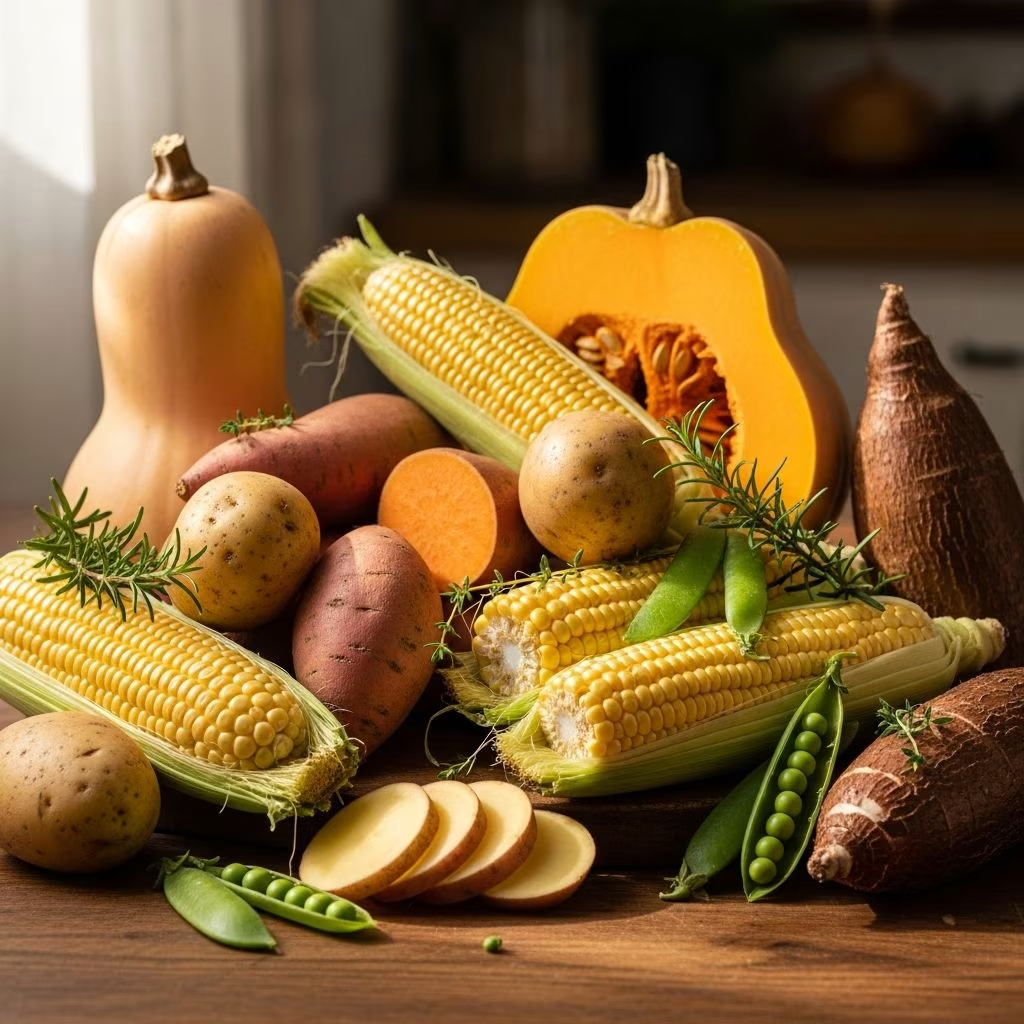
Starchy vegetables, such as potatoes, corn, peas, and cassava, form a key part of many diets worldwide. These foods are rich in carbohydrates, providing essential energy, but recent research highlights their potential links to weight gain and metabolic issues when overconsumed. This article examines their nutritional profile, health benefits, risks, and practical ways to incorporate them healthily.
What Are Starchy Vegetables?
Starchy vegetables are plant-based foods high in carbohydrates, distinguishing them from non-starchy varieties like leafy greens or broccoli. According to MyPlate guidelines, this group includes potatoes, corn, green peas, lima beans, cassava, plantains, taro, and green bananas. These veggies digest quickly due to their starch content, leading to rapid blood sugar rises, unlike fiber-rich non-starchy options.
Starchy vegetables differ from grains but share similar energy-providing roles. U.S. Dietary Guidelines often group all vegetables together, but studies question this for starchier types. For instance, white potatoes and corn are staples, yet their high glycemic index raises concerns for blood sugar control.
Nutritional Profile of Starchy Vegetables
Despite carb concerns, starchy vegetables pack nutrients. A single serving delivers significant fiber, vitamins, and minerals.
Fiber Content
Fiber aids digestion and satiety. Top sources include:
- Lima beans: 31% DV
- Green peas: 30% DV
- Cowpeas: 29% DV
- Plantains: 21% DV
- Potatoes: 18% DV
All provide at least 14% DV per cup, supporting gut health.
Vitamins and Minerals
These veggies excel in manganese, vitamin C, potassium, magnesium, thiamin, B6, folate, and niacin. Highlights:
- Manganese: Lima beans (95% DV), cowpeas (40% DV), cassava (40% DV), green peas (30% DV).
- Vitamin C: Green peas (97% DV), cassava (71% DV), lima beans (61% DV), potatoes (50% DV).
- Potassium: Essential for muscle function, heart rhythm, and carb metabolism; many Americans fall short.
| Vegetable | Fiber (% DV) | Vitamin C (% DV) | Manganese (% DV) |
|---|---|---|---|
| Lima Beans | 31 | 61 | 95 |
| Green Peas | 30 | 97 | 30 |
| Potatoes | 18 | 50 | 18 |
| Corn | 12 | 17 | 12 |
This table summarizes key nutrients per cup serving.
Health Benefits of Starchy Vegetables
Starchy vegetables fuel daily activities as primary carb sources. Their fiber slows digestion somewhat, promoting fullness. Potassium supports heart health and blood pressure. Vitamin C boosts immunity, while manganese aids metabolism. Folate and B vitamins support energy production. When excluding potatoes, some studies link higher starchy veggie intake to benefits. Moderation unlocks these perks without drawbacks.
Potential Downsides and Health Risks
Research links starchy vegetables to weight gain, especially in middle age. A Harvard study of 137,000 adults over 25 years found swapping whole grains/fruits/non-starchy veggies for starchy ones like potatoes, peas, corn accelerated gain. Starch digests fast, spiking blood sugar and promoting fat storage. Women and higher-BMI individuals are more susceptible, possibly due to menopause.
Potatoes pose highest risk; one serving ties to more gain than refined carbs. A NHANES analysis associated total starchy veggies and potatoes with higher metabolic syndrome (MetS) risk: OR 1.06 per SD for starchy, 1.08 for potatoes. MetS involves obesity, high blood sugar, hypertension—raising diabetes/heart disease odds. Dark-green non-starchy veggies inversely linked (OR 0.93). Stronger effects in non-Hispanic Whites.
Guidelines promote all veggies equally, but evidence challenges this for starchy types. Low-carb diets fail long-term by limiting fiber/vitamins from these foods. Minimize added sugars/refined starches; no safe threshold exists.
Starchy vs. Non-Starchy Vegetables
| Aspect | Starchy Vegetables | Non-Starchy Vegetables |
|---|---|---|
| Carb Content | High (quick energy, blood sugar spikes) | Low (fiber-focused) |
| Examples | Potatoes, corn, peas, cassava | Broccoli, spinach, carrots |
| Health Impact | Weight gain, MetS risk | Weight loss, lower MetS |
| Recommendation | Moderate | Increase intake |
Non-starchy, especially dark-greens, protect against MetS, cancers, depression.
How to Include Starchy Vegetables in a Healthy Diet
- Portion Control: Limit to 1/2 cup cooked daily.
- Pair Smartly: Combine with proteins, fats, non-starchy veggies to blunt blood sugar spikes.
- Preparation Matters: Bake/boil over frying; keep skins for fiber.
- Variety: Rotate with non-starchy for balance.
- Alternatives: Opt for sweet potatoes (lower GI) or whole grains sometimes.
Focus on whole forms; avoid processed like chips.
Common Starchy Vegetables and Tips
- Potatoes: Bake with skin; avoid fries. High vitamin C, but MetS risk.
- Corn: Fresh on cob; moderate due to moderate fiber.
- Green Peas/Lima Beans: High fiber/vitamins; add to soups.
- Cassava/Plantains: Boil; watch portions for carbs.
Frequently Asked Questions (FAQs)
Are starchy vegetables healthy?
Yes in moderation; they provide carbs, fiber, vitamins but link to weight gain/MetS if overeaten. Prioritize non-starchy.
Why do potatoes cause weight gain?
Fast digestion spikes blood sugar, promoting fat storage, per Harvard study.
Can I eat starchy vegetables on a low-carb diet?
Limited amounts; they provide essential nutrients low-carb diets may lack.
How much is too much?
No threshold, but minimize; fill plate with non-starchy veggies.
Are all starchy vegetables equal?
No; potatoes riskiest, beans higher fiber.
Key Takeaways
- Starchy veggies offer energy/nutrients but risk weight gain/MetS.
- Emphasize non-starchy/dark-greens for protection.
- Balance with portions, pairings for health.
References
- Study links starchy vegetables with weight gain — Harvard Gazette. 2023-11-01. https://news.harvard.edu/gazette/story/2023/11/study-links-starchy-vegetables-like-potatoes-with-middle-age-weight-gain/
- MyPlate Exploration: Starchy Vegetables — Food and Health Communications. 2023-01-01. https://www.foodandhealth.com/blog-free/myplate-starchy-vegetables
- Associations of starchy and non-starchy vegetables with risk of metabolic syndrome — PMC (Nutr Diabetes). 2023-09-04. https://pmc.ncbi.nlm.nih.gov/articles/PMC10472713/