
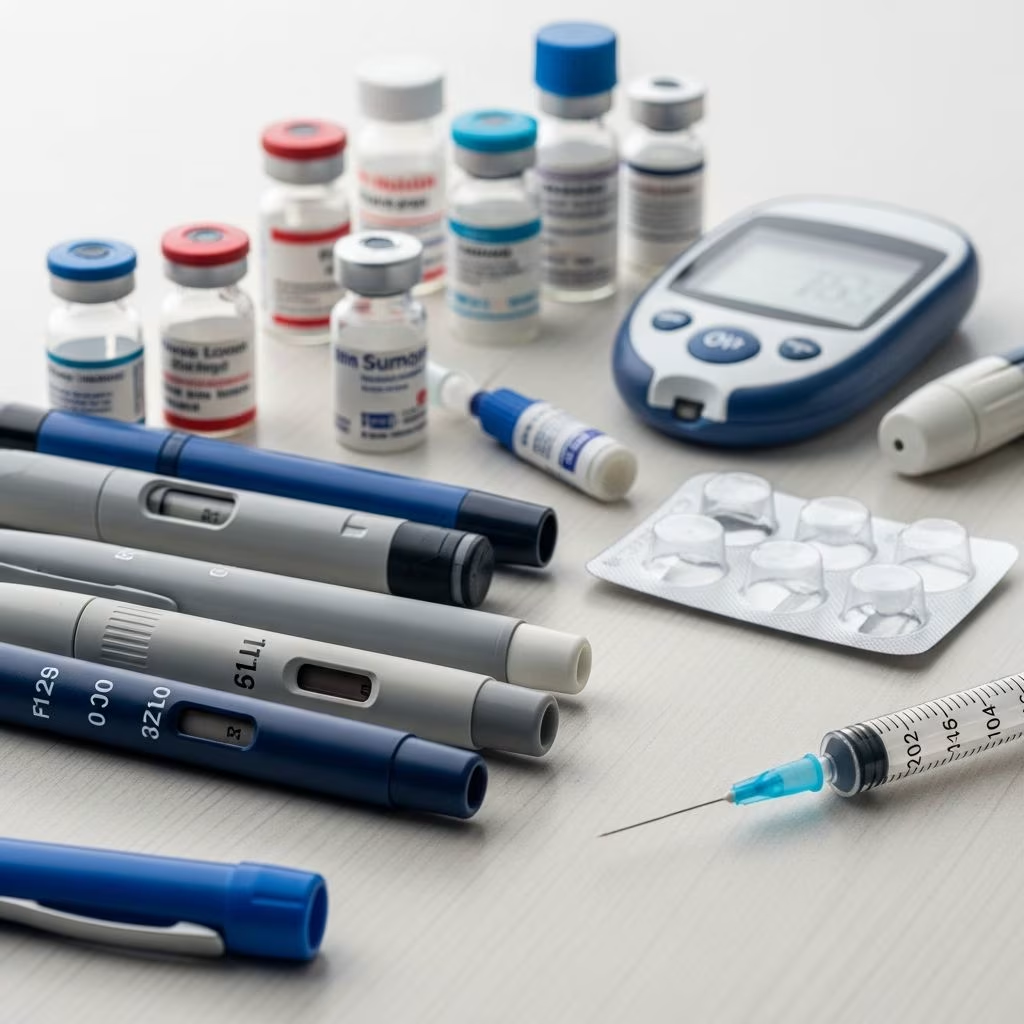
Insulin is a vital hormone for people living with diabetes, particularly those with type 1 diabetes and many with type 2 diabetes. It helps regulate blood glucose levels by allowing glucose to enter cells for energy. There are several types of insulin, each characterized by its onset of action, time to peak effect, and duration. Understanding these differences is crucial for effective diabetes management. This guide covers the main categories: rapid-acting, short-acting, intermediate-acting, long-acting, biphasic or mixed insulins, and inhaled insulin. We’ll explore how they work, when to use them, common brand names, and typical insulin regimens.
Insulin therapy mimics the body’s natural insulin production, which occurs in two phases: basal insulin for background needs between meals and bolus insulin for meals and corrections. Selection of insulin type depends on factors like diabetes type, lifestyle, blood glucose patterns, and healthcare provider recommendations. Always consult your diabetes care team for personalized advice.
What are the different types of insulin?
Insulins are categorized based on how quickly they start working (onset), when they are most effective (peak), and how long they last (duration). Here’s an overview of the primary types:
- Rapid-acting insulin: Starts working in 15 minutes, peaks in 1-2 hours, lasts 2-4 hours. Used for mealtime boluses.
- Short-acting insulin: Onset 30-60 minutes, peaks 2-4 hours, lasts 5-8 hours.
- Intermediate-acting insulin: Onset 1-2 hours (often cloudy, requires mixing), peaks 4-12 hours, lasts 12-18 hours.
- Long-acting insulin: Onset 1-2 hours, minimal peak, lasts 20-24+ hours for basal coverage.
- Biphasic/mixed insulin: Combination of rapid/short and intermediate, taken before meals.
- Inhaled insulin: Ultra-rapid onset, used at mealtimes.
These categories help tailor therapy to individual needs, whether through multiple daily injections (MDI), insulin pumps, or simpler regimens.
Rapid-acting insulin
Rapid-acting insulins are designed for quick action to cover carbohydrate intake at meals and correct high blood glucose levels. They begin working within 10-20 minutes after injection, reach peak effect in 1-2 hours, and last 3-5 hours. This matches the digestion time of a meal, preventing post-meal spikes. Administer right before or within 15 minutes of starting a meal. Common brands include NovoLog (insulin aspart), Humalog (insulin lispro), Apidra (insulin glulisine), and Fiasp (faster aspart).
These analogs are clear solutions, injected subcutaneously via syringe, pen, or pump. They are preferred in basal-bolus regimens and insulin pumps, which deliver continuous subcutaneous insulin infusion (CSII) using rapid-acting insulin. Risks include hypoglycemia if dosed too high or without food. Storage: room temperature for 28 days after opening.
Short-acting insulin
Also called regular insulin, short-acting insulin has an onset of 30 minutes to 1 hour, peaks at 2-4 hours, and lasts 5-8 hours. It’s suitable for mealtime coverage but requires injection 20-30 minutes before eating due to slower onset. Brand examples: Humulin R, Novolin R, Actrapid, Humulin S.
Regular insulin is human-derived or analog, often used in hospitals or fixed-dose regimens. It can be given intravenously in emergencies. Unlike rapid-acting, it may cause more variability in absorption. It’s compatible with pumps but less common than analogs due to slower action.
Intermediate-acting insulin
Intermediate-acting insulin, primarily NPH (Neutral Protamine Hagedorn), provides basal coverage between meals and overnight. Onset is 1-2 hours, peak 4-12 hours, duration 12-18 hours. It’s cloudy, requiring thorough mixing by rolling the vial gently.
Brands: Humulin N, Insulatard, Novolin N. Often used once or twice daily, e.g., morning and bedtime. It pairs well with rapid/short-acting for comprehensive control. NPH is cost-effective but has a pronounced peak, increasing hypo risk at peak times. Recent studies support its efficacy in type 2 diabetes when analogs aren’t accessible.
Long-acting insulin
Long-acting insulins offer steady basal coverage with little to no peak, minimizing hypoglycemia. Onset 1-2 hours, plateau effect, duration 20-42 hours depending on type. Ideal for once-daily dosing.
Types include:
- Insulin glargine: Lantus, Basaglar, Toujeo, Semglee (24 hours).
- Insulin detemir: Levemir (up to 24 hours, dose-dependent).
- Insulin degludec: Tresiba (up to 42 hours, ultra-long).
Injected once daily at the same time. Preferred for type 2 diabetes starting insulin therapy alongside oral meds. Adjustments based on fasting glucose.
Biphasic or mixed insulin
Mixed insulins combine intermediate (basal) and rapid/short-acting (bolus) in one injection, simplifying regimens for those preferring fewer shots. Taken 1-3 times daily before meals. Less flexible for variable eating but convenient.
Brands: Humalog Mix25/50, NovoMix 30, Humulin M3. Composition varies, e.g., 30% rapid + 70% NPH. Suitable for type 2 diabetes; monitor for hypos during peaks.
Inhaled insulin
Afrezza is a rapid-acting inhaled powder for mealtime use in adults with type 1 or 2 diabetes. Onset 12-15 minutes, peaks 30-90 minutes, lasts 2-3 hours. Delivered via oral inhaler—no needles.
Lung function tests required before and during use. Not for smokers or those with lung disease. Complements long-acting injections in MDI regimens.
Insulin regimens
Regimens vary by diabetes type and needs:
- Once/twice-daily: Basal (intermediate/long-acting) for type 2, often with orals.
- Basal-bolus: Long-acting basal + rapid-acting boluses 3+ times/day. Mimics physiology, gold standard for type 1.
- Pumps: Continuous rapid-acting infusion + boluses.
- Mixed: 2-3 daily meals.
| Regimen | Best For | Injections/Day | Examples |
|---|---|---|---|
| Once-daily basal | Early type 2 | 1 | Lantus + orals |
| Basal-bolus | Type 1, advanced type 2 | 4+ | Lantus + Humalog |
| Mixed | Fixed meals type 2 | 2-3 | NovoMix |
| Pump | Flexible lifestyle | Site change 2-3d | Novolog pump |
Choosing the right insulin
No one-size-fits-all; factors include A1C goals, hypo frequency, lifestyle, cost, insurance. Start simple, intensify as needed. Pumps/analogs offer flexibility but higher cost. Biosimilars like Semglee lower prices.
Frequently asked questions
What is the best type of insulin?
The best depends on your needs; basal-bolus with analogs is often optimal for control.
Can I mix insulins?
Yes, rapid/short with NPH if compatible; consult provider.
How to store insulin?
Unopened: fridge. In-use: room temp <28 days, avoid heat.
Does insulin cause weight gain?
Possible due to anabolic effects; manage with diet/exercise.
Switching insulins?
Taper/overlap under supervision to avoid errors.
This guide empowers informed decisions. Work with your healthcare team for titration and monitoring. Advances like smart pens and closed-loop systems continue improving outcomes.
References
- The 6 Types of Insulin: A Complete Guide — GoodRx. 2023-10-15. https://www.goodrx.com/classes/insulins/insulin-types-how-to-use
- Insulin for type 2 diabetes — NHS. 2024-05-20. https://www.nhs.uk/medicines/insulin/insulin-for-type-2-diabetes/
- Types of Insulin for Diabetes Treatment — WebMD. 2024-01-12. https://www.webmd.com/diabetes/diabetes-types-insulin
- Types of Insulin for use in Type 2 Diabetes — UCSF Diabetes Teaching Center. 2023-08-05. https://diabetesteachingcenter.ucsf.edu/about-diabetes/type-2-diabetes/types-insulin-use-type-2-diabetes
- Insulin Basics — American Diabetes Association. 2024-06-10. https://diabetes.org/health-wellness/medication/insulin-basics
- Insulin-Pharmacology, Therapeutic Regimens — NCBI Bookshelf (Endotext). 2023-11-28. https://www.ncbi.nlm.nih.gov/books/NBK278938/