
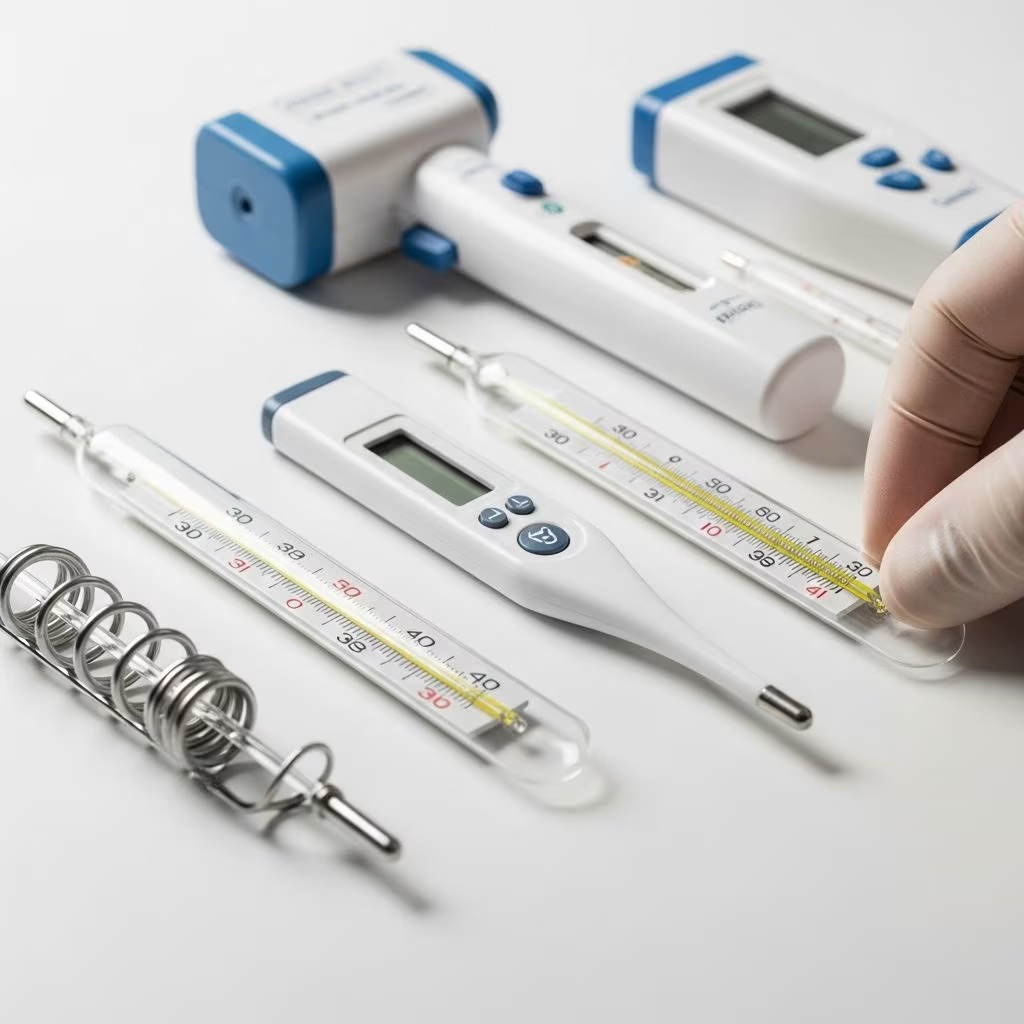
Accurately measuring body temperature is a fundamental aspect of home healthcare, enabling early detection of fever and illness. Modern thermometers offer diverse options tailored to different ages and preferences, ensuring reliable results when used correctly.
Why Accurate Temperature Measurement Matters
Body temperature serves as a key indicator of health, typically ranging from 36.1°C to 37.2°C orally in healthy adults. Deviations signal potential infections or other conditions, making precise readings essential for timely interventions. Selecting the right device and following proper protocols minimizes errors influenced by external factors like recent activity or ambient conditions.
Exploring Thermometer Varieties
Severe options exist, each leveraging unique technologies for contact or non-contact measurements. Understanding their mechanisms helps in choosing the best fit for your needs.
- Digital Stick Thermometers: Versatile devices using heat sensors for oral, rectal, or axillary readings, prized for affordability and multi-site adaptability.
- Ear (Tympanic) Thermometers: Infrared-based tools that capture eardrum temperature swiftly, ideal for quick assessments in cooperative patients.
- Forehead (Temporal) Thermometers: Scan the temporal artery via infrared, offering non-invasive convenience suitable for all ages.
- Non-Contact Infrared Thermometers: Measure from a distance, perfect for screening multiple individuals without hygiene concerns.
- Rectal Thermometers: Provide the gold standard for infants, delivering core temperature with high precision.
Comparative Overview of Thermometer Types
The table below summarizes key attributes, helping you evaluate suitability based on accuracy, speed, and application.
| Type | Accuracy Range | Best For | Pros | Cons |
|---|---|---|---|---|
| Digital Stick | ±0.1°C | Oral/Axillary/Rectal | Cost-effective, multi-use | Slower (30-60s), needs cleaning |
| Tympanic | ±0.2°C | Ear (6m+) | Fast (1-2s), gentle | Earwax interference |
| Forehead | ±0.3°C | All ages | Non-contact option | Sweat/environment sensitive |
| Non-Contact IR | ±0.3°C | Screening | Hygienic, quick | Distance critical |
| Rectal | ±0.05°C | Infants (0-3m) | Most precise | Invasive, discomfort |
Data derived from clinical comparisons showing rectal as most reliable for young children, while tympanic excels in speed for older kids.
Age-Specific Usage Recommendations
For Newborns and Infants Under 3 Months
Rectal measurement remains the preferred method due to its proximity to core temperature, ensuring readings within 0.1°C of actual values. Lubricate the tip with petroleum jelly, insert gently 1-2 cm, and hold for the beep. Avoid if the child is restless.
For Babies 3-6 Months
Transition to axillary or rectal digital sticks. Place under the armpit, securing the arm against the body for 3-5 minutes to account for the 0.5-1°C cooler reading compared to oral.
For Children Over 6 Months
Tympanic or forehead scanners provide speed without distress. For ears, pull the pinna back and up, aiming at the canal; forehead requires a steady swipe across the temple.
For Adults and Older Children
Oral digital thermometers offer simplicity: place under the tongue, mouth closed, for 30-60 seconds. Wait 15 minutes post-eating or drinking for accuracy.
Step-by-Step Instructions for Popular Models
Using a Digital Oral Thermometer
- Wash hands and clean the probe with alcohol.
- Turn on and wait for readiness signal.
- Position under tongue; advise no talking.
- Hold until beep; note reading.
- Disinfect after use.
Mastering Tympanic Thermometers
- Select correct ear probe cover.
- Gently pull ear up/back (adults) or down/back (kids).
- Insert probe snugly without forcing.
- Press button for instant result.
- Discard cover hygienically.
Forehead models demand a clean, dry surface; hold 1-3 cm away per device specs to avoid skewed results from ambient heat.
Factors Affecting Reading Reliability
Several variables can skew results: recent baths, exercise, or bundled clothing elevate readings by up to 0.5°C. Environmental extremes, user error in positioning, or device calibration lapses also impact precision. Always cross-verify suspicious results with an alternate method.
Cleaning and Maintenance Essentials
Hygiene prevents cross-contamination. Wipe probes with 70% isopropyl alcohol between uses; replace tympanic covers each time. Store in protective cases away from direct sunlight or moisture to preserve sensor integrity. Check batteries regularly and calibrate annually if specified.
Safety Precautions and Common Pitfalls
- Never use mercury devices due to toxicity risks; opt for galinstan or digital alternatives.
- Avoid forehead scans on sweaty skin or in drafts.
- For ears, clear wax buildup first to prevent false lows.
- Do not interchange rectal/oral probes without thorough sterilization.
- Consult professionals for persistent high fevers over 38°C in infants.
Interpreting Temperature Readings
Normal ranges vary: rectal 36.6-38°C (infants), oral 35.5-37.5°C (adults), axillary 36.5-37.5°C. Fever thresholds: 38°C+ rectal/oral, warranting monitoring; 40°C+ demands medical advice. Adjust site-specific baselines: add 0.5°C to axillary, subtract 0.5°C from tympanic.
Choosing Your Ideal Home Thermometer
Prioritize CE-marked devices for EU safety standards, ensuring ±0.2°C accuracy. Families with infants favor multi-mode units (ear/forehead); budget-conscious users select digital sticks. Hospitals lean toward tympanic and non-contact for efficiency.
Frequently Asked Questions
What is the most accurate thermometer for babies?
Rectal digital thermometers offer superior precision for infants under 3 months.
Can I use a forehead thermometer on a newborn?
Yes, but confirm with rectal if fever suspected, as forehead may read 0.6°C lower.
How often should I replace thermometer probe covers?
Single-use only for hygiene, especially in multi-person households.
Are non-contact thermometers reliable for daily use?
They excel in screening but verify highs with contact methods due to environmental sensitivity.
What if my thermometer gives inconsistent readings?
Recalibrate, check batteries, or test on a known temperature like warm water.
Advanced Tips for Professional-Level Accuracy
Record multiple readings over time to track trends, noting time of day as temperatures peak afternoons. Integrate with health apps for logging if your model supports Bluetooth. For high-risk scenarios like post-surgery, pair with wearable monitors for continuous data.
References
- Which Thermometer Do Hospitals and Doctors Use? — CME Corp Blog. 2023-05-15. https://blog.cmecorp.com/which-thermometer-do-hospitals-and-doctors-use
- Types Of Thermometers And Which Thermometer Is Most Accurate — Kinetik Wellbeing. 2024-02-10. https://kinetikwellbeing.com/types-of-thermometers-which-thermometer-is-most-accurate/
- Types of thermometer — healthdirect.gov.au (Australian Government). 2025-01-20. https://www.healthdirect.gov.au/types-of-thermometer
- Best Thermometer Buying Guide — Consumer Reports. 2024-11-05. https://www.consumerreports.org/babies-kids/thermometers/buying-guide/
- Types of Thermometers, Their Accuracy, and How to Use Them — Healthline. 2024-08-12. https://www.healthline.com/health/types-of-thermometers
- Temperature: Digital and Glass Thermometers — Nationwide Children’s Hospital. 2023-10-01. https://www.nationwidechildrens.org/family-resources-education/health-wellness-and-safety-resources/helping-hands/temperature-digital-and-glass-thermometers
- Thermometer Buying Guide — MarketLab. 2024-03-18. https://www.marketlab.com/Solutions/Buying-Guides/Thermometer-Buying-Guide
- Thermometers: Understand the options — Mayo Clinic. 2025-06-14. https://www.mayoclinic.org/diseases-conditions/fever/in-depth/thermometers/art-20046737