Tuberculosis (TB) treatment relies on a combination of antibiotics administered over several months to eradicate the Mycobacterium tuberculosis bacteria and prevent resistance. Standard regimens typically involve four primary drugs during an initial intensive phase, followed by a continuation phase with fewer medications.
Understanding Tuberculosis and Its Treatment Needs
TB affects primarily the lungs but can spread to other organs, manifesting as active disease or remaining latent. Active TB requires aggressive therapy to kill rapidly dividing bacteria and persistent forms, while latent TB aims to prevent progression. Treatment duration varies from 3 to 9 months based on disease type, patient response, and drug susceptibility.
The cornerstone of therapy is multidrug regimens to minimize resistance risk. Core drugs target different bacterial processes: cell wall synthesis, RNA polymerase inhibition, and metabolic disruption.
Core Medications in TB Therapy
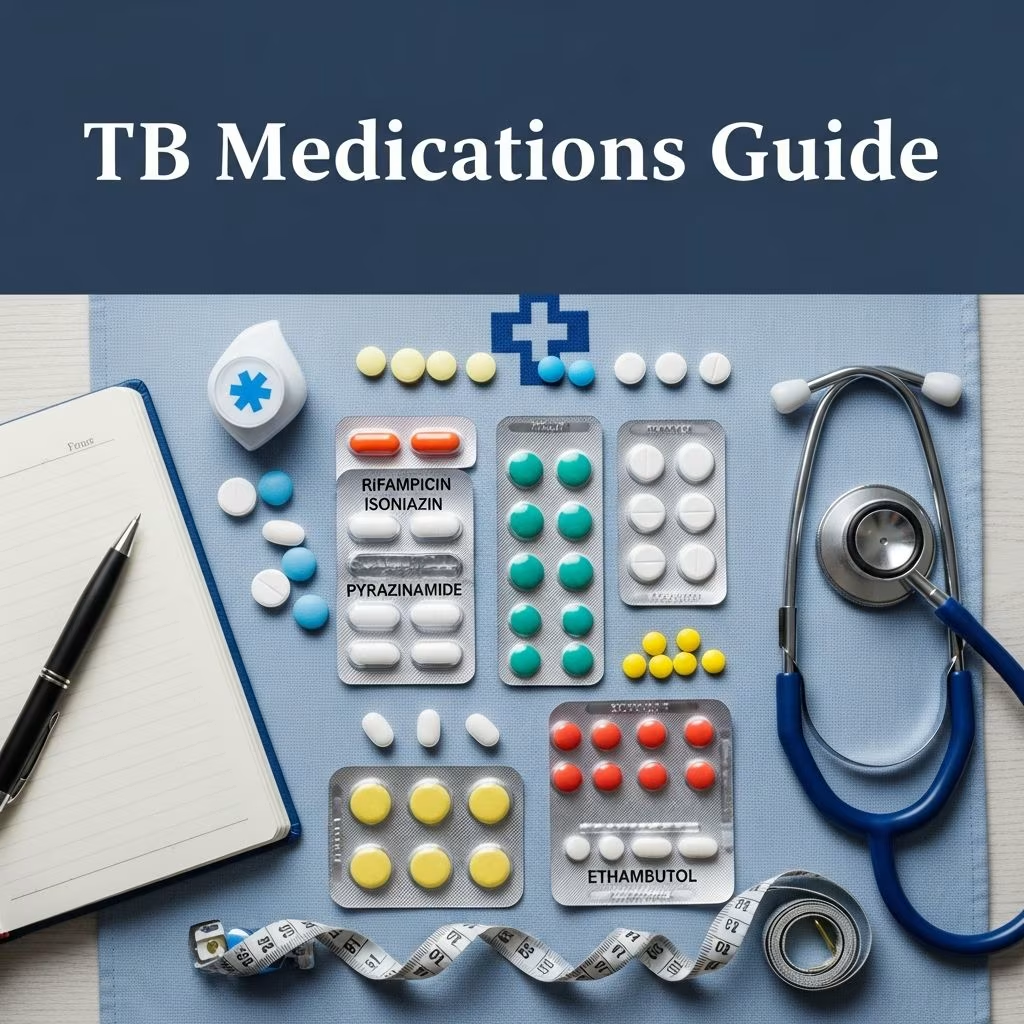
First-line drugs form the foundation of treatment for drug-susceptible TB. These include:
- Isoniazid (INH or H): Inhibits mycolic acid synthesis in the cell wall, effective against actively growing bacteria. Used alone for latent TB but combined for active disease. Common side effects: peripheral neuropathy, hepatotoxicity.
- Rifampin (RIF or R): Binds to DNA-dependent RNA polymerase, halting transcription. Turns bodily fluids orange-red. Key adverse effects: liver enzyme elevation, drug interactions.
- Pyrazinamide (PZA or Z): Disrupts membrane energetics and CoA precursors; sterilizing agent active in acidic environments. Monitor for hyperuricemia and gout.
- Ethambutol (EMB or E): Inhibits arabinosyl transferase, blocking cell wall arabinogalactan. Bacteriostatic; watch for optic neuritis.
These drugs, known collectively as RIPE therapy, address TB’s slow growth and dormancy.
Standard Treatment Regimens for Drug-Susceptible TB
Therapy divides into an intensive phase (killing active bacilli) and continuation phase (eliminating persisters).
Preferred 6-Month Regimen (2HRZE/4HR)
The most common approach: 2 months of daily HRZE (56 doses), followed by 4 months of HR (126 or 90 doses, daily or 5 days/week).
| Phase | Drugs | Duration | Frequency | Total Doses |
|---|---|---|---|---|
| Intensive | INH, RIF, PZA, EMB | 8 weeks | Daily (7x/week) | 56 |
| Continuation | INH, RIF | 18 weeks | Daily or 5x/week | 126-90 |
This regimen suits most pulmonary TB cases, offering high cure rates.
Shorter 4-Month Option (2HPZM/2HPM)
For non-resistant pulmonary TB: 2 months HPZM intensive, then 2 months +1 week HPM (17 weeks total). Rifapentine (P) replaces rifampin for weekly dosing convenience; moxifloxacin (M) enhances efficacy.
- Suitable for smear-negative, non-cavitary disease.
- Reduces treatment burden while maintaining outcomes.
Extended 9-Month Regimen (2HRZE/7HR)
Used for severe cases like cavitary disease or HIV co-infection: Continuation extends to 7 months HR.
Alternative schedules (e.g., thrice-weekly) apply in resource-limited settings but risk failure if doses missed.
Addressing Drug-Resistant Tuberculosis
Multidrug-resistant TB (MDR-TB) resists INH and rifampin. WHO/CDC endorse tailored regimens.
BPaL Regimen for MDR-TB: Bedaquiline, pretomanid, linezolid. Intensive: bedaquiline 400mg daily x2 weeks then 200mg 3x/week; pretomanid 200mg daily x26 weeks; linezolid 600mg daily (adjust for toxicity). Extends to 9 months if needed.
Shorter courses (e.g., 6 months) with fluoroquinolones, injectables like streptomycin are options, guided by susceptibility testing.
Latent TB Infection Management
Preventive therapy for inactive TB uses shorter regimens:
- 3 months: INH + rifapentine weekly.
- 4 months: Rifampin daily.
- 6-9 months: INH daily or with rifapentin.
These halt progression to active disease.
Potential Side Effects and Monitoring
TB drugs demand vigilant monitoring:
| Drug | Main Side Effects | Monitoring |
|---|---|---|
| Isoniazid | Hepatitis, neuropathy | LFTs, vitamin B6 supplement |
| Rifampin | Hepatotoxicity, flu-like syndrome | LFTs monthly |
| Pyrazinamide | Hyperuricemia, arthralgia | Uric acid levels |
| Ethambutol | Optic neuritis | Visual acuity/color tests |
| Linezolid (MDR) | Myelosuppression, neuropathy | CBC, dose adjust |
Hepatotoxicity risk highest with INH+RIF; baseline and monthly LFTs essential. DOT ensures adherence.
Strategies for Adherence and Success
Directly Observed Therapy (DOT) boosts completion rates. Patient education on orange urine (rifampin), interactions (e.g., rifampin with OCPs), and symptom relief during intensive phase is crucial.
For HIV/TB co-infection, integrate antiretrovirals carefully due to interactions.
Emerging Advances in TB Treatment
Research explores shorter regimens: 4-month rifapentine-moxifloxacin or 8-week bedaquiline-linezolid strategies show non-inferiority to 6-month standards with similar safety.
These innovations promise reduced dropout and transmission.
Frequently Asked Questions (FAQs)
What is the standard TB treatment length?
Typically 6 months for drug-susceptible pulmonary TB, with shorter 4-month options available.
Can TB be cured?
Yes, with full adherence to regimens; cure rates exceed 95% for susceptible strains.
What if I miss TB doses?
Missed doses risk resistance; use DOT and contact your provider immediately.
Are TB drugs safe during pregnancy?
INH, rifampin, ethambutol preferred; consult specialists.
How is drug resistance tested?
Via sputum culture and molecular tests like GeneXpert.
References
- A Comprehensive Review of Tuberculosis Management — US Pharmacist. 2023. https://www.uspharmacist.com/article/a-comprehensive-review-of-tuberculosis-management
- Treatment for Drug-Susceptible Tuberculosis Disease — CDC. 2024-10-23. https://www.cdc.gov/tb/hcp/treatment/tuberculosis-disease.html
- Treating Tuberculosis — CDC. 2024. https://www.cdc.gov/tb/treatment/index.html
- Tuberculosis Drugs — Sketchy Medical. 2023. https://www.sketchy.com/medical-lessons/tuberculosis-drugs
- Shorter Course for Tuberculosis Treatment — NEJM (YouTube). 2024. https://www.youtube.com/watch?v=LCROk4NBylk