UV sanitizers, particularly those using UV-C light, can effectively inactivate many viruses, bacteria, and other pathogens on surfaces and in the air when used correctly, but their performance depends on factors like exposure time, distance, surface cleanliness, and device quality. They are not a complete replacement for traditional cleaning methods and carry risks such as skin/eye damage from improper use or unintended air pollution.
What Are UV Sanitizers?
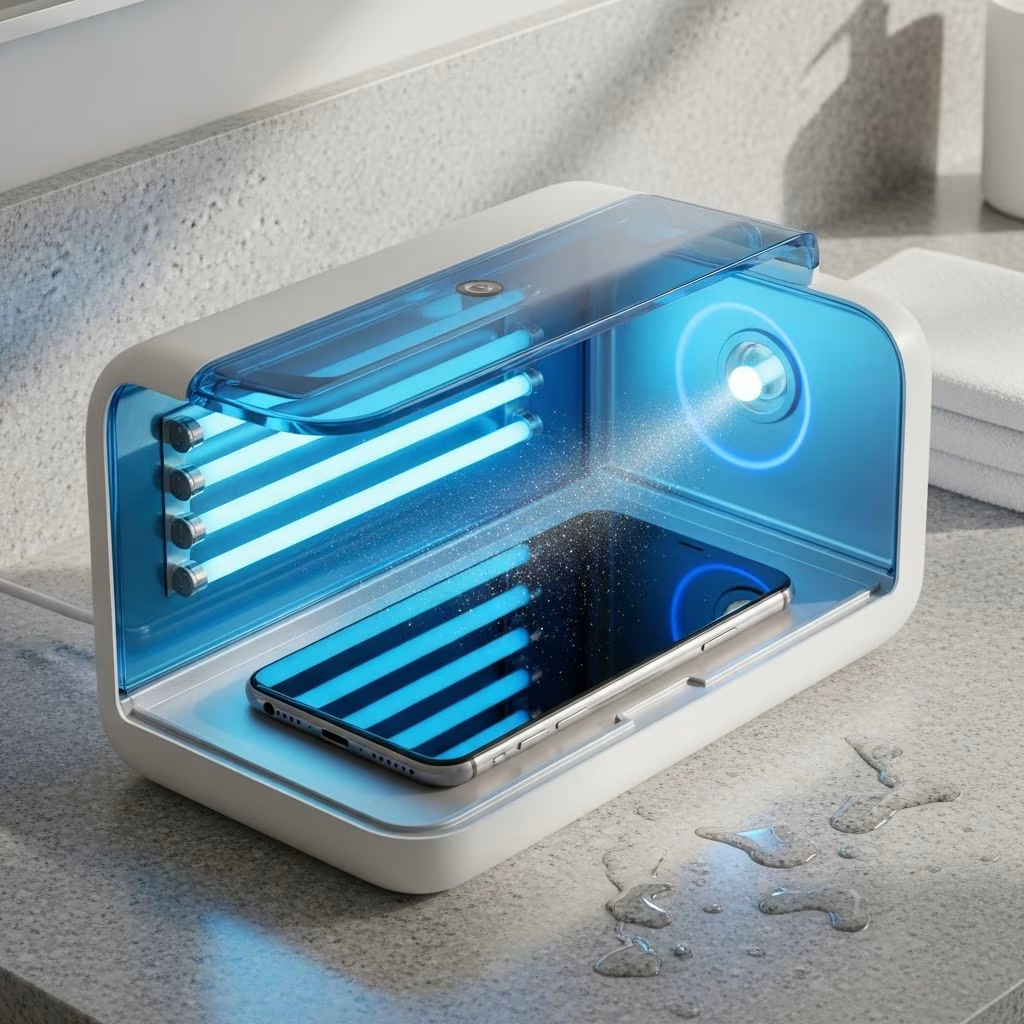
UV sanitizers employ ultraviolet light, specifically the UV-C spectrum (wavelengths around 200-280 nm), to damage the DNA or RNA of microorganisms, preventing them from reproducing. These devices come in various forms: wand-style sanitizers for surfaces, enclosed boxes for phones and small items, room-scale units for air and surfaces, and HVAC-integrated systems. Peak effectiveness occurs at 254 nm or 222 nm wavelengths, where microbes absorb light most strongly.
Unlike chemical disinfectants, UV sanitizers leave no residue, require no consumables, and work without water, making them appealing for quick, no-touch disinfection. They have been used for decades in water treatment and healthcare settings.
How Do UV Sanitizers Work?
UV-C light penetrates microbial cells and creates thymine dimers in DNA, disrupting replication. This germicidal action targets bacteria, viruses (including SARS-CoV-2), fungi, and protozoa. Effectiveness hinges on:
- UV Dose: Measured in mJ/cm²; higher doses (e.g., 10-50 mJ/cm² for many viruses) require longer exposure or higher intensity.
- Direct Line-of-Sight: Shadows, dirt, or organic matter block light, reducing efficacy.
- Wavelength: 254 nm is standard for surfaces; 222 nm is safer for occupied spaces as it penetrates skin less.
For example, studies show UV-C reduces bioburden on high-touch surfaces when combined with cleaning, but standalone use misses crevices.
Do UV Sanitizers Actually Kill Germs?
Yes, peer-reviewed evidence confirms UV-C’s efficacy against a broad spectrum of pathogens. A review of 80+ studies (1985-2020) found UV irradiation promising for air and surfaces, especially SARS-CoV-2, with reductions in microbial load under controlled conditions. UV light is effective against most viruses and bacteria, though tougher microbes like Cryptosporidium may resist low-power systems.
In healthcare, UV-C devices sanitized mobile phones, cutting hospital-acquired infection (HAI) risks cost-effectively at ~AUD360 per bed/year vs. hand hygiene at AUD965. However, real-world variables like humidity, temperature, and soiling diminish results—organic matter shields germs.
Limitations of UV Sanitizers
Despite promise, UV sanitizers have key drawbacks:
- Incomplete Coverage: Cannot reach shadowed areas or porous materials.
- Environmental Factors: High humidity/temperature lowers efficacy; dirty surfaces block light.
- Device Variability: Consumer wands often underdeliver UV dose due to low power or improper use.
- Resistance: Some microbes (e.g., Giardia) need specialized high-power UV.
| Factor | Impact on Efficacy | Example |
|---|---|---|
| Distance from Source | Inverse square law: doubles distance quarters intensity | 10 cm vs. 20 cm halves dose |
| Organic Matter | Shields microbes | Dust reduces kill rate by 50%+ |
| Exposure Time | Dose = Intensity × Time | 30s at high power = 5min low power |
| Humidity | >60% RH cuts efficacy | Virus survival increases 2x |
UV should adjunct—not replace—soap, wipes, and ventilation.
Are UV Sanitizers Safe?
Traditional 254 nm UV-C damages eyes (photokeratitis) and skin (erythema) on direct exposure—never use in occupied rooms without shielding. Far-UVC (222 nm) is safer for humans but generates ozone reacting with air chemicals to form formaldehyde, VOCs, and nanoparticles, potentially worsening indoor air quality.
NIST research in ventilated/unventilated restrooms found 222 nm lamps produced pollutants; ventilation mitigated buildup but didn’t eliminate risk. Long-term health impacts need study. Material damage: Prolonged exposure (>6 hours) degrades plastics/glass, though short cycles (seconds) are safe.
- Safe Practices: Use enclosed units, follow dwell times, wear PPE for open devices, ensure ventilation.
UV Sanitizers vs. Other Cleaning Methods
| Method | Pros | Cons | Best For |
|---|---|---|---|
| UV Sanitizers | No residue, fast on direct exposure, sustainable | Line-of-sight only, safety risks, variable efficacy | Phones, keys, air (with HVAC) |
| Chemical Wipes | Reaches crevices, proven broad-spectrum | Residues, allergies, disposal waste | High-touch surfaces |
| Hand Hygiene | Simple, immediate | Less effective vs. fomites, compliance issues | Personal contact |
| Ventilation/HEPA | Air-focused, safe | Slow for surfaces | Occupied spaces |
UV excels as adjunct; studies favor it over handwashing for devices like phones in hospitals.
What Do Experts Say About UV Sanitizers?
Experts view UV positively but cautiously. A PMC review concludes UV has “potential for effective application” as adjunct to cleaning/PPE, dependent on dose and conditions. NIST warns of 222 nm pollution risks needing guidelines. Healthcare analyses praise cost-savings for fomite control. Consensus: Promising for no-touch disinfection amid pandemics, but not standalone.
Best UV Sanitizers for Home Use
Choose NSF/ANSI-certified devices with verified UV output (mW/cm²). Recommended types:
- Enclosed Phone Boxes: Safe, effective in 1-5 min.
- Surface Wands: High-power (≥5 mW/cm²), with timers.
- Upper-Room UVGI: For air in homes/offices.
Avoid cheap imports lacking dosimetry. Test with UV cards for output.
Frequently Asked Questions (FAQs)
Do UV sanitizers kill COVID-19?
Yes, UV-C at sufficient doses (e.g., 10-20 mJ/cm²) inactivates SARS-CoV-2, per lab studies, but real-world soiling reduces impact.
Can I use UV sanitizer around pets or kids?
No for 254 nm—direct exposure harms eyes/skin. Use 222 nm cautiously with ventilation; keep enclosed.
How long to sanitize with UV wand?
30-120 seconds per spot at 1-5 cm, per device specs; calculate dose for target germs.
Does UV damage plastics or screens?
Minimal in short bursts (<1 min); prolonged exposure yellows plastics.
Are UV sanitizers better than Lysol wipes?
UV for residue-free, no-touch; wipes for crevices. Combine for best results.
UV sanitizers offer valuable disinfection when integrated thoughtfully into hygiene routines, balancing efficacy with safety limitations.
References
- A Review of Recent Evidence for Utilizing Ultraviolet Irradiation… — Owens J, et al. PMC. 2022-02-22. https://pmc.ncbi.nlm.nih.gov/articles/PMC8869636/
- UV Disinfection Lights Can Cause Indoor Air Pollution — NIST. 2024-05-XX. https://www.nist.gov/news-events/news/2024/05/uv-disinfection-lights-can-cause-indoor-air-pollution
- Does UV Light Damage Medical Equipment? — UV Smart. 2023 (approx.). https://www.uvsmart.nl/articles/does-uv-light-damage-medical-equipment-understanding-the-power-of-light
- Ultraviolet disinfection of drinking water — WA Health. 2024 (ongoing). https://www.health.wa.gov.au/Articles/U_Z/Ultraviolet-disinfection-of-drinking-water
- Ultraviolet-C-based sanitization is a cost-effective option… — Frontiers in Health Services. 2024-XX-XX. https://www.frontiersin.org/journals/health-services/articles/10.3389/frhs.2024.1448913/full