Warfarin, a widely prescribed anticoagulant, helps prevent blood clots but requires careful dietary management to maintain therapeutic INR levels between 2.0 and 3.0. Sudden changes in vitamin K intake, certain supplements, or alcohol can destabilize these levels, raising risks of bleeding or thrombosis.
Understanding Warfarin’s Mechanism and INR Monitoring
Warfarin inhibits vitamin K-dependent clotting factors (II, VII, IX, X), making consistent vitamin K intake crucial. INR, or International Normalized Ratio, measures blood clotting time; fluctuations can lead to supratherapeutic (bleeding risk) or subtherapeutic (clot risk) states.
Regular INR testing, typically weekly initially then monthly, guides dose adjustments. Patients should track diet and report changes to healthcare providers for precise management.
Key Dietary Principles for Warfarin Users
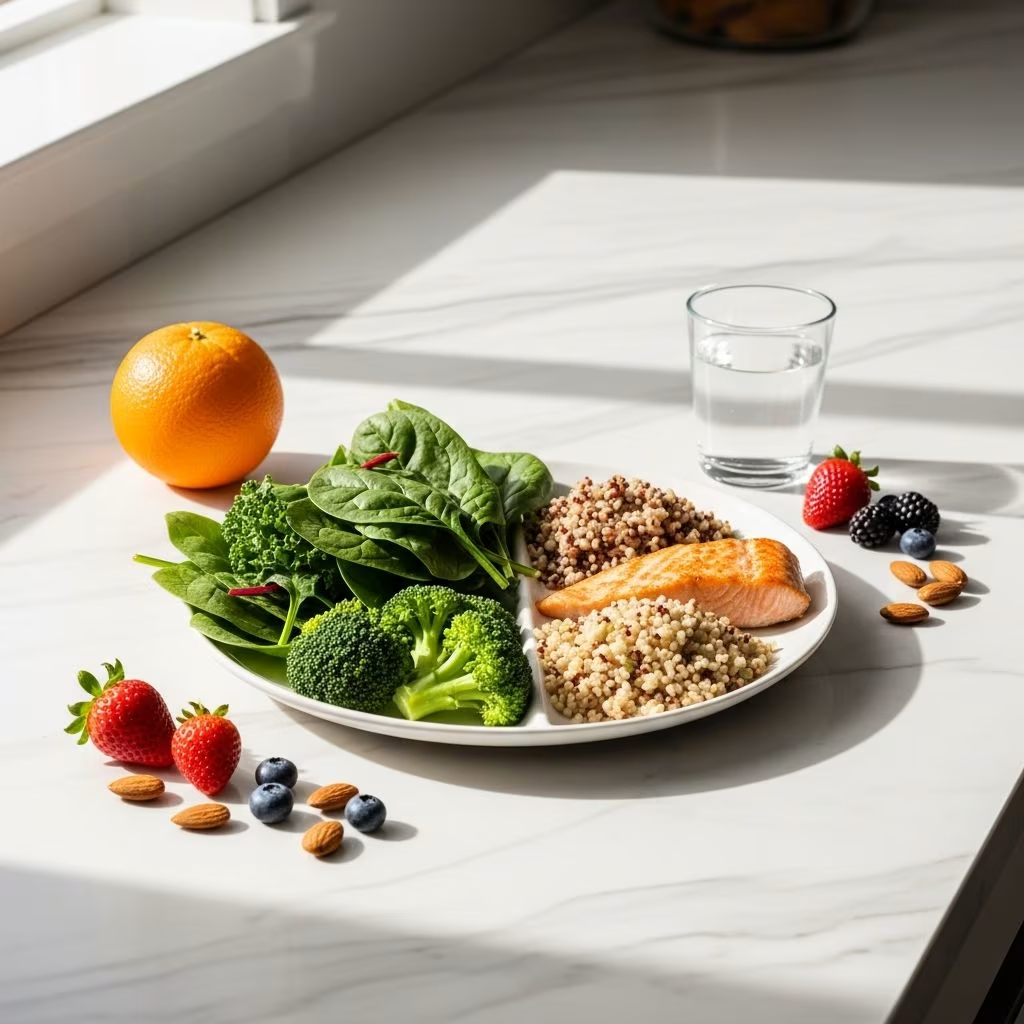
Maintain steady vitamin K consumption rather than strict avoidance. Aim for 90-120 mcg daily from consistent sources to avoid INR swings.
- Record daily food intake and vitamin K estimates using apps or charts.
- Avoid drastic shifts, like suddenly increasing salads or greens.
- Consult dietitians specializing in anticoagulation for personalized plans.
Vitamin K Content in Common Foods
Vitamin K1 (phylloquinone) predominates in plants, counteracting warfarin. High-intake foods (>100 mcg/serving) demand caution.
| Food Category | Examples | Vitamin K per Serving (mcg) | Recommendation |
|---|---|---|---|
| Leafy Greens | Kale, spinach, collards | 500-1000+ | Limit portions; consistent intake |
| Cruciferous Vegetables | Broccoli, Brussels sprouts, cabbage | 100-400 | Moderate; track total weekly |
| Herbs | Parsley, basil | 200-800 (small amounts) | Use sparingly in cooking |
| Other Vegetables | Asparagus, green beans | 50-100 | Generally safe in moderation |
| Meats/Organ | Liver, goose liver | Variable high (K2) | Avoid or treat as high-K |
| Dairy/Soy | Soy milk, fermented soy | 20-50 | OK consistently |
Low-vitamin K foods like fruits, grains, and meats form the bulk of the diet. Mangoes may unpredictably elevate INR; limit them.
Supplements and Herbal Interactions with Warfarin
Many supplements potentiate warfarin (increase INR/bleeding) or inhibit it (decrease INR/clot risk). A review identified 78 interacting items, with 58% potentiating.
High-Risk Supplements to Avoid
- St. John’s Wort: Induces CYP enzymes, reducing warfarin efficacy.
- Turmeric/Curcumin: Reported INR spikes and bleeding; recent CARM case with tonic.
- Ginkgo, Garlic, Ginger, Fish Oil: Antiplatelet effects heighten bleeding.
- Green Tea (excess): Large amounts (>1 gallon/day) lower INR.
Other Notable Interactions
| Supplement | Effect on INR | Notes |
|---|---|---|
| Ginseng | ↓ | May reduce efficacy |
| Vitamin E | ↑ | High doses risky |
| Flaxseed/Psyllium | ↓ | Impair absorption; space dosing |
| Cranberry Products | ↑ (variable) | Juice linked to hemorrhage cases |
Always disclose supplements to providers; more frequent INR checks needed.
Beverages and Alcohol Considerations
Alcohol chronic use potentiates warfarin via liver enzyme effects; acute bingeing inhibits it. Limit to 1 drink/day women, 2 men, consistently.
- Grapefruit Juice: Minimal direct interaction but monitor CYP effects.
- Cranberry Juice: Case reports of INR >50 and fatalities. Avoid large amounts.
- Chamomile/Green Tea: Potential potentiation; use moderately.
Lifestyle Factors Impacting Warfarin Therapy
Beyond diet, habits influence stability.
- Tobacco: Smoking induces metabolism, lowering INR; quitting raises it—monitor closely.
- Exercise: Moderate OK; dehydration from intense activity concentrates warfarin.
- Illness: Fever, diarrhea alter absorption; antibiotics often potentiate.
Practical Tips for Consistent INR Control
Empower patients with strategies.
- Keep a food/supplement diary shared at appointments.
- Weigh foods for accuracy in high-K items.
- Shop with vitamin K lists; prepare balanced meals.
- Space warfarin from high-fiber supplements by 2 hours.
- Travel prepared: carry medication, INR log, provider contacts.
Special Scenarios and Precautions
During Illness or Surgery
Infections or antibiotics (e.g., azoles, macrolides) potentiate; hold warfarin pre-surgery, bridge if high clot risk.
Pregnancy and Pediatrics
Warfarin contraindicated in pregnancy; special dosing for children requires expertise.
Elderly Patients
More sensitive; lower doses, frequent monitoring essential.
Frequently Asked Questions (FAQs)
Can I eat spinach on warfarin?
Yes, but consistently in small portions (e.g., 1/2 cup daily) to avoid INR drop. Track total greens.
Is turmeric safe occasionally?
No; even tonics spike INR. Avoid entirely or monitor closely.
What if my INR is too high?
Hold doses, eat vitamin K-rich foods moderately, seek urgent care if bleeding.
How does alcohol affect warfarin?
Chronic: increases bleeding risk; acute: may lower INR. Moderation key.
Should I avoid all green vegetables?
No—consistency over elimination. Balanced diet supports health.
Monitoring Schedule and When to Seek Help
Start daily INR first week, then stabilize to monthly. Test more if diet changes, illness, new meds. Emergency: INR >5 with bleeding, <1.5 with clot symptoms.
References
- Warfarin and food, herbal or dietary supplement interactions — PubMed. 2020-06-03. https://pubmed.ncbi.nlm.nih.gov/32478963/
- Warfarin: eat, drink and be wary — Medsafe. 2022-12. https://www.medsafe.govt.nz/profs/PUArticles/December2022/Warfarin-eat-drink-and-be-wary.html
- Systematic Overview of Warfarin and Its Drug and Food Interactions — JAMA Internal Medicine. 2004-06-28. https://jamanetwork.com/journals/jamainternalmedicine/fullarticle/486574
- Food and Lifestyle Interactions With Warfarin: A Review — US Pharmacist. 2009-02. https://www.uspharmacist.com/article/food-and-lifestyle-interactions-with-warfarin-a-review
- Food and Supplement Interactions with Warfarin — UCSD Health. Recent. https://health.ucsd.edu/for-health-care-professionals/anticoagulation-guidelines/warfarin/supplement-interactions/
- Warfarin diet: What foods should I avoid? — Mayo Clinic. Recent. https://www.mayoclinic.org/diseases-conditions/thrombophlebitis/expert-answers/warfarin/faq-20058443
- Coumadin® and Warfarin Diet Interactions — UW Health. Recent. https://patient.uwhealth.org/healthfacts/322