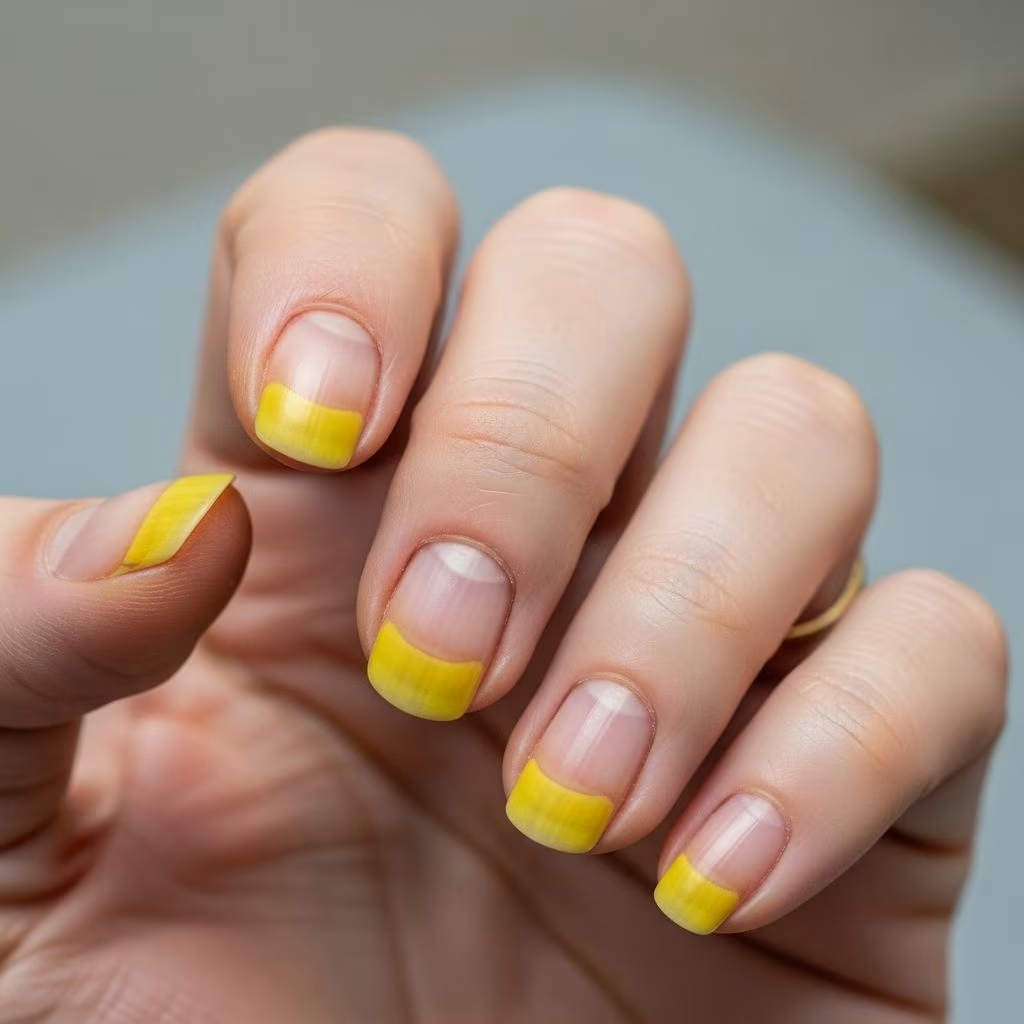
Yellow nail syndrome is a rare clinical triad characterised by yellow dystrophic nails, lymphedema and respiratory tract involvement. It typically affects adults over the age of 50 years, though paediatric cases have been reported.
What is yellow nail syndrome?
Yellow nail syndrome (YNS) is an uncommon disorder defined by the presence of at least two of the following features:
- Yellow, thickened, and excessively curved nails with absent or reduced cuticles
- Primary lymphedema, predominantly affecting the lower limbs
- Respiratory manifestations including pleural effusions, bronchiectasis, or chronic sinusitis
The full triad is present in only about one-third of cases, but the nail changes are the most consistent feature, occurring in over 90% of patients.
Who gets yellow nail syndrome (epidemiology)?
YNS is extremely rare, with an estimated prevalence of less than 1 in 1,000,000. It primarily affects middle-aged and older adults, with a mean age of onset around 50–60 years. A slight female predominance has been noted in some series.
- Both sporadic and familial cases reported
- May occur in children, though exceptional
- Associated with underlying conditions in up to 90% of cases
Causes
The exact cause of yellow nail syndrome remains unknown. However, it is strongly associated with lymphatic dysfunction, and several predisposing factors have been identified:
- Lymphatic abnormalities: Congenital hypoplasia, obstruction, or impaired lymphatic drainage is implicated in most cases. Lymphatic imaging often reveals underdevelopment or malformation of lymphatic vessels.
- Respiratory conditions: Chronic bronchiectasis (40–60%), pleural effusions (40–80%), sinusitis
- Malignancies: Bronchogenic carcinoma, lymphoma, breast cancer (10–20% of cases)
- Autoimmune/rheumatological diseases: Rheumatoid arthritis, Raynaud phenomenon
- Immunodeficiencies: Common variable immunodeficiency, nephrotic syndrome
- Familial cases: Rare autosomal dominant inheritance with variable penetrance suggested
Pathogenesis likely involves impaired lymph flow leading to protein-rich fluid accumulation in tissues, nail matrix changes, and respiratory complications.
Clinical features
Nail changes
The hallmark of YNS is slow-growing, dystrophic nails that appear yellow-brown due to paronychial tissue thickening and lymphatic stasis. Key characteristics include:
| Feature | Characteristics |
|---|---|
| Discolouration | Yellow to yellow-green hue, starting proximally |
| Thickness | Marked hyperkeratosis and onychauxis (2–3x normal) |
| Curvature | Excessive transverse overcurvature (transverse spooning) |
| Growth | Severely reduced (<0.1 mm/day vs. normal 0.3 mm/day) |
| Cuticles | Hyperkeratotic, absent or receded |
| Onycholysis | Distal separation in 50–70% |
Nail changes are usually bilateral and affect both finger and toenails, though toenails may be more severely involved.
Lymphoedema
Peripheral lymphedema occurs in 30–80% of cases, predominantly affecting the lower extremities. It results from lymphatic hypoplasia or obstruction, leading to:
- Non-pitting oedema, often starting proximally (hands/feet)
- Skin thickening and hyperkeratosis over time
- Recurrent cellulitis in affected limbs
- Genital or facial oedema in severe cases
Onset may coincide with puberty in congenital forms.
Respiratory signs
Pulmonary involvement manifests as:
- Pleural effusions: Bilateral, chylous or exudative (most common)
- Bronchiectasis: Chronic productive cough, recurrent infections
- Sinusitis: Chronic rhinosinusitis
- Others: Pneumonia, COPD exacerbation
Respiratory symptoms may precede nail changes by years.
Diagnosis
Diagnosis is clinical, based on the presence of ≥2 triad features after excluding differentials. No specific biomarker exists.
Investigations
- Nail clippings: Negative fungal culture (distinguishes from onychomycosis)
- Lymphoscintigraphy: Confirms lymphatic hypoplasia/dysfunction
- CXR/CT chest: Pleural effusions, bronchiectasis
- Echo/pleural tap: Characterise effusions
- Screen for malignancy/autoimmunity: Age-appropriate workup
Differential diagnosis
| Condition | Distinguishing features |
|---|---|
| Onychomycosis | Positive mycology, uneven involvement |
| Psoriatic nails | Pitting, oil-drop, arthritis |
| Respiratory onychauxis | No yellow hue or triad |
| Lymphedema (isolated) | No nail/respiratory features |
Management
Treatment is symptomatic and supportive, targeting underlying associations. Nail changes may persist despite therapy but can improve spontaneously.
Nail management
- Vitamin E (oral 800–1200 IU/day or topical in DMSO): Improves growth/discolouration in 60–80%
- Itraconazole/fluconazole (pulse therapy): Despite negative cultures
- Zinc supplements: Anecdotal benefit
- Topical antifungals/steroids: Limited evidence
Lymphedema management
- Complex decongestive therapy: Multilayer bandaging, manual drainage
- Compression garments
- Exercise, elevation, skin care
- Zinc, diuretics (limited efficacy)
Respiratory management
- Antibiotics for infections
- Chest drainage/pleurodesis for effusions
- Bronchodilators, mucolytics for bronchiectasis
- Octreotide for chylothorax
Treat associated conditions (e.g., malignancy, RA). Prognosis is good with management; symptoms often stabilise.
Frequently asked questions
Q: Is yellow nail syndrome contagious?
A: No, YNS is not infectious. It results from lymphatic and developmental abnormalities, not pathogens.
Q: Can yellow nail syndrome be cured?
A: No cure exists, but symptoms often improve with treatment. Nail changes may resolve spontaneously in some cases.
Q: What is the prognosis for yellow nail syndrome?
A: Generally favourable with supportive care. Respiratory complications determine long-term outlook.
Q: Should I see a doctor for yellow nails?
A: Yes, especially with swelling or breathing issues, to rule out YNS or malignancy.
References
- Yellow Nail Syndrome – StatPearls — Patel G, et al. NCBI Bookshelf. 2023-10-01. https://www.ncbi.nlm.nih.gov/books/NBK557760/
- What Is Yellow Nail Syndrome? Its Causes, Symptoms, and More — WebMD Medical Reference. 2024-05-15. https://www.webmd.com/skin-problems-and-treatments/what-is-yellow-nail-syndrome
- Yellow Nail Syndrome — National Organization for Rare Disorders (NORD). 2023-11-20. https://rarediseases.org/rare-diseases/yellow-nail-syndrome/
- Yellow Nail Syndrome — Patient.info Professional Reference. 2024-02-10. https://patient.info/doctor/dermatology/yellow-nail-syndrome
- Yellow nail syndrome – DermNet — DermNet NZ. 2024-01-05. https://dermnetnz.org/topics/yellow-nail-syndrome
- Yellow Nail Syndrome — MD Searchlight. 2024-08-12. https://mdsearchlight.com/health/yellow-nail-syndrome/