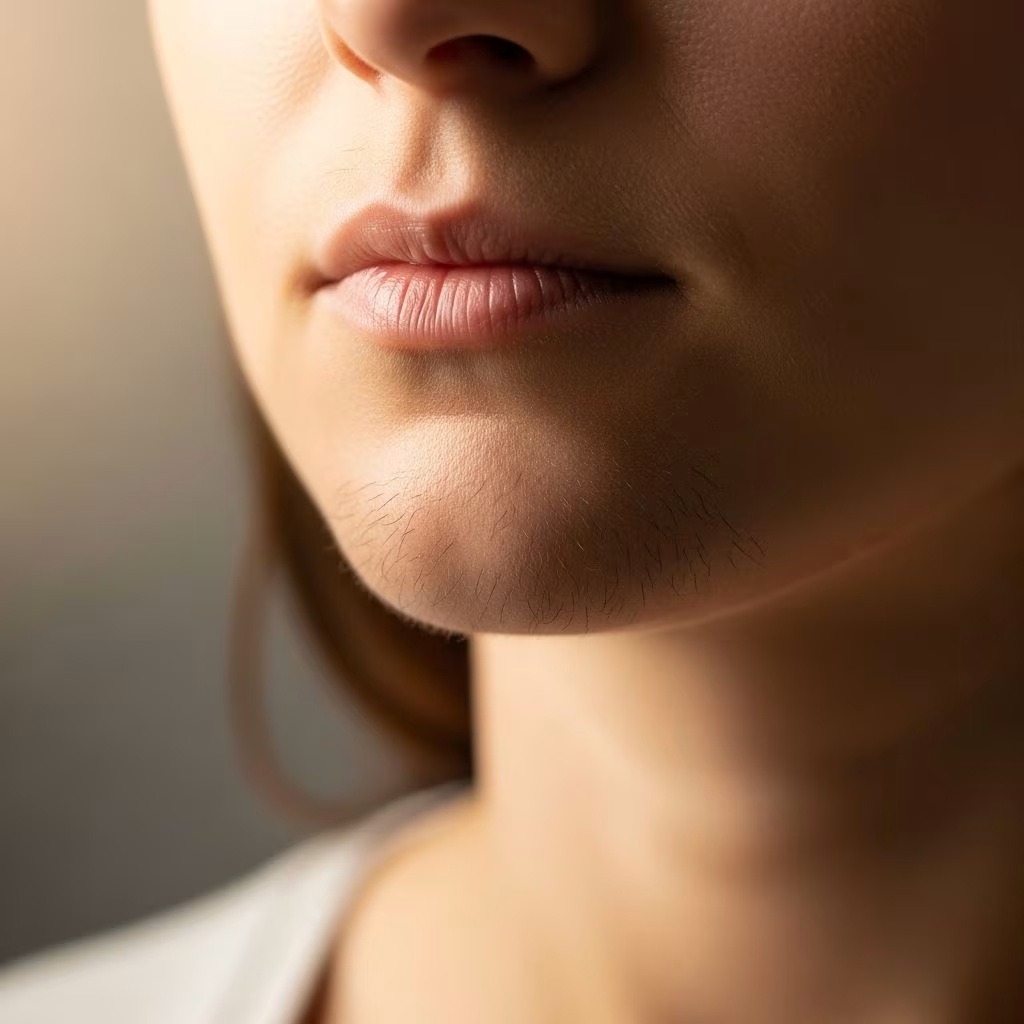
Hirsutism refers to the excessive growth of dark, coarse terminal hair in women in a male-pattern distribution, resulting from increased androgen activity on hair follicles. It affects 5–10% of reproductive-age women and is often linked to hyperandrogenism, though it can also arise from ethnic variations or idiopathic causes. Common sites include the face (chin, upper lip), chest, upper abdomen, back, and thighs. Unlike hypertrichosis, which is generalized hair growth, hirsutism specifically follows androgen-sensitive patterns.
What is the cause of hirsutism?
Hirsutism primarily stems from hyperandrogenism, where elevated levels of androgens like testosterone stimulate hair follicles to produce thick, pigmented terminal hairs. About 70–80% of cases are associated with polycystic ovary syndrome (PCOS), characterized by ovarian androgen overproduction. Other causes include:
- Idiopathic hirsutism: Normal androgen levels but heightened follicle sensitivity; common in Mediterranean, Middle Eastern, South Asian women.
- Non-classical congenital adrenal hyperplasia (CAH): Enzyme deficiencies (e.g., 21-hydroxylase) leading to adrenal androgen excess; affects 1–10% of hirsute women.
- Adrenal disorders: Cushing syndrome (high cortisol), androgen-secreting tumors (rare, rapid onset).
- Ovarian tumors: Androgen-producing tumors causing virilization.
- Medications: Phenytoin, minoxidil, anabolic steroids, danazol.
- Hyperprolactinaemia or acromegaly: Indirect androgen elevation.
Risk factors include family history, obesity (increases ovarian androgens), and certain ethnicities with denser hair. Mild hirsutism may be physiologic in some women.
Who gets hirsutism?
Hirsutism typically onset during puberty, pregnancy, or menopause, affecting women of reproductive age (18–45 years), though postmenopausal cases occur due to relative androgen excess. Prevalence is higher in women of Mediterranean, Indian, Middle Eastern, Native American, or Polynesian descent (up to 40%), versus 4–18% in northern Europeans. PCOS-related hirsutism impacts 70–80% of patients. Obesity exacerbates it via insulin resistance.
What are the signs and symptoms of hirsutism?
The hallmark is male-pattern terminal hair (dark, thick, >0.5–1 cm) on:
- Face: chin, sideburns, upper lip.
- Body: chest (periareolar, midline), upper back, lower abdomen (linea nigra), thighs.
Severity varies; mild cases may be subtle. Associated features of hyperandrogenism include acne, androgenic alopecia, irregular menses, infertility. Rapid, severe hirsutism with virilization (deep voice, clitoromegaly, balding, increased muscle mass) signals tumors. Emotional distress, anxiety, or depression often accompanies due to cosmetic concerns.
How is hirsutism diagnosed?
Diagnosis combines clinical assessment and targeted testing.
Ferriman-Gallwey (mFG) score
The modified Ferriman-Gallwey score quantifies hirsutism by scoring hair density (0–4) at 9 androgen-sensitive sites (upper lip, chin, sideburns, chest, upper back, lower back, upper abdomen, lower abdomen, thighs). Score ≥8 indicates hirsutism; normal ethnic cutoffs vary (e.g., ≥2–9).
| Site | Score 0 | Score 1 | Score 2 | Score 3 | Score 4 |
|---|---|---|---|---|---|
| Upper lip | No terminal hair | Minor terminal hair | Complete lower border | Complete lip | Dense |
| Chin | No hair | Few at midline | Tufts midline | Random | Confluent |
Physical examination
Assess BMI, acne, alopecia, virilization signs (clitoromegaly, masses), pelvic exam.
Investigations
Total/free testosterone (best screening; elevated in 60%). Others if indicated: DHEAS (adrenal), 17-OH progesterone (CAH), FSH/LH/prolactin/TSH, overnight dexamethasone suppression. Imaging: Pelvic ultrasound (PCOS), MRI/CT for tumors if rapid onset or very high androgens. No routine ovarian biopsy.
How is hirsutism treated?
Treatment addresses underlying causes and symptoms; cosmetic measures alone suffice for mild cases. Multidisciplinary: endocrinologist, dermatologist, gynecologist.
Cosmetic treatments
- Shaving/plucking/waxing/bleaching: Quick, inexpensive; plucking risks folliculitis.
- Depilatory creams: Dissolve hair; test patch needed.
- Sugaring/threading: Natural options.
Mechanical epilation
- Waxing: Epilates for 3–6 weeks; painful.
- Epilators: Mechanical plucking.
- Needle electrolysis: Permanent; destroys follicles via electric current; time-consuming, painful.
Reduction epilation
- Laser therapy: Targets melanin; effective for dark hair/light skin (e.g., alexandrite, diode); 40–80% reduction after 6 sessions. Less effective for blond/white hair.
- IPL (intense pulsed light): Broad-spectrum; similar results.
Pharmacological treatments
Aim to reduce androgens or block effects; results take 6–12 months.
| Agent | Dose | Efficacy | Side Effects |
|---|---|---|---|
| Oral contraceptives (OCPs) | E.g., ethinylestradiol + cyproterone acetate | 50–70% reduction | Nausea, VTE risk |
| Spironolactone | 100–200 mg/day | Modest; 6+ months | Hyperkalemia, teratogenic |
| Flutamide | 250 mg/day | High efficacy | Hepatotoxicity |
| Eflornithine cream | 13.9% twice daily | Facial; 8 weeks | Local irritation |
| Metformin | 1500–2000 mg/day (PCOS) | Adjunct | GI upset |
OCPs first-line (suppress ovarian androgens); combine with antiandrogens (use contraception). For CAH: glucocorticoids. Tumors: surgery. Lifestyle: weight loss for PCOS.
Complications of hirsutism treatments
- OCPs: thrombosis, breast tenderness.
- Antiandrogens: menstrual irregularity, fetal risk (contraception mandatory).
- Laser/IPL: burns, dyspigmentation (Fitzpatrick IV–VI).
- Electrolysis: scarring, infection.
Prevention of hirsutism
Not fully preventable, but manage risk factors: weight control, avoid causative drugs. Early PCOS screening in at-risk families.
Personal and psychological effects of hirsutism
Hirsutism causes significant distress, lowering self-esteem, causing depression/anxiety (up to 50% affected); cultural stigma worsens impact. Counseling, support groups aid coping.
Frequently asked questions about hirsutism
Q: Is hirsutism dangerous?
Usually cosmetic; investigate if rapid/severe (tumor risk). Associated with PCOS metabolic issues.
Q: Does hirsutism mean infertility?
Not always; common in PCOS but treatable.
Q: Can hirsutism be cured permanently?
Electrolysis/laser offer long-term reduction; medical therapy manages ongoing.
Q: When to see a doctor for hirsutism?
If mFG ≥8, virilization, irregular periods, or distress.
Q: Is laser hair removal safe for hirsutism?
Yes, effective first-line; multiple sessions needed.
References
- Hirsutism – OBGYN — UCLA Health. 2023. https://www.uclahealth.org/medical-services/obgyn/conditions-treated/hirsutism
- Hirsutism – Diagnosis & treatment — Mayo Clinic. 2024-05-15. https://www.mayoclinic.org/diseases-conditions/hirsutism/diagnosis-treatment/drc-20354941
- Hirsutism — StatPearls, NCBI Bookshelf. 2023-07-17. https://www.ncbi.nlm.nih.gov/books/NBK470417/
- Hirsutism Causes, Symptoms, and Treatments — UPMC. 2024. https://www.upmc.com/services/womens-health/conditions/hirsutism
- Hirsutism in Women — American Academy of Family Physicians (AAFP). 2019-08-01. https://www.aafp.org/pubs/afp/issues/2019/0801/p168.html
- Hirsutism – Symptoms & causes — Mayo Clinic. 2024-05-15. https://www.mayoclinic.org/diseases-conditions/hirsutism/symptoms-causes/syc-20354935