
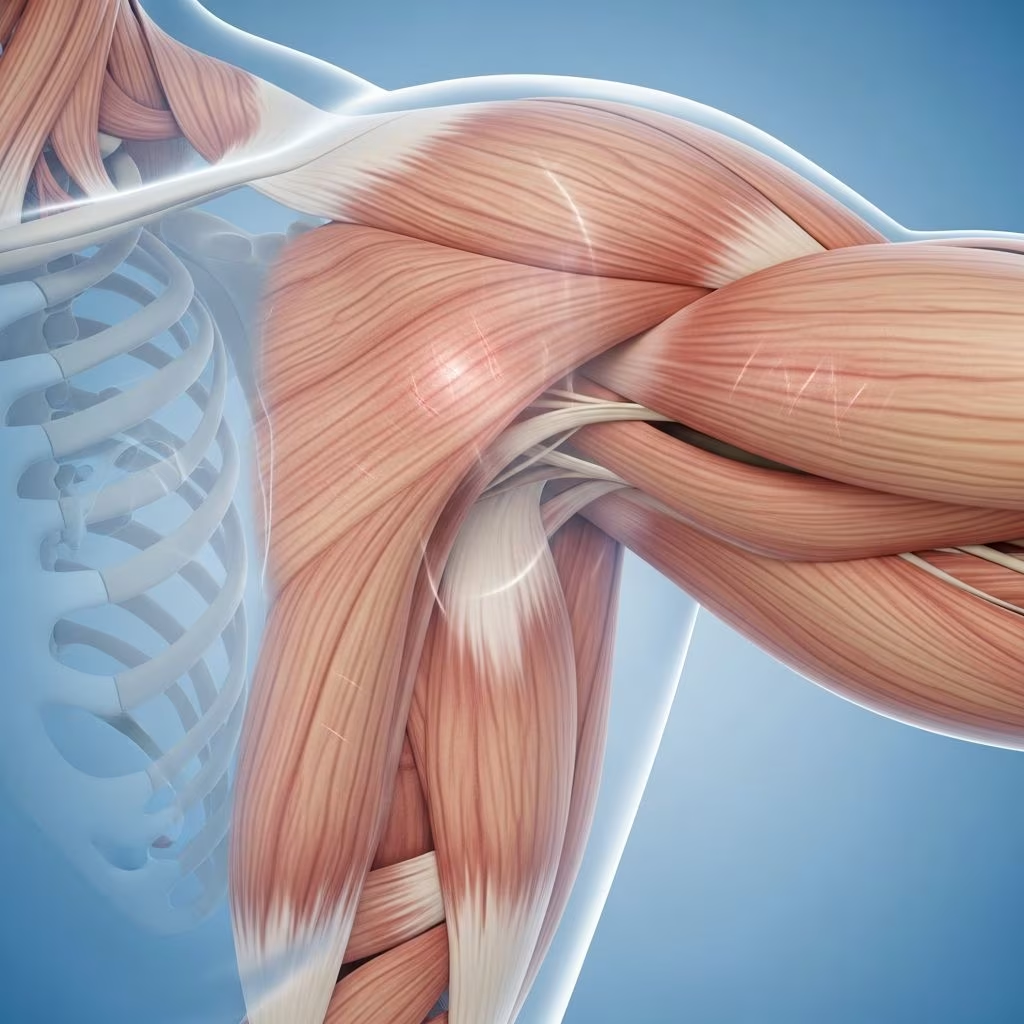
What is brachioradial pruritus?
Brachioradial pruritus (BRP) is a form of neuropathic itch characterised by intense itching localised to the dorsolateral aspects of the arms, overlying the brachioradialis muscle. This muscle runs from the lower arm to the thumb side of the forearm, making the itch typically felt from the elbow to the wrist on the outer forearm. Unlike typical itches, BRP occurs without a primary skin rash, distinguishing it from allergic or inflammatory dermatoses. Patients often describe a burning, stinging, or prickling sensation alongside the itch, which can be debilitating and lead to compulsive scratching, resulting in secondary excoriations or lichenification.
The condition predominantly affects middle-aged to older adults, with a higher prevalence in sunny climates, suggesting environmental triggers. It is unilateral or bilateral, often worsening seasonally in summer. BRP represents a cutaneous dysaesthesia, where damaged nerves misfire, producing itch signals in response to normally non-pruritic stimuli, a phenomenon called alloknesis. Recognition is crucial as it evades standard antipruritic therapies, requiring targeted neuropathic management.
Who gets brachioradial pruritus?
BRP typically impacts individuals in their 40s to 60s, though cases occur across ages. It shows no strong gender bias but is more reported in women, possibly due to healthcare-seeking patterns. Geographic prevalence is higher in sun-exposed regions like Australia, the southern US, and South Africa, correlating with UV radiation levels.
- Risk factors include prolonged sun exposure, outdoor occupations, fair skin types, and history of cervical spine issues such as degenerative disc disease or spondylosis.
- A study of 111 patients found 20.8% had unknown causes, but many linked to C5-C8 dermatomes.
- Up to 85% of cases with upper limb involvement show radicular nerve changes on electromyography (EMG).
Patients often have unremarkable skin exams except for scratch marks, and no systemic diseases are consistently associated, though comorbidities like hypertension or osteoarthritis appear more frequently in older cohorts.
What causes brachioradial pruritus?
The exact aetiology remains elusive, but two primary theories dominate: peripheral nerve damage from UV radiation and central nerve compression at the cervical spine. These lead to sensitisation of C5-C8 nerve roots, innervating the brachioradialis area.
Sun exposure / UV light
Chronic UV exposure damages keratinocytes and cutaneous nerves in the forearms, unprotected by thicker dorsal skin. This causes axonal degeneration and reduced epidermal innervation, normalising in remission. Symptoms flare in summer, abate in winter, and improve with sun avoidance or ice packs, supporting this mechanism. A study noted seasonal patterns in 70% of cases.
Cervical spine pathology
Compression or irritation of C6-C8 nerve roots from spondylosis, herniated discs, or foraminal stenosis refers neuropathic itch to the arm dermatomes. EMG abnormalities in 60-85% of patients confirm radiculopathy, especially at C7 (80%) and C6 (47%). MRI reveals pathology in ~50% of imaged cases, though routine scanning is not recommended without neurological signs.
Other causes
- Notalgia paraesthetica (similar dorsal scapular itch).
- Multiple sclerosis or syringomyelia (rare central causes).
- Viral aetiology: Emerging case series suggest herpetic triggers, with valacyclovir resolving symptoms in 3 patients for up to 5 years.
- Idiopathic in 20-30%.
Multifactorial origins explain variable treatment responses.
Clinical features of brachioradial pruritus
Symptoms are intensely pruritic, often burning or stinging, confined to the brachioradialis distribution: outer forearm from elbow to wrist, sometimes extending to shoulder or thumb.
- Key features:
- Bilateral in 70%, unilateral possible.
- Worsens with heat, sun, or pressure; relieved by cool compresses.
- Alloknesis: Light touch or clothing triggers itch.
- Excoriations, hyperpigmentation from scratching; no primary eruption.
- Duration: Acute flares or chronic, seasonal.
Patients report sleep disruption, reduced quality of life, and frustration from misdiagnosis as psychogenic.
Diagnosis of brachioradial pruritus
Diagnosis is clinical, based on characteristic location and lack of rash. Exclusion of mimics is essential.
| Test | Purpose | Findings |
|---|---|---|
| Skin biopsy | Rule out dermatitis | Normal or reduced nerve fibres |
| EMG / Nerve conduction | Detect radiculopathy | Abnormal in 60-85% |
| Cervical MRI | If neuro signs present | Spondylosis in ~50% |
| Autonomic tests | Sympathetic dysfunction | Often normal |
Differentials include cheiralgia paraesthetica, notalgia paraesthetica, photodermatitis, and lymphoma.
Treatment of brachioradial pruritus
No universal cure exists; management targets symptoms and causes. Response varies; severe cases need multimodal therapy.
Non-pharmacological
- Sun protection: Sunscreen (SPF 50+), long sleeves, avoid peak UV hours.
- Cooling: Ice packs, mentholated creams for rapid relief.
- Physical therapy: Cervical traction, posture correction for spine issues.
Topical therapies
- Capsaicin 0.025-0.075% (desensitises nerves; initial burning).
- Mild steroids, pramoxine, lidocaine.
- Amitriptyline/ketamine compound.
Systemic medications
| Drug Class | Examples | Efficacy |
|---|---|---|
| Gabapentinoids | Gabapentin, pregabalin | High; first-line for neuropathic itch |
| Antidepressants | Amitriptyline, duloxetine | Commonly prescribed |
| Antivirals | Valacyclovir 1g TID x2 weeks | Complete resolution in case series |
| Others | Hydroxyzine (limited), risperidone | Variable |
Invasive options
- Botulinum toxin injections, nerve blocks.
- Epidural steroids or surgery for confirmed spinal pathology.
- Chiropractic manipulation.
Longer treatment durations yield better outcomes; combine therapies for refractory cases.
Frequently Asked Questions (FAQs)
Q: Does brachioradial pruritus go away on its own?
A: Mild cases may resolve seasonally, but chronic BRP often persists without intervention, especially if spine-related.
Q: Is MRI always needed for diagnosis?
A: No, only if neurological deficits; clinical features suffice.
Q: Can sun exposure really cause this?
A: Yes, UV damages forearm nerves; protection prevents flares.
Q: What is the best first-line treatment?
A: Gabapentin or topical capsaicin, plus sun avoidance.
Q: Is BRP linked to shingles?
A: Possibly; valacyclovir showed sustained relief in cases.
References
- Brachioradial Pruritus Treatment with Valacyclovir: A Case Series — Neurology.org. 2023-10-10. https://www.neurology.org/doi/10.1212/WNL.0000000000204606
- Brachioradial Pruritus Explained — Westlake Dermatology. 2024-05-15. https://www.westlakedermatology.com/blog/brachioradial-pruritus-explained/
- Brachioradial Pruritus – StatPearls — NCBI Bookshelf. 2023-07-17. https://www.ncbi.nlm.nih.gov/books/NBK459321/
- Brachioradial Pruritus – Neuropathic itch — Caring Medical. 2023-11-02. https://caringmedical.com/prolotherapy-news/brachioradial-pruritis-neuropathic-itch-hysterical-itching/
- Brachioradial Pruritus: The Neuropathic Itch Every DC Should Recognize — Chiroup. 2024-02-20. https://chiroup.com/blog/brachioradial-pruritus-the-neuropathic-itch-every-dc-should-recognize
- Brachioradial Pruritus: Causes, Features, and Treatment — DermNet NZ. 2025-01-01. https://dermnetnz.org/topics/brachioradial-pruritus