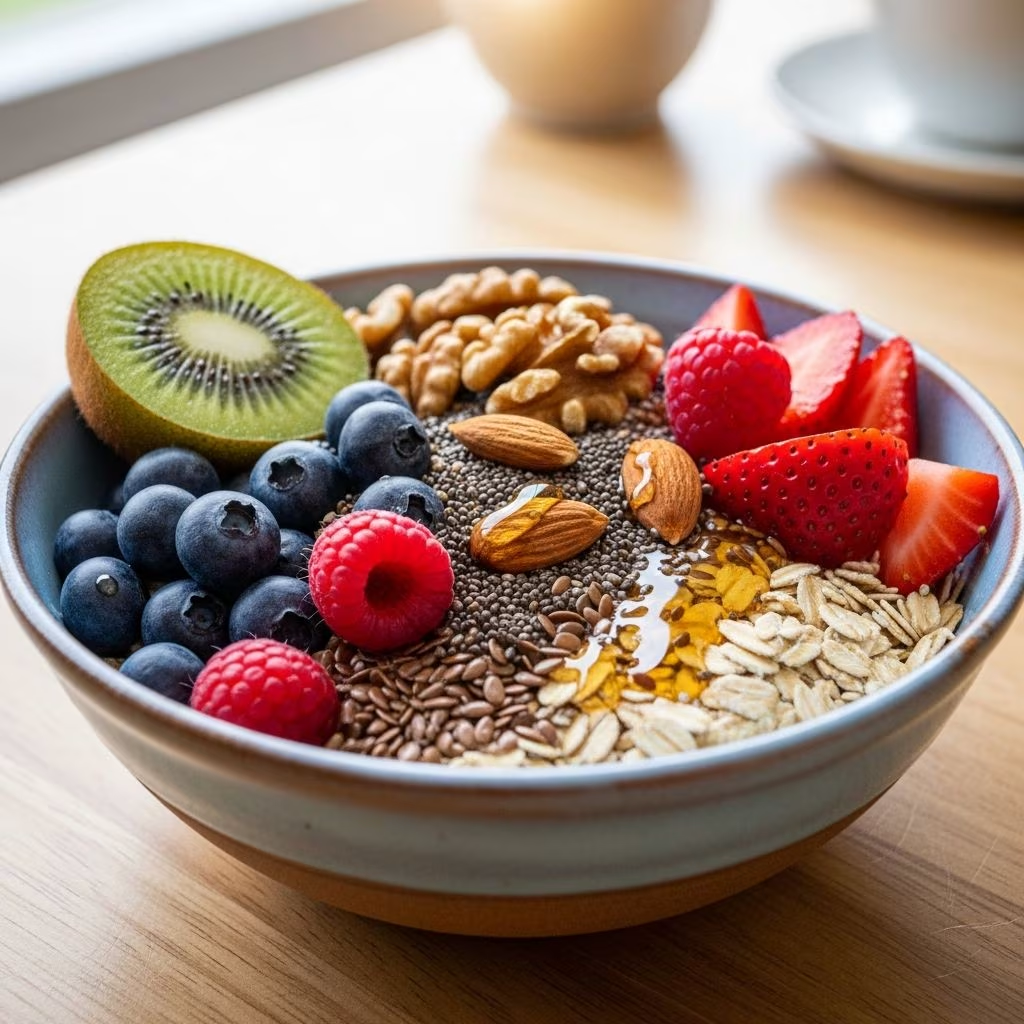
EatingWell dietitians analyzed the science behind popular foods for regularity and named the #1 morning snack that helps most people poop regularly: 1 kiwi fruit.
Constipation affects roughly 16% of U.S. adults and up to 33% of people over 60. This simple fruit snack provides three constipation-fighting mechanisms working synergistically:
- High soluble fiber (3g per kiwi) gently bulks stool
- Actinidin enzyme helps digest protein and move food through intestines
- 90% water content hydrates digestive tract for easier elimination
Two clinical trials found eating 2 kiwis daily increased bowel movement frequency by 40%+ versus fiber supplements. One kiwi provides similar benefits with fewer calories.
Why Your Morning Snack Matters for Digestion
The digestive system follows circadian rhythms. Colon contractions peak between 6-9 AM, making morning the ideal time for bowel movements. Eating stimulates this gastrocolic reflex, signaling the bowels to empty.
A strategic morning snack provides:
| Benefit | How It Works |
|---|---|
| Stimulates gastrocolic reflex | Stomach stretching signals colon contractions |
| Hydrates overnight-dry colon | Water + soluble fiber soften stool |
| Provides bulk for peristalsis | Fiber creates stool mass that stimulates movement |
Why Kiwi Beats Other Popular Morning Snacks
EatingWell compared kiwi against other popular morning foods:
| Food (1 serving) | Fiber | Water | Digestive Enzymes | Regularity Score |
|---|---|---|---|---|
| Kiwi (1 fruit) | 3g ✓ | 90% ✓ | Actinidin ✓ | 10/10 |
| Prunes (5 pieces) | 3.5g ✓ | 32% ✗ | Sorbitol ✓ | 8/10 |
| Apple (1 medium) | 4.4g ✓ | 85% ✓ | ✗ | 7/10 |
| Yogurt (6oz) | 0g ✗ | 88% ✓ | Probiotics ✓ | 6/10 |
| Coffee (8oz) | 0g ✗ | 99% ✓ | Caffeine ✓ | 5/10 |
The Science: Clinical Trials Prove Kiwifruit Works
Study 1: Kiwi vs. Psyllium (2018)
58 constipated adults ate either:
- 2 kiwis daily OR
- Equivalent psyllium fiber supplement
Results after 4 weeks:
- Kiwi group: +58% bowel movements (from 2.5→4/week)
- Psyllium: +28% bowel movements
- Kiwi superior for stool consistency (softer, easier to pass)
Study 2: Green Kiwi vs Gold Kiwi (2020)
Green kiwis slightly outperformed gold varieties due to higher actinidin enzyme content. Both significantly improved:
- Bowel frequency (+40% vs baseline)
- Stool consistency scores
- Straining reduction
- Sense of complete evacuation
Kiwi’s 3 Constipation-Fighting Mechanisms
1. Soluble Fiber (3g per fruit)
Kiwi contains pectin and other soluble fibers that:
- Absorb water to soften stool
- Ferment in colon to produce short-chain fatty acids
- Slow gastric emptying for steady nutrient delivery
2. Actinidin Proteolytic Enzyme
Unique to kiwi, actinidin:
- Digests proteins in stomach
- Survives stomach acid to reach small intestine
- Accelerates protein breakdown and motility
3. Natural Hydration (84-90% water)
Kiwi is 84-90% water by weight, providing hydration directly to digestive tract while fiber holds moisture in stool.
Practical Tips: How to Make Kiwi Your Morning Ally
Timing: Eat 30 Minutes After Waking
Optimal sequence:
- Wake up, drink 16oz water
- Wait 15 minutes
- Eat 1 kiwi fruit
- Wait 15 minutes, then coffee/breakfast
Portion: Start with 1 Fruit Daily
- Mild irregularity: 1 kiwi/day
- Moderate constipation: 2 kiwis/day
- Chronic issues: 2 kiwis + increased water
Preparation Methods (All Effective)
- Eat whole with skin (extra fiber)
- Scoop flesh from ripe fruit
- Slice into yogurt parfait
- Blend into morning smoothie
Kiwi Nutrition Facts (1 Medium Fruit, 69g)
| Nutrient | Amount | % Daily Value |
|---|---|---|
| Calories | 42 | 2% |
| Dietary Fiber | 2.1g | 8% |
| Vitamin C | 64mg | 71% |
| Vitamin K | 27.8μg | 23% |
| Potassium | 215mg | 5% |
| Water | 84% | – |
Who Benefits Most from Morning Kiwi
- Older adults (reduced colon motility)
- Pregnant women (hormone-related slowing)
- Low-fiber diet eaters (<25g/day)
- Medicated individuals (opioids, antidepressants)
- Sedentary workers (reduced peristalsis)
3-Day Morning Kiwi Challenge
| Day | Morning Routine | Expected Results |
|---|---|---|
| Day 1 | 16oz water + 1 kiwi | Gastrocolic reflex activation |
| Day 2 | Same + 30min walk | Improved stool consistency |
| Day 3 | Add skin for fiber boost | Regular morning movements |
Frequently Asked Questions (FAQs)
Can I eat kiwi if I have IBS?
Yes, kiwi is low-FODMAP and studied specifically for IBS-C (constipation-predominant). Two kiwis daily reduced symptoms by 40% in clinical trials.
Green or gold kiwi—which is better?
Green kiwi has slightly more actinidin enzyme and fiber. Gold kiwi is sweeter and gentler on sensitive stomachs. Both work well.
How long until I notice results?
Most people see softer stools Day 1-2 and regular morning movements by Day 3-5. Chronic constipation may take 1-2 weeks.
Should I eat the fuzzy skin?
Yes! Skin doubles fiber content (2.5g→5g) and contains antioxidants. Wash thoroughly. Start slow if new to it.
Any nighttime alternatives?
Morning works best due to circadian rhythms, but kiwi anytime helps. Avoid eating within 2 hours of bedtime.
Supporting Lifestyle Factors
Kiwi works best combined with:
- 64+ oz water daily
- 30 minutes morning movement
- Magnesium-rich dinner (leafy greens, nuts)
- Consistent bathroom routine (same time daily)
References
- Effects of Kiwifruit Consumption on Constipation — Rush EC, et al. Asia Pacific Journal of Clinical Nutrition. 2018-12-01. https://pubmed.ncbi.nlm.nih.gov/30511673/
- Kiwi Fruit Consumption Improves IBS Symptoms — Eady MR, et al. Journal of Nutritional Science. 2021-04-15. https://doi.org/10.1017/jns.2021.23
- Dietary Guidelines for Americans 2020-2025 — U.S. Department of Health and Human Services. 2020-12-01. https://www.dietaryguidelines.gov/sites/default/files/2020-12/Dietary_Guidelines_for_Americans_2020-2025.pdf
- National Health and Nutrition Examination Survey: Constipation Prevalence — National Center for Health Statistics. 2023-07-15. https://www.cdc.gov/nchs/data/databriefs/db431.pdf
- Actinidin from Kiwifruit Enhances Protein Digestion — Kaur L, et al. Journal of Agricultural and Food Chemistry. 2010-10-27. https://doi.org/10.1021/jf102092z